

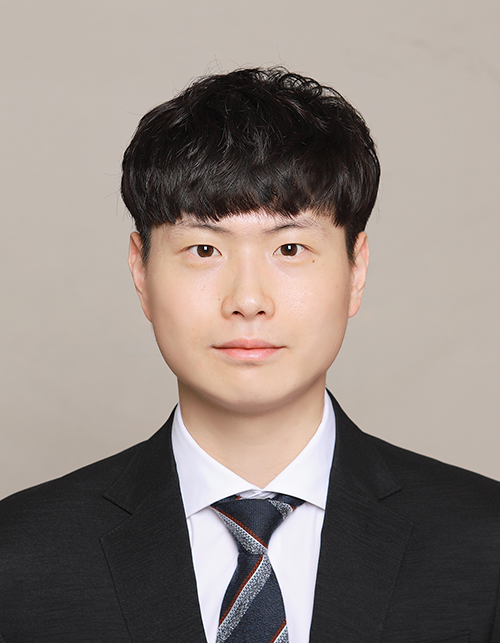
 Hee-Jun Jung
· 4 previous affiliations
- Current
- PhD student · 2020
- 광주과학기술원Since 2020
- PHD Candidate · Since 2020
- National University of SingaporeSince 2026
- Visiting Scholar · Since 2026
- Kyung Hee University2012–2020
- Bachelor of Science - BS, 기계 공학 · 2012–2020
Research Overview
Hee-Jun Jung focuses on disentanglement learning, representation learning through symmetry, and knowledge distillation. His trajectory spans from structural feature transfer in natural language processing to advanced geometric methods for unsupervised disentanglement in computer vision. Most recently, his work investigates architectural inductive biases and partial-equivariant transformations to improve combinatorial generalization and robust representation learning.
Research Trajectory
Jung’s early work addressed model compression and transfer learning in natural language processing, with a specific focus on preserving the geometric relationships of features during distillation. He introduced Feature structure distillation with Centered Kernel Alignment in BERT transferring, a knowledge distillation technique designed to transfer structural information between teacher and student networks. By leveraging Centered Kernel Alignment (CKA), this method captures intra-feature, local inter-feature, and global inter-feature structures, leading to a deeper understanding of knowledge transfer mechanisms. This approach contributes to the broader area of Distilling the Structural Geometry of Feature Spaces and advances techniques in research directions such as Relational Knowledge Distillation for Structural Manifold Transfer and Knowledge Amalgamation Across Heterogeneous Teacher Networks.
Shifting his focus toward generative models and computer vision, Jung began investigating how geometric principles and group theory can improve representation learning. In CFASL: Composite Factor-Aligned Symmetry Learning for Disentanglement in Variational AutoEncoder, he developed an unsupervised method to integrate symmetry-based disentanglement into VAEs without relying on known factor information in the training data. The approach injects inductive biases to align latent vector dimensions to factor-aligned symmetries within an explicit learnable framework. This work bridges generative modeling with the research direction of Riemannian Geometry of Latent Manifolds and addresses core challenges in the area of Decoupling Identity from Nuisance Factors in Latent Representations.
Building on these geometric foundations, he further explored equivariance in latent spaces to enhance the interpretability of learned representations. He proposed Multiple Invertible and Partial-Equivariant Function for Latent Vector Transformation to Enhance Disentanglement in VAEs, which introduces a transformation framework that guarantees an invertible latent-to-transformed-latent mapping while preserving partial input-to-latent equivariance. By integrating these transformations with exponential-family distributions, the method allows for more effective reuse of learned representations, contributing to the broader field of Expressive Non-Gaussian Priors for Latent Variable Models.
In collaborative research on model extrapolation, Jung contributed to Symmetric Space Learning for Combinatorial Generalization. This work addresses the inability of standard machine learning models to imagine unseen combinations of known factors—such as generalizing to a "red square" after only observing "red circles" and "blue squares." The resulting framework, CartanFM, utilizes the geometric principles of symmetric spaces and Cartan decomposition to mathematically extrapolate learned symmetries into unobserved regions of the data manifold.
Continuing his focus on structural inductive biases, Jung introduced Layer-Centric Factors of Variation Disentanglement for Task- and Model-Agnostic Generalization. Moving away from traditional single-bottleneck objectives, this research proposes the Orthogonal Subspaces Projection (OSP) layer, a plug-and-play architectural module that forces neural networks to separate factors of variation—such as shape, color, or pose—throughout their intermediate layers. This layer-centric design yields significant generalization improvements across computer vision, natural language processing, and parameter-efficient fine-tuning.
Current Directions
The most recent papers in the evidence address the integration of strict geometric and architectural constraints into neural networks to achieve robust generalization. Recent work investigates how principles from group theory and symmetric spaces can be embedded directly into model architectures—such as through orthogonal subspace projections or partial-equivariant transformations—to separate underlying factors of variation. By shifting disentanglement from a single bottleneck objective to a structural, layer-centric design, these efforts aim to enable models to extrapolate learned symmetries into unobserved regions of the data manifold, facilitating task- and model-agnostic combinatorial generalization.
Profile updated
| Paper | Venue | Year |
|---|---|---|
| Feature structure distillation with Centered Kernel Alignment in BERT transferringGitHubmaroo-sky/ | Expert Systems with Applications | 2023 |
Loading new papers…
Other researchers whose papers cluster into the same research directions — a proxy for overlapping technical interests and shared intellectual neighborhoods.
See something wrong? Report a mistake