

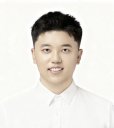
 He Zhang
· 3 previous affiliations
- Assistant Professor · Since 2025
- Researcher · 2024–2025
- Xi'an Jiaotong University2015–2024
- PhD student · 2019–2024
- Undergrad student · 2015–2019
6 other authors named He Zhang: He Zhang (Adobe Systems (United States) · 51 papers), He Zhang (Griffith University · 22 papers), He Zhang (Hong Kong University of Science and Technology · 10 papers), He Zhang (1 paper), He Zhang (Tsinghua University · 1 paper), and 1 more
Research Overview
He Zhang focuses on geometric deep learning, equivariant neural networks, and machine learning for computational chemistry. His early work addressed protein structure prediction and the design of SE(3)-equivariant architectures for physical systems. More recently, he develops deep learning frameworks for ab initio molecular dynamics and density functional theory, enabling large-scale, high-accuracy quantum chemistry simulations.
Research Trajectory
Initial research by He Zhang explored applied sequence modeling, including A Driving Behavior Recognition Model with Bi-LSTM and Multi-Scale CNN. He soon transitioned to computational biology and structural prediction, introducing a transformer-based approach in Co-evolution Transformer for Protein Contact Prediction. This work sought to estimate inter-residue contacts by learning directly from data, mitigating the information loss associated with traditional hand-crafted coevolutionary features derived from multiple sequence alignments.
In 2022, his focus expanded to geometric deep learning and the modeling of many-body physical systems. With collaborators, he developed ClofNet in SE(3) Equivariant Graph Neural Networks with Complete Local Frames. This architecture constructs orthonormal local frames to losslessly project geometric tensors into invariant scalars, avoiding the heavy computational overhead typically associated with spherical harmonics. This work advanced the research direction of Scaling 3D Equivariant Networks via Local Frames and Tensor Reduction as well as the broader area of SE(3) Equivariance via Local Frame Scalarization. It also provided new tools relevant to the field of Geometric Degeneracy in Camera Pose Estimation. Concurrently, he explored how to encode physical symmetries into neural networks for dynamic systems in Equivariant Vector Field Network for Many-body System Modeling, contributing to the broader research direction of Equivariant Machine Learning for Tensorial Physical Properties.
He has also contributed to the theoretical foundations of generative modeling. In A Flexible Diffusion Model, he and his co-authors introduced FP-Diffusion, a framework leveraging Riemannian and symplectic geometry to allow diffusion models to learn optimal forward noising processes rather than relying on fixed, hand-crafted schedules. This research aligns with ongoing work in the area of Adaptive Noise Schedules and Learnable Diffusion Trajectories and the specific direction of Learnable Forward Processes for Diffusion Models.
Most recently, his research has centered on scaling quantum chemistry and molecular dynamics simulations using deep learning. He introduced a novel approach to predicting Density Functional Theory (DFT) Hamiltonian matrices in Self-Consistency Training for Density-Functional-Theory Hamiltonian Prediction. By enforcing the physical principle that a converged Hamiltonian must be consistent with its resulting electron density, this method enables models to train on vast datasets of unlabeled molecular structures, improving both generalization and efficiency. He further addressed the computational bottlenecks of quantum chemistry in Overcoming the barrier of orbital-free density functional theory for molecular systems using deep learning, developing M-OFDFT to achieve Kohn-Sham DFT accuracy at a fraction of the cost, successfully extrapolating to large proteins.
Extending these machine learning force fields to dynamic simulations, he presented an artificial intelligence-based ab initio biomolecular dynamics system in Ab initio characterization of protein molecular dynamics with AI2BMD, which utilizes a protein fragmentation scheme to simulate full-atom large biomolecules. Alongside these core contributions, he collaborated on frameworks for sampling diverse molecular conformations, participating in the development of the Distributional Graphormer (DiG) in Predicting equilibrium distributions for molecular systems with deep learning.
Current Directions
The most recent papers in the evidence point to a sustained focus on the intersection of machine learning and quantum chemistry. Current work investigates methods for bypassing the computational limits of traditional ab initio simulations, particularly for large biomolecules and proteins. This involves developing deep learning surrogates for orbital-free density functional theory and designing machine learning force fields capable of full-atom molecular dynamics at chemical accuracy. A key theme in this recent research is the integration of fundamental physical constraints—such as self-consistency and geometric equivariance—into neural network architectures to improve generalization and reduce the field's reliance on expensive labeled quantum chemical data.
Profile updated
Loading new papers…
Other researchers whose papers cluster into the same research directions — a proxy for overlapping technical interests and shared intellectual neighborhoods.
See something wrong? Report a mistake