

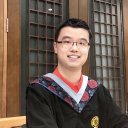
 He Jia
4 previous affiliations
- Princeton University2020–2025
- Graduate Research Fellow · 2020–2025
- Peking University2016–2020
- Undergrad student · 2016–2020
- Undergraduate Research Fellow · 2017–2018
- Researcher · 2018–2019
- Visiting Researcher · 2018
1 other author named He Jia: He Jia (tsinglink · 1 paper)
Research Overview
He Jia focuses on computational astrophysics, simulation-based inference, and high-dimensional geometry. Initially trained as a cosmologist, his trajectory spans machine learning applications for galaxy classification and theoretical work on black hole accretion. His current research investigates advanced statistical techniques, particularly quantile regression, to extract quantitative information from complex astrophysical data.
Research Trajectory
He Jia’s early research focused on foundational problems in statistics and algorithmic complexity, particularly concerning high-dimensional spaces and probability distributions. In 2019, he led work on Normalizing Constant Estimation with Gaussianized Bridge Sampling, introducing a method to calculate the Bayesian evidence (or partition function) required for complex statistical models. This methodological work aligns with the broader area of Overcoming Local Mode Entrapment in Multimodal Sampling, addressing the geometric challenges of sampling from distributions with multiple modes. The following year, he was the first author on Reducing Isotropy and Volume to KLS: An O(n3ψ2) Volume Algorithm (2020), which tackled the algorithmic complexity of efficiently estimating the volume of high-dimensional convex shapes.
During his doctoral studies at Princeton University, Jia’s focus shifted toward astrophysics and cosmology, where he applied advanced computational and machine learning techniques to observational data. A major component of this work involved cosmological surveys and the measurement of galaxy angular momentum. In Galaxy Spin Classification I: Z-wise vs S-wise Spirals With Chirality Equivariant Residual Network (2022), he and his co-authors developed a machine-learning-based classifier to break the degeneracy in galaxy spin direction measurements. By designing a Chirality Equivariant Residual Network (CE-ResNet) that is manifestly equivariant under image reflection, the model ensured no inherent asymmetry between probability estimators for Z-wise and S-wise spirals.
In parallel with his cosmological research, Jia expanded his focus to the study of black holes. As first author of Observational signatures of black hole accretion: rotating versus spherical flows with tilted magnetic fields (2022), he investigated how the initial conditions of infalling gas affect the resulting images of black holes. By comparing general relativistic magnetohydrodynamic (GRMHD) simulations of the M87* black hole, the research demonstrated that while the event horizon acts as an equalizer for the final images, the stability of the resulting plasma jets varies significantly based on the accretion flow. He continued this theoretical work in Photon ring interferometric signatures beyond the universal regime (2024), calculating the visibility of thick photon rings by perturbatively expanding baseline length contributions to account for finite ring width.
Most recently, Jia has synthesized his backgrounds in statistics and astrophysics by advancing simulation-based inference (SBI). In Simulation-Based Inference with Quantile Regression (2024), he introduced Neural Quantile Estimation (NQE). This method utilizes quantile regression to learn the posterior distribution of model parameters, offering a highly efficient way to evaluate posterior reliability and calibrate biased results. This contribution directly supports themes such as Overcoming the Simulation Bottleneck in Bayesian Inference and the research direction of Continuous Quantile Functions for Distributional Learning.
In 2025, Jia defended his PhD in Astrophysics at Princeton and transitioned to a role as a quantitative portfolio manager at a startup, while continuing to engage with astrophysical research and statistical methodology on a part-time basis.
Current Directions
Recent work investigates the intersection of deep learning and physical simulation, particularly focusing on the research direction of Robust Simulation-Based Inference Under Model Misspecification. The most recent themes in the evidence address the development of robust posterior estimation techniques for "black-box" simulators—complex computer programs that generate synthetic data but lack mathematically tractable likelihood functions. By leveraging neural networks to invert these simulators, this work aims to reliably estimate hidden parameters behind observed data even when the underlying models are misspecified.
Additionally, the evidence points to an interest in the broader area of Statistical Bias Correction for Quantized Neural Networks. This reflects a continued engagement with the statistical properties of machine learning models, specifically examining how systematic errors introduced by model compression and quantization can be understood and corrected through rigorous statistical frameworks.
Profile updated
Loading new papers…
Other researchers whose papers cluster into the same research directions — a proxy for overlapping technical interests and shared intellectual neighborhoods.
See something wrong? Report a mistake