

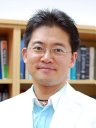
 Hawoong Jeong
· 1 previous affiliation
- Full Professor · Since 2001
Research Overview
Hawoong Jeong focuses on the statistical mechanics of complex systems, with a research trajectory that spans the fundamental topology of scale-free networks, the scaling laws of socio-biological phenomena, and the application of deep learning to physical dynamics. His work is characterized by the use of statistical physics frameworks to uncover universal patterns in diverse domains, including urban planning, demography, art history, and quantum thermodynamics. Recently, his focus has shifted toward integrating machine learning with dynamical systems to infer interaction kernels and detect state transitions in complex trajectories.
Research Trajectory
The evolution of Jeong’s work reflects the broader development of statistical physics over the last three decades, moving from idealized lattice models to the data-driven analysis of real-world networks and physical simulations. In the early 1990s, his research was grounded in non-equilibrium dynamics and the study of self-organized criticality. This period is exemplified by investigations into the Avalanche size distribution in the Toom interface, where he explored how noise-triggered updates in high-dimensional interfaces decay. This foundational work in interfacial roughening and stochastic processes provided the mathematical basis for his subsequent transition into network science.
By the early 2000s, Jeong became a significant contributor to the burgeoning field of complex networks. During this era, his work moved beyond simple descriptions of power-law degree distributions to more nuanced structural metrics. He identified that while degree exponents can be inconsistent, measures like betweenness centrality offer more robust fingerprints for classifying networks into universality classes. This period also saw an exploration of the functional robustness of these systems, specifically their Error and attack tolerance of complex networks, which demonstrated how redundant wiring contributes to the stability of biological and communication infrastructures. This interest in structural invariants prefigures modern efforts in the Automated Discovery of Data Symmetries.
In the mid-to-late 2000s, Jeong expanded the application of statistical mechanics to interdisciplinary problems in demography and urban science. He investigated how cultural and economic constraints produce unique scaling laws, such as the Korean Family Name Distribution in the Past, which deviates from standard power-law distributions found in other nations. His work on urban systems explored the Scaling laws between population and facility densities, applying economic microdynamics to understand the optimal placement of public infrastructure. This phase of his career demonstrated the utility of physical modeling in explaining large-scale human behavior and societal organization.
In the last decade, Jeong’s research has increasingly intersected with computational biology and the digital humanities. He participated in studies regarding the entropic forces driving DNA compaction, as seen in A polymer in a crowded and confined space: effects of crowder size and poly-dispersity. Simultaneously, he applied statistical metrics to massive cultural datasets, contributing to the characterization of Heterogeneity in chromatic distance in images and characterization of massive painting data set. This work utilized color contrast heterogeneity to map the macro-evolution of Western art, bridging the gap between physics and the history of technology and style.
Current Directions
Jeong’s current research program is increasingly focused on the intersection of physics and machine learning, particularly in the context of Physics-Informed Neural Networks for Dissipative Dynamical Systems. He is developing methods to infer the underlying rules of dynamical systems from observed trajectories, moving away from discrete interaction assumptions toward continuous, weighted models. This involves the use of Graph Neural Networks (GNNs) to handle systems with a Neural Networks with Dynamic Input Dimensionality, allowing for the modeling of swarms, multi-agent systems, and complex biological environments.
Another significant current area is the detection of state transitions in anomalous diffusion. By leveraging Sobolev Training for Derivative Aware Neural Networks and other physics-informed architectures, he aims to create Foundation Models for Generalist Physical Simulation that can segment complex trajectories into distinct diffusive states. This work is critical for understanding microscopic interactions in biological systems where standard numerical methods are often too rigid or computationally expensive.
Furthermore, Jeong continues to explore the boundaries of thermodynamics in the quantum regime. His recent work on the Quantumness and thermodynamic uncertainty relation of the finite-time Otto cycle examines how quantum effects can enhance the precision and productivity of heat engines in finite-time operations, challenging classical thermodynamic bounds. He has also applied statistical analysis to communication design, investigating how different types of ambassadors influence viewer attitudes in campaigns, a direction that aligns with Risk Insulated Brand Maintenance through Controllable Assets.
Representative Work
Classification of scale-free networks This study addresses the limitations of using power-law exponents of degree distributions as a primary metric for network classification. By analyzing betweenness centrality, the research demonstrates that scale-free networks can be more accurately categorized into two distinct universality classes, providing a more stable framework for understanding the structural properties of complex systems.
Korean Family Name Distribution in the Past Analyzing five centuries of genealogical records, this paper identifies a unique exponential decay in the distribution of Korean family names. This finding contrasts with the power-law distributions observed in most other populations and establishes the pattern as a long-term cultural constant rather than a modern demographic anomaly.
Quantumness and thermodynamic uncertainty relation of the finite-time Otto cycle This work investigates the performance of quantum versus classical Otto cycles using a harmonic oscillator model. It reveals that quantum effects, while often detrimental in steady-state operations, can significantly improve the precision and power of engines operating in fast, finite-time regimes, even leading to violations of the standard Thermodynamic Uncertainty Relation (TUR).
Learning Heterogeneous Interaction Strengths by Trajectory Prediction with Graph Neural Network Jeong introduces the Relational Attentive Inference Network (RAIN) to address the challenge of inferring continuous interaction strengths in multi-agent systems. Unlike previous models that assumed binary interactions, this GNN-based approach allows for the accurate reconstruction of weighted interaction graphs directly from system trajectories without ground-truth interaction data.
Segment-based task-specific deep learning framework for detecting state transitions in anomalous diffusion trajectories This research proposes a deep learning framework for identifying transitions between diffusive states in biological systems. By combining change-point detection with task-specific models, the framework iteratively segments trajectories to reveal changes in microscopic interactions, providing a tool for analyzing heterogeneous biological environments.
Heterogeneity in chromatic distance in images and characterization of massive painting data set In this interdisciplinary study, Jeong contributed to the development of "seamlessness" ($S$), a statistical metric for quantifying artistic style through color difference heterogeneity. The application of this metric to a dataset of 180,000 artworks allowed for a quantitative mapping of art history, showing how shifts in materials and movements altered the visual texture of Western art over centuries.
Profile updated
| Paper | Venue | Year |
|---|---|---|
| Stochastic resetting mitigates latent gradient bias of SGD from label noiseGitHubqodudrud/ | Mach. Learn. Sci. Technol | 2025 |
| Inferring dissipation maps from videos using convolutional neural networksGitHubqodudrud/ | Physical Review Research | 2022 |
| Deep reinforcement learning for feedback control in a collective flashing ratchetGitHubkdkyum/ | Physical Review Research | 2021 |
| Estimating entropy production in a stochastic system with odd-parity variablesGitHubkdkyum/ | arXiv | 2021 |
Loading new papers…
Other researchers whose papers cluster into the same research directions — a proxy for overlapping technical interests and shared intellectual neighborhoods.
See something wrong? Report a mistake