

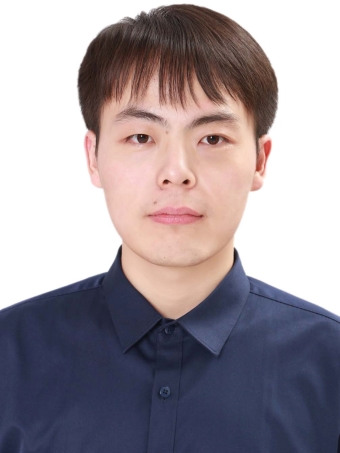
 Harry Cheng
· 2 previous affiliations
- National University of SingaporeSince 2025
- Postdoc · Since 2025
- Shandong University2014–2025
- PhD student · 2021–2025
- MS student · 2018–2021
- Undergrad student · 2014–2018
Research Overview
Harry Cheng focuses on AI safety, deepfake detection, and multi-modal computing. Their early work explored multimodal interaction and relation extraction before shifting toward the robust identification of synthetic media. Currently, their research addresses the generalization of deepfake detectors to unseen manipulations, the security of diffusion models, and the intersection of fairness and generalization in facial analysis systems.
Research Trajectory
The trajectory begins in 2021 with participation in multimodal interaction research. Early collaborative work included Multimodal Activation: Awakening Dialog Robots without Wake Words, which proposed an audio-visual consistency detection scheme to activate dialog systems without explicit wake words. The following year, Cheng contributed to graph-based information extraction in Multi-Relation Extraction via A Global-Local Graph Convolutional Network.
By 2022, the primary research focus shifted to the detection of synthetic media and deepfakes. A key early contribution in this domain was Voice-Face Homogeneity Tells Deepfake, which approached forgery detection through the lens of cross-modal inconsistency, measuring the matching degree between audio and visual identities. Concurrently, Cheng developed architectural improvements for video analysis in Deep Convolutional Pooling Transformer for Deepfake Detection. This work combined the local texture-spotting capabilities of convolutional networks with the global consistency-checking of Transformers, contributing to the research direction of Integrating Local Convolutions and Global Self Attention and addressing challenges in the area of The Upstream Detection Bottleneck in Facial Analysis.
A persistent challenge in synthetic media detection is the ability of models to perform well on novel forgery methods. To advance the broader area of Generalizing Deepfake Detection to Unseen Manipulations, Cheng introduced Towards Generalizable Deepfake Detection by Primary Region Regularization in 2023. This approach augmented training images by removing primary regions, preventing detectors from overfitting to specific data biases and artifacts.
As generative models evolved, the research expanded to address diffusion-based synthesis and proactive defense mechanisms. In 2024, Cheng presented Diffusion Facial Forgery Detection, which introduced the DiFF dataset—a large-scale collection of face-focused diffusion-generated images—and proposed an edge graph regularization approach to improve detection. Moving toward proactive security, FractalForensics: Proactive Deepfake Detection and Localization via Fractal Watermarks (2025) detailed a defense mechanism that embeds invisible, semi-fragile fractal watermarks into images prior to tampering, enabling both high-accuracy detection and precise pixel-level localization of manipulations.
Parallel to deepfake detection, Cheng has investigated fairness and reasoning in large multimodal systems. Social Debiasing for Fair Multi-modal LLMs (2024) introduced a counter-stereotype debiasing strategy utilizing a large counterfactual dataset to reduce social biases without degrading reasoning capabilities. In 2025, collaborative work on Multimodal Fact-Checking: An Agent-based Approach explored the research direction of Role Specialization in Multi-Agent Architectures, decomposing the verification of real-world claims into specialized tasks such as strategy planning and iterative reasoning.
Most recently, the research has deeply integrated the concepts of generalization, fairness, and optimization in deepfake detection. Learning Real Facial Concepts for Independent Deepfake Detection (2025) proposed decoupling the detection of forgeries from the verification of genuine faces by learning diverse "real face" prototypes. In Fair Deepfake Detectors Can Generalize (2025), Cheng formally defined a causal relationship between demographic fairness and generalization, introducing a framework that utilizes demographic-aware data rebalancing and feature aggregation to neutralize distributional biases. Finally, Suppressing Gradient Conflict for Generalizable Deepfake Detection (2025) identified gradient conflicts during backpropagation as a source of performance degradation when training on mixed original and synthesized forgeries, proposing a framework to explicitly mitigate these conflicts and enforce a low-conflict feature embedding space.
Current Directions
Recent work investigates the theoretical and practical intersections of algorithmic fairness and cross-domain generalization in synthetic media detection. The most recent papers in the evidence address the causal mechanisms that link demographic equity to improved model robustness, suggesting that mitigating distributional biases can directly enhance a detector's ability to identify unseen manipulations. Additionally, current research explores advanced optimization strategies—such as suppressing gradient conflicts during multi-domain training—and the decoupling of genuine facial concept learning from forgery artifact detection. Beyond deepfakes, there is an ongoing focus on multi-agent frameworks and role specialization to improve the reliability and reasoning capabilities of multimodal fact-checking systems.
Profile updated
| Paper | Venue | Year |
|---|---|---|
| Multimodal Fact-Checking: An Agent-based ApproachGitHubxudanni0927/ | arXiv | 2025 |
| Diffusion Facial Forgery DetectionGitHubiLearn-Lab/ | ACM Multimedia | 2024 |
Loading new papers…
Other researchers whose papers cluster into the same research directions — a proxy for overlapping technical interests and shared intellectual neighborhoods.
See something wrong? Report a mistake