

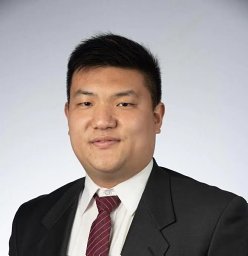
 Haoying Zhou
· 8 previous affiliations
- IntuitiveSince 2026
- Machine Learning Engineer · Since 2026
- WPI AIM Lab2021–2026
- Research Assistant · 2021–2026
- Worcester Polytechnic Institute2020–2026
- PhD student · 2020–2026
- Teaching Assistant · 2020–2021
- Johns Hopkins University2023–2026
- Visiting graduate scholar · 2023–2026
- Philips2022
- Image Guided Therapy Solutions Robotic Intern · 2022
- Boston University2018–2020
- Master's degree, Mechanical Engineering · 2018–2020
- Undergrad student · 2017–2018
- Beijing Institute of Technology2014–2018
- Undergrad student · 2014–2018
Research Overview
Haoying Zhou focuses on robotic-assisted surgery, surgical tool pose estimation, and 3D point cloud processing. Their trajectory encompasses the development of simulation platforms for fine-grained surgical policy learning and novel loss distillation techniques for geometric reconstruction. Recent work addresses data scarcity in surgical robotics to enable autonomous manipulation and augmented reality applications.
Research Trajectory
The trajectory begins in 2024 with contributions to simulation environments for complex robotic manipulation. With collaborators, Zhou developed SurgicAI: A Hierarchical Platform for Fine-Grained Surgical Policy Learning and Benchmarking, a system designed to facilitate reinforcement and imitation learning for intricate tasks such as suturing. This platform addresses the limitations of existing environments by supporting modular subtasks and flexible generalization in robotic-assisted surgery.
Concurrently, Zhou participated in research addressing 3D vision challenges, specifically in the area of Reconstructing Complete Geometry from Partial Point Clouds. This work included Loss Distillation via Gradient Matching for Point Cloud Completion with Weighted Chamfer Distance, which introduced a method to automatically discover effective weighted Chamfer Distance loss functions. By mimicking the gradient behavior of more complex loss functions, the approach eliminates the need for manual parameter tuning, contributing to the broader research direction of Multi-Objective Loss Functions for Knowledge Distillation and highlighting the area of The Critical Role of Systematic Hyperparameter Optimization.
In 2025, the focus returned to surgical robotics with the introduction of SurgPose: a Dataset for Articulated Robotic Surgical Tool Pose Estimation and Tracking. To address data scarcity in the field, this project utilized UV-reactive paint for keypoint marking to collect robust tracking data under varied lighting conditions. This dataset supports applications in augmented reality and autonomous manipulation, intersecting with research areas such as Architectures for Low Latency Pose Estimation, the direction of Self-Prompting Mechanisms for Vision Foundation Models, and the broader goal of Scaling Robotic Learning Beyond Expert Demonstrations.
Current Directions
The most recent papers in the evidence indicate a continuing focus on the foundational data and perception requirements for advanced surgical robotics. Current work investigates methods for accurate pose estimation and tracking of articulated tools, addressing the critical data bottlenecks that limit autonomous manipulation and augmented reality in surgical environments.
Profile updated
Loading new papers…
Other researchers whose papers cluster into the same research directions — a proxy for overlapping technical interests and shared intellectual neighborhoods.
See something wrong? Report a mistake