

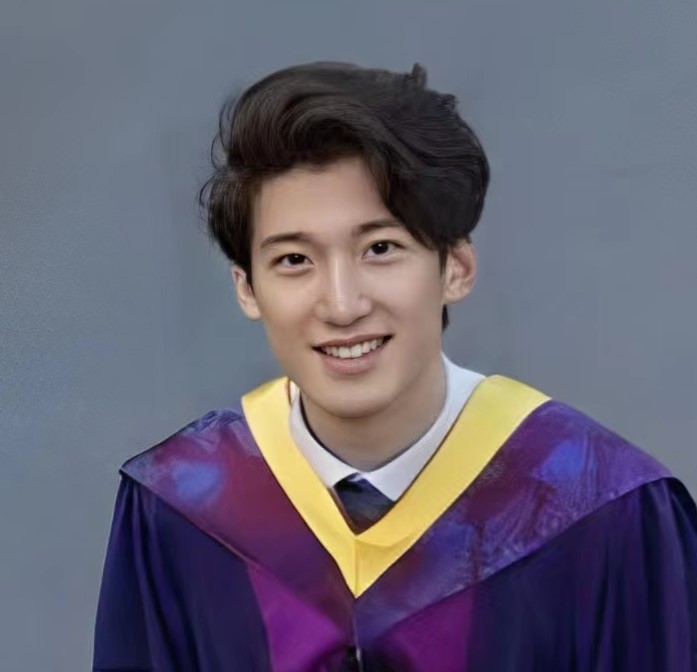
 Haoyi Niu
· 2 previous affiliations
- International Computer Science InstituteSince 2025
- PhD student · Since 2025
- Tsinghua University2018–2025
- MS student · 2022–2025
- Research Intern · 2021–2025
- Undergrad student · 2018–2022
Research Overview
Haoyi Niu focuses on reinforcement learning, cross-domain policy adaptation, and autonomous driving for embodied agents. His trajectory spans from early work in traffic prediction and scenario generation to developing hybrid offline-and-online reinforcement learning frameworks that bridge the sim-to-real gap. Currently, he investigates efficient robotic policy learning, skill composition, and cross-domain adaptation using diffusion models and latent space planning.
Research Trajectory
Niu's early research addressed spatiotemporal modeling and decision-making in intelligent transportation systems. In 2020, he contributed to spatiotemporal modeling for urban traffic prediction with Graph Attention Convolutional Network: Spatiotemporal Modeling for Urban Traffic Prediction. He subsequently led work on Tactical Decision Making for Emergency Vehicles based on a Combinational Learning Method, which intersects with several research areas including Velocity Adaptive Spatial Attention for Driving, Trajectory-Conditioned World Models for Interactive Driving, and the broader domain of Behavioral Fidelity for Mixed Autonomy Traffic Control. Building on this foundation in autonomous navigation, he developed DR2L: Surfacing Corner Cases to Robustify Autonomous Driving via Domain Randomization Reinforcement Learning. This 2021 paper utilized domain randomization to expose and handle corner cases, contributing to the research direction of Lexicographic Optimization for Strictly Prioritized Reinforcement Learning.
A major theme in Niu's trajectory is bridging the sim-to-real gap caused by imperfect simulators. He introduced a hybrid offline-and-online reinforcement learning framework in When to Trust Your Simulator: Dynamics-Aware Hybrid Offline-and-Online Reinforcement Learning. This work addresses the challenge of learning effective policies when simulators have simplified dynamics, combining limited real-world offline data with online simulation. In parallel, he collaborated on Discriminator-Guided Model-Based Offline Imitation Learning, proposing a framework that uses a discriminator to evaluate the dynamics correctness and sub-optimality of model rollouts, advancing the area of Joint Policy and Dynamics Optimization. Extending his hybrid RL approach to autonomous driving, he developed (Re)2H2O: Autonomous Driving Scenario Generation via Reversely Regularized Hybrid Offline-and-Online Reinforcement Learning to generate diverse, safety-critical testing scenarios by training background vehicles. He further formalized the interaction between autonomous and background vehicles as a hierarchical game in Stackelberg Driver Model for Continual Policy Improvement in Scenario-Based Closed-Loop Autonomous Driving.
In 2024, Niu's research expanded into continual learning, cross-domain adaptation, and multimodal representations for embodied agents. He investigated continual driving policy optimization in Continual Driving Policy Optimization with Closed-Loop Individualized Curricula. He also contributed to DecisionNCE: Embodied Multimodal Representations via Implicit Preference Learning, which reframed vision-language alignment as an implicit preference learning problem, a method relevant to the research direction of Multi-Scale Temporal Sampling for Robust Video Learning. Exploring the computational trade-offs in offline RL, he co-authored Are Expressive Models Truly Necessary for Offline RL?, which examines the necessity of large sequential models for goal-conditioned supervised learning. To address data scarcity in target domains, he introduced xTED: Cross-Domain Adaptation via Diffusion-Based Trajectory Editing, a method that bridges domain gaps directly at the data level rather than relying on complex downstream model architectures.
Most recently, Niu has focused on refining hybrid RL frameworks and improving the efficiency of robotic policy learning. He presented H2O+: An Improved Framework for Hybrid Offline-and-Online RL with Dynamics Gaps, which builds upon his earlier work to more explicitly address dynamics mismatches in real-world robotics. He also co-developed Efficient Robotic Policy Learning via Latent Space Backward Planning, which mitigates the computational costs and accumulation errors of fine-grained forward planning by utilizing coarse-grained subgoals in a latent space. Additionally, he participated in research on skill composition to prevent catastrophic forgetting in Skill Expansion and Composition in Parameter Space, and contributed to PhysiAgent: An Embodied Agent Framework in Physical World, a training-free framework that wraps robotic controllers in high-level reasoning scaffolding for complex physical tasks.
Current Directions
The most recent papers in the evidence indicate a strong focus on efficient policy learning and cross-domain adaptation for embodied agents. Recent work investigates how to bridge dynamics gaps between imperfect simulators and the real world using refined hybrid offline-and-online reinforcement learning frameworks. Additionally, Niu is exploring methods to improve the computational efficiency of robotic planning through latent space backward planning, avoiding the high costs of full-pixel multi-frame predictions. Another active area involves skill expansion and composition in parameter space to enable agents to learn new tasks without catastrophic forgetting, alongside the development of high-level reasoning frameworks that allow robotic controllers to monitor and adjust their strategies in complex physical environments.
Profile updated
Loading new papers…
Other researchers whose papers cluster into the same research directions — a proxy for overlapping technical interests and shared intellectual neighborhoods.
See something wrong? Report a mistake