

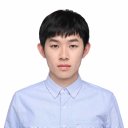
 Haoye Lu
· 7 previous affiliations
- Vector InstituteSince 2021
- Postgraduate Affiliate · Since 2021
- Skyfall AISince 2025
- Member of Technical Staff · Since 2025
- Skyfall.AISince 2025
- Intern · Since 2025
- University of WaterlooCurrent
- Current
- PhD student · 2021–2026
- Research Internship · 2022
- University of Ottawa2017–2021
- Research Associate · 2019–2021
- Teaching Assistant · 2019
- MS student · 2017–2019
- Teaching Assistant · 2018
- Machine Learning · 2021
Research Overview
Haoye Lu focuses on the mathematical foundations and algorithmic development of generative models, with a primary emphasis on stochastic differential equations (SDEs) and diffusion models. His research explores the intersection of continuous-time optimization, geometric deep learning, and reinforcement learning, aiming to enhance the efficiency and privacy of machine learning systems. By reinterpreting generative processes through the lens of classical optimization and differential geometry, Lu develops frameworks that address challenges in training on noisy data, preserving structural symmetries, and managing multi-objective trade-offs.
Research Trajectory
Lu’s early research, conducted during his tenure at the University of Ottawa, was characterized by an exploration of discrete structures and secure communication protocols. In 2017, he investigated semi-quantum direct communication (SQDC), focusing on protocols that allow secure transmission between parties with asymmetric quantum capabilities. This period also involved work on network science, specifically the development of general definitions and detection algorithms for network communities. These early projects established a foundation in rigorous algorithmic design and the analysis of complex relational data.
By 2019, Lu’s focus shifted toward the application of deep learning to structured data, particularly periodic time series. He contributed to the development of convolutional neural network (CNN) architectures designed to extract period lengths from noisy data streams, a problem with significant implications for signal processing and environmental monitoring. This work marked a transition from purely discrete or quantum systems toward the use of neural architectures for continuous and noisy signal analysis.
In 2021, Lu began investigating the The Single Layer Constraint in Transformer Theory. This research moved beyond empirical performance to analyze the training dynamics of attention mechanisms using gradient descent. By establishing mathematical identities between word embeddings and attention scores, Lu provided a more granular understanding of how these models prioritize discriminative information during training.
Following this theoretical work, Lu expanded his scope to reinforcement learning (RL), specifically addressing the complexities of The Convex Geometry of Multi-Objective Pareto Fronts. His analysis of policy-induced value functions in multi-objective settings clarified the relationship between stationarity and Pareto optimality, providing a theoretical basis for algorithms that must balance conflicting goals, such as safety and speed in autonomous systems.
Lu’s current research at the University of Waterloo and the Vector Institute centers on the evolution of diffusion models. His recent work addresses the practical and ethical challenges of training these models, such as data privacy and the reliance on high-quality clean datasets. He has introduced methods for training diffusion models on corrupted or noisy data, utilizing limited clean samples to guide the learning process. Furthermore, he has explored Equivariant Stochasticity and Structured Symmetry Breaking within diffusion processes, ensuring that generative models respect the inherent geometric symmetries of the data they represent.
Current Directions
Lu’s current efforts are focused on unifying generative modeling with continuous optimization frameworks. A significant recent development in his work is the transition from iterative denoising protocols to continuous-time "flow" variants. This approach reinterprets training procedures as alternating projection algorithms, simplifying the implementation of complex denoising loops and establishing connections to consistency models. This direction aims to make diffusion-based generation more robust, mathematically transparent, and computationally efficient.
Additionally, Lu continues to refine structure-preserving diffusion models. By establishing necessary and sufficient conditions for maintaining group symmetries during the diffusion process, he is developing bridge models that ensure alignment between the model’s endpoint couplings and the geometric constraints of the domain. This work is particularly relevant for applications in the physical sciences and robotics, where respecting symmetries like rotation or translation is critical for model fidelity.
Representative Work
Economic No-Key Semi-Quantum Direct Communication Protocol In this early work, Lu addressed the limitations of existing semi-quantum direct communication (SQDC) protocols, which typically required pre-shared keys and linear entanglement preservation times. He proposed a no-key protocol that reduces hardware complexity and increases transmission efficiency, facilitating secure communication between a full-quantum sender and a limited-quantum receiver.
On the Dynamics of Training Attention Models Lu investigated the mathematical mechanisms of the attention component in deep neural networks. By analyzing a text classification task under gradient descent, he demonstrated the existence of a persisting identity relating a word's embedding to the inner product of its key and the query. This work provided theoretical depth to the empirical success of Transformers, explaining how the model learns to attend to discriminative features.
Multi-Objective Reinforcement Learning: Convexity, Stationarity and Pareto Optimality Addressing the limitations of single-objective RL, Lu performed a rigorous analysis of the spaces in which multi-objective reinforcement learning (MORL) operates. He distinguished between three views of Pareto optimality and proved the convexity of certain value function spaces. These insights are fundamental for developing algorithms that can effectively navigate the trade-offs inherent in complex, real-world decision-making.
Stochastic Forward–Backward Deconvolution: Training Diffusion Models with Finite Noisy Datasets Lu introduced Stochastic Forward–Backward Deconvolution (SFBD) to solve the problem of training diffusion models on noisy datasets. While training on purely noisy data is theoretically possible, it often suffers from slow convergence. SFBD uses a small fraction of clean data to "jumpstart" the process, allowing for high-quality generative results while maintaining the privacy and copyright protections afforded by noisy training sets.
Diffusion Models under Group Transformations This paper focuses on structure-preserving diffusion models (SPDM) for distributions with inherent group symmetries. Lu complemented existing research by proving necessary conditions for constructing SPDMs and proposed a new framework that incorporates geometric structures into the diffusion process. The resulting structure-preserving bridge model ensures that the generative process remains aligned with the required symmetries.
SFBD Flow: A Continuous-Optimization Framework for Training Diffusion Models with Noisy Samples Building on the SFBD framework, Lu developed a continuous variant called SFBD Flow. By reinterpreting the iterative denoising process as an alternating projection algorithm, this framework removes the need for manual coordination of alternating steps. This work connects diffusion training more closely to continuous optimization and consistency models, offering a more streamlined approach to training on corrupted data.
Profile updated
Loading new papers…
Other researchers whose papers cluster into the same research directions — a proxy for overlapping technical interests and shared intellectual neighborhoods.
See something wrong? Report a mistake