

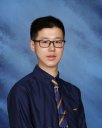
 Haoteng Tang
· 4 previous affiliations
- Assistant Professor · Since 2023
- University of Pittsburgh2018–2023
- PhD student · 2018–2023
- University of Southern California2016–2018
- MS student · 2016–2018
- Xi'an Jiaotong University2012–2016
- Undergrad student · 2012–2016
Research Overview
Haoteng Tang focuses on graph neural networks, representation learning, and computational neuroimaging. His research trajectory spans from foundational work on the interpretability and robustness of hierarchical graph pooling to the application of advanced graph learning techniques in medical image analysis. Currently, his work addresses the complex spatio-temporal dynamics of brain networks, developing models that integrate structural and functional modalities to discover clinical biomarkers.
Research Trajectory
Tang’s early active research centers on the architecture and robustness of Graph Neural Networks (GNNs), particularly for graph-level tasks such as classification. A major challenge in this domain is the loss of structural nuance when graphs are pooled into smaller representations. Contributing to the area of Multi-Scale Fusion for Hierarchical Graph Representation, Tang led the development of interpretable pooling mechanisms. In the first-author paper CommPOOL: An Interpretable Graph Pooling Framework for Hierarchical Graph Representation Learning, he proposed a framework designed to capture and preserve intrinsic hierarchical community structures during the representation learning process, advancing the research direction of Information Loss in Graph Pooling and Coarsening. Concurrently, he investigated the security and reliability of these architectures. As the first author of Adversarial Attack on Hierarchical Graph Pooling Neural Networks, Tang explored the vulnerabilities of advanced GNNs, demonstrating how hierarchical pooling networks could be compromised in graph classification tasks by targeted perturbations.
Building on his expertise in network robustness and representation learning, Tang expanded his focus to cross-modal learning and medical image analysis. He contributed as a second author to Vulnerability vs. Reliability: Disentangled Adversarial Examples for Cross-Modal Learning, which investigated how adversarial examples could be disentangled into modality-related and modality-independent components to boost the robustness of deep cross-modal networks. This interest in complex, multi-dimensional data naturally extended to clinical applications. In PSGR: Pixel-wise Sparse Graph Reasoning for COVID-19 Pneumonia Segmentation in CT Images, Tang served as a second author on a project that integrated a pixel-wise sparse graph reasoning module into convolutional neural networks. This approach enhanced the modeling of long-range dependencies, overcoming the limited local receptive fields of standard CNNs to achieve more accurate segmentation of infected regions in computed tomography scans.
By 2022, Tang’s research trajectory shifted decisively toward computational neuroimaging, applying sophisticated graph mining techniques to brain networks. Brain networks present unique challenges because they often involve inhibitory or competitive relationships that violate the standard homophily assumptions of traditional GNNs. Engaging with the broader area of Signed Attention for Modeling Inhibitory Relationships, Tang led the first-author study Contrastive Brain Network Learning via Hierarchical Signed Graph Pooling Model. This work introduced a model specifically designed for signed graphs, addressing the limitations of unsigned models in analyzing brain functional networks and utilizing contrastive learning to mitigate the performance bottlenecks caused by data scarcity.
Furthermore, Tang addressed the challenge of integrating different neuroimaging modalities to better understand brain topology. In Functional2Structural: Cross-Modality Brain Networks Representation Learning, he proposed methods to fuse functional and structural MRI data, moving beyond simple projection techniques to extract comprehensive representations that could serve as biomarkers for clinical phenotypes and neurodegenerative diseases. This work also aligns with the theme of Structural Attribution in Graph Neural Networks, as it seeks to map functional dynamics onto underlying structural topologies to explain the interactions among distinct brain regions.
Current Directions
Tang’s most recent work investigates the complex spatio-temporal dynamics of the brain, moving beyond synchronous functional correlations to model directional influences. The most recent papers in the evidence address the construction and analysis of brain-effective networks using dynamic causal modeling. Specifically, his recent research introduces interpretable graph learning frameworks that incorporate Ordinary Differential Equations (ODEs) to capture temporal functional dynamics and directed node interactions. This direction aims to provide a more rigorous, mathematically grounded understanding of how structural and functional aspects of the brain interact during developmental processes and disease progression, addressing the limitations of traditional models that rely solely on synchronous blood-oxygen-level-dependent (BOLD) signals.
Profile updated
Loading new papers…
Other researchers whose papers cluster into the same research directions — a proxy for overlapping technical interests and shared intellectual neighborhoods.
See something wrong? Report a mistake