

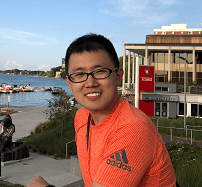
 Haoliang Sun
· 2 previous affiliations
- Shandong UniversitySince 2010
- Associate Professor · Since 2020
- Postdoc · 2021–2023
- PhD student · 2014–2020
- Bachelor's degree, Computer Science · 2010–2019
- University of Wisconsin–Madison2017–2024
- Visiting Scholar · 2017–2024
Research Overview
Haoliang Sun focuses on few-shot learning, domain adaptation, and generative modeling on manifolds. His early research addressed medical image analysis and image-set classification using kernel methods and graph networks. More recently, his work has evolved to tackle robust learning under noisy environments and one-step generative sampling on non-Euclidean geometries.
Research Trajectory
Sun’s early research addressed distinct challenges in computer vision and medical image analysis. He introduced a structured support vector regression model in Direct Estimation of Spinal Cobb Angles by Structured Multi-output Regression, which jointly learned related outputs and incorporated manifold regularization alongside kernel target alignment to directly estimate clinical metrics and vertebral landmarks from X-rays. Concurrently, he investigated image-set classification, a domain characterized by high inter-class ambiguity and significant intra-class variability. To effectively measure similarity between image sets, he developed deep match kernels built upon arc-cosine kernels in Learning Deep Match Kernels for Image-Set Classification. This approach mimicked deep neural networks and introduced anchors to aggregate local kernels into a global representation. He subsequently expanded on this problem by applying sparse graph convolutional networks to model the complex relationships within image sets in Learning the Set Graphs: Image-Set Classification Using Sparse Graph Convolutional Networks.
Building on his expertise in kernel methods, Sun transitioned toward few-shot learning and meta-learning frameworks. He contributed to the development of meta variational random features in Learning to Learn Kernels with Variational Random Features, enabling the learning of adaptive kernels for base tasks with limited data.
A significant portion of Sun’s trajectory focuses on algorithm robustness in the presence of distribution shifts and noisy data. He addressed label noise through confidence penalization and noise-aware sample selection in Self-Filtering: A Noise-Aware Sample Selection for Label Noise with Confidence Penalization, and further explored rectification strategies in Learning to rectify for robust learning with noisy labels. In parallel, he investigated the research direction of Parameter Space Transformations for Unsupervised Domain Adaptation, contributing to Learning Transferable Parameters for Unsupervised Domain Adaptation. He later participated in extending these concepts to multiple noisy environments—where source domains are corrupted by label, feature, or open-set noise—by analyzing the disparate impacts of noise types and proposing offline curriculum learning to minimize a newly-defined empirical source risk in Towards Accurate and Robust Domain Adaptation Under Multiple Noisy Environments.
Returning to few-shot paradigms, Sun introduced a probabilistic framework for segmentation in Attentional prototype inference for few-shot segmentation. By modeling prototypes and attention maps as distributions, this approach improved accuracy in scenarios with high intra-class variation. He continued advancing meta-learning with MetaKernel: Learning Variational Random Features With Limited Labels, which leveraged shared knowledge via LSTMs and enriched kernel expressiveness using normalizing flows to achieve strong performance on few-shot classification and regression benchmarks.
In his most recent work, Sun has explored generative modeling and multimodal reasoning. He contributed to a novel generative framework in Riemannian MeanFlow for One-Step Generation on Manifolds, which enables high-quality, one-step sampling on non-Euclidean geometries like spheres and rotation groups. By redefining average velocity through parallel transport and stabilizing training with multi-task optimization, this method significantly reduces sampling costs. Additionally, he participated in research bridging textual information and time-series forecasting in From Text to Forecasts: Bridging Modality Gap with Temporal Evolution Semantic Space, utilizing a confidence-aware gating mechanism to distill text into interpretable primitives and improve forecasting accuracy in non-stationary scenarios. Further advancing one-step manifold generation, Sun co-developed Start Where the Data Are: Statistical Priors for One-Step Generation on Manifolds, introducing statistical priors via geometry-aware moment matching and posterior coupling to prevent spurious samples between data modes on manifolds such as spheres, tori, and SO(3).
Current Directions
The most recent papers in the evidence, published in 2026, indicate a focus on continuous generative models and multimodal time-series reasoning. Sun is currently investigating scalable geometric learning, specifically focusing on simulation-free training for generative models on high-dimensional Riemannian manifolds. This involves optimizing one-step generation processes on non-Euclidean geometries to reduce computational overhead while maintaining competitive accuracy against iterative models. Concurrently, his recent collaborative work addresses semantic textualization for time-series reasoning, exploring how textual modalities can be integrated into forecasting pipelines to improve predictive robustness in complex, non-stationary environments.
Profile updated
Loading new papers…
Other researchers whose papers cluster into the same research directions — a proxy for overlapping technical interests and shared intellectual neighborhoods.
See something wrong? Report a mistake