

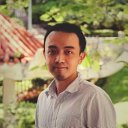
 Haoliang Li
· 2 previous affiliations
- City University of Hong KongSince 2021
- Associate Professor · Since 2026
- Assistant Professor · 2021–2026
- Nanyang Technological University2014–2018
- PhD student · 2014–2018
Research Overview
Haoliang Li focuses on artificial intelligence security, multimedia forensics, and robust machine learning. His early work addressed image manipulation detection and domain generalization for face anti-spoofing, establishing methods to handle distribution shifts across acquisition devices. More recently, his research investigates the trustworthiness and alignment of large language models, alongside test-time adaptation techniques for dynamic environments and multimodal data.
Research Trajectory
His early research addressed multimedia forensics, beginning with Blurred Image Splicing Localization by Exposing Blur Type Inconsistency, which detected tampering by analyzing inconsistencies in blur types across image regions. Recognizing that forensic and security models often fail when deployed in new environments, he expanded his focus to domain generalization. In Domain Generalization With Adversarial Feature Learning, he introduced a framework utilizing adversarial autoencoders and Maximum Mean Discrepancy (MMD) to align distributions across domains. This work contributed to the broader research area of Test Time Adaptation for Distribution Shift. He applied these generalization principles to biometric security in Learning Generalized Deep Feature Representation for Face Anti-Spoofing, advancing the specific direction of Generalizing Face Presentation Attack Detection to Unseen Domains.
Continuing to address domain gaps, he investigated unsupervised domain adaptation for visual assessment in No-Reference Screen Content Image Quality Assessment With Unsupervised Domain Adaptation. This research advanced the area of Aligning Feature Distributions with Maximum Mean Discrepancy by transferring quality prediction models from natural images to screen content. Returning to biometrics, he developed methods to eliminate the influence of acquisition devices in Camera Invariant Feature Learning for Generalized Face Anti-Spoofing, isolating camera-invariant spoofing features in the high-frequency domain.
As his research evolved, he began addressing non-stationary environments and test-time adaptation. He participated in developing Temporal Coherent Test Time Optimization for Robust Video Classification, which utilized spatio-temporal information to adapt models to corrupted video data during testing. He further formalized the challenge of continuous domain drift in Evolving Domain Generalization via Latent Structure-Aware Sequential Autoencoder, a project that also touched upon the broader field of Reconstructive Regularization for Information Preservation in Latent Representations. In the security domain, he advanced multimodal approaches with M$^{3}$3FAS: An Accurate and Robust MultiModal Mobile Face Anti-Spoofing System, contributing to the area of Face Anti Spoofing Against High Fidelity 3D Masks. He also applied multi-modal feature alignment to the challenge of domain shifts in news events with Robust Domain Misinformation Detection via Multi-Modal Feature Alignment, focusing on detecting misinformation through cross-modal inconsistency.
In recent years, his trajectory has heavily integrated large language models (LLMs) and foundation models across diverse domains. He explored novel applications of LLMs in Large Language Models for Lossless Image Compression: Next-Pixel Prediction in Language Space is All You Need, treating RGB subpixels as text tokens to achieve highly efficient compression. In generative AI, he addressed complex, multi-layered image editing in Disentangling Instruction Influence in Diffusion Transformers for Parallel Multi-Instruction-Guided Image Editing, contributing to efforts aimed at Overcoming Regression to the Mean in Image Synthesis and disentangling attribute control. Returning to his roots in forensics, he bridged high-level semantic reasoning and low-level pixel analysis in Propose and Rectify: A Forensics-Driven MLLM Framework for Image Manipulation Localization.
His work also extended to healthcare with Q-PART: Quasi-Periodic Adaptive Regression with Test-time Training for Pediatric Left Ventricular Ejection Fraction Regression, which tackled the difficulties of pediatric echocardiogram analysis. Additionally, he enhanced vision-language models in Enhancing Zero-Shot Image Recognition in Vision-Language Models through Human-like Concept Guidance by using LLMs for Bayesian reasoning, and he introduced continuous-time frameworks for evolving networks in Learning Dynamic Graph Embeddings with Neural Controlled Differential Equations.
Most recently, his research has focused on the fundamental mechanics and alignment of generative models. In Beyond Confidence: Adaptive and Coherent Decoding for Diffusion Language Models, he introduced an inference framework that leverages cross-step consistency to improve generation quality. Finally, he addressed the critical issue of imperfect human preference data in Unbiased Alignment for Large Language Models with Noisy Preferences, developing theoretical frameworks and loss functions to mathematically correct noise for robust LLM alignment.
Current Directions
The most recent papers in the evidence indicate a strong focus on the alignment, reliability, and multimodal capabilities of foundation models. Recent work investigates the fundamental mechanics of generative models, particularly in developing adaptive decoding strategies for diffusion language models to improve generation quality and inference efficiency. Another major theme is the robust alignment of large language models, addressing the challenge of training models on noisy or imperfect human preference data through mathematically grounded loss functions. Alongside these theoretical advancements, current research continues to apply multimodal large language models (MLLMs) to complex, real-world problems, including forensics-driven image manipulation localization and test-time training for specialized medical imaging tasks.
Profile updated
Loading new papers…
Other researchers whose papers cluster into the same research directions — a proxy for overlapping technical interests and shared intellectual neighborhoods.
See something wrong? Report a mistake