

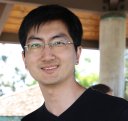
 Hao Li
· 8 previous affiliations
- Google (United States)Since 2025
- Research Scientist · Since 2025
- Current
- Amazon (United States)2018–2025
- Applied Scientist · 2018–2025
- University of Maryland, College Park2012–2018
- PhD student · 2012–2018
- Nervana Systems2016
- Research Intern · 2016
- NEC (United States)2014–2016
- Research Intern · 2014–2016
- Chinese Academy of Sciences2009–2012
- MS student · 2009–2012
- Microsoft (United States)2009–2010
- Research Intern · 2009–2010
35 other authors named Hao Li: Hao Li (Fudan University · 118 papers), Hao Li (Xidian University · 80 papers), Hao Li (Pinscreen · Mohamed bin Zayed University of Artificial Intelligence · 54 papers), Hao Li (42 papers), Hao Li (Baidu (China) · 33 papers), and 30 more
Research Overview
Hao Li focuses on the optimization, visualization, and scalability of deep neural networks, with a particular emphasis on generative modeling, efficient transfer learning, and high-fidelity computer vision. His research trajectory spans the theoretical foundations of network quantization and loss landscape analysis to the empirical scaling laws governing large-scale diffusion transformers for text-to-image synthesis. By combining rigorous optimization techniques with architectural innovation, Li addresses fundamental bottlenecks in model efficiency, generalization, and representation capacity across multiple modalities.
Research Trajectory
The early phase of Li’s research, beginning around 2016–2017, centered on the structural and mathematical foundations of deep learning models. This period was characterized by an investigation into model efficiency and the geometry of neural loss functions. In 2017, Li explored the theoretical underpinnings of low-precision computation in Training Quantized Nets: A Deeper Understanding, moving beyond empirical observations to analyze how coarsely quantized weights affect learning dynamics on resource-constrained platforms. During this time, he also participated in research on distributed optimization, contributing to the development of Adaptive Consensus ADMM for Distributed Optimization, which sought to improve the reliability of model fitting in distributed environments by automating penalty parameter selection.
In 2018, Li’s work shifted toward understanding the relationship between network architecture and the ease of optimization. This resulted in a significant study on Visualizing the Loss Landscape of Neural Nets, which introduced visualization techniques to explain why certain design choices, such as skip connections, lead to smoother loss surfaces and better generalization. This work provided a visual and analytical framework for understanding the "trainability" of deep architectures.
Following a period of diversification into broader vision and sensing themes, Li’s focus returned to the challenges of model adaptation and multi-task learning in the early 2020s. As pre-trained models became the standard starting point for downstream applications, he addressed the memory and computational costs of fine-tuning. In 2022, he contributed to the development of Task Adaptive Parameter Sharing for Multi-Task Learning, a method for efficiently tuning base models by adaptively modifying task-specific subsets of layers. This was followed in 2023 by research into model selection, where he proposed Guided Recommendation for Model Fine-Tuning, treating the identification of the best pre-trained model for a specific task as a recommendation problem based on historical training data.
Most recently, from 2024 to 2025, Li has focused on the scalability of generative AI. His work in this area empirically investigates the scaling laws of diffusion-based text-to-image models, comparing different backbones and dataset sizes. This line of inquiry culminated in the development of efficient Diffusion Transformers (DiTs), specifically focusing on pure self-attention architectures like U-ViT that scale more effectively than traditional cross-attention variants.
Core Research Themes
Generative Modeling and Scaling Laws A primary focus of Li’s current work is the empirical study of how model size and data volume influence the performance of text-to-image systems. This includes rigorous ablations of denoising backbones, ranging from 0.3B to 8B parameters, and the evaluation of training sets containing up to 600 million images. This research aims to identify the most cost-effective pathways for scaling generative models while maintaining high fidelity.
High-Fidelity Synthesis and Geometric Understanding Li has a long-standing interest in the precision of digital representations. This is evident in his work on High-Fidelity Facial Synthesis via Non-linear Morphable Models, which sought to overcome the "linear ceiling" of traditional statistical face models. His work also addresses the alignment of semantic and geometric information, as seen in Aligning Semantic Labels with Geometric Boundaries, which targets the problem of "semantic bleeding" where neural network predictions fail to respect the physical edges of objects.
Architectural Innovations for Complex Data Li’s research frequently explores how to adapt transformer architectures to non-standard data types. This includes Volumetric Transformers for Long Range Dependencies in 3D Data, which addresses the "locality bottleneck" of 3D Convolutional Neural Networks by enabling the capture of global structural relationships in volumetric scans. Similarly, in the audio domain, he has explored the integration of Linguistic Priors for Speech Separation and Enhancement, moving beyond raw signal processing to incorporate phonetic and linguistic structures.
Representation Learning and Optimization Li continues to refine how models represent complex data distributions. This includes work on Multi-Prototype Representations for Intra-Class Diversity, which moves away from the assumption that a semantic category can be represented by a single average point in feature space, instead allowing for multiple prototypes to capture intra-class variance.
Interdisciplinary Sensing and Monitoring Beyond core computer vision, Li has contributed to the development of optical methods for biological sensing. This is reflected in research on Optical Monitoring of Neurochemical and Calcium Dynamics, which utilizes optical sensors to observe the chemical drivers of neural activity, providing a more nuanced view of brain dynamics than traditional electrode-based electrical monitoring.
Representative Work
Training Quantized Nets: A Deeper Understanding In this work, Li provides a theoretical investigation into the training of neural networks with coarsely quantized weights. While previous studies were largely empirical, this paper explores the accuracy and convergence properties of quantization methods from a mathematical perspective, facilitating the deployment of deep learning on low-power embedded platforms with limited memory and computing resources.
Visualizing the Loss Landscape of Neural Nets This research addresses the non-convex nature of neural network loss functions. Li introduced a "filter normalization" method to enable meaningful comparisons between different loss landscapes. The study demonstrated that skip connections prevent the transition to chaotic, non-convex landscapes, explaining why certain architectures are significantly easier to train and generalize better than others.
Task Adaptive Parameter Sharing for Multi-Task Learning As the second author of this study, Li contributed to the development of Task Adaptive Parameter Sharing (TAPS). This method optimizes which layers of a pre-trained base model should be shared and which should be adapted for new downstream tasks. TAPS enables efficient multi-task learning by minimizing the total number of task-specific parameters while reducing competition between different objectives.
Guided Recommendation for Model Fine-Tuning This paper proposes a meta-learning approach to model selection. By analyzing the performance of over 400 pre-trained models across 40 downstream tasks, Li and his collaborators demonstrated that traditional hand-designed selection criteria often fail. They introduced a recommendation-based system that uses the meta-information of datasets and models to predict the best starting point for fine-tuning, significantly reducing search costs.
On the Scalability of Diffusion-based Text-to-Image Generation Li empirically studied the scaling properties of diffusion models, performing rigorous ablations on both denoising backbones and training set sizes. The work provides a framework for fair model comparison in the expensive text-to-image domain, exploring how UNet and Transformer variants scale from 0.4B to 4B parameters.
Efficient Scaling of Diffusion Transformers for Text-to-Image Generation Extending his work on scaling laws, Li investigated the efficiency of various Diffusion Transformers (DiTs). He identified that U-ViT, a pure self-attention-based model, scales more effectively than cross-attention variants. The study demonstrated that a 2.3B parameter U-ViT model could outperform larger, more complex architectures like SDXL UNet, and provided insights into the diminishing returns of dataset scaling beyond certain thresholds.
Profile updated
Loading new papers…
Other researchers whose papers cluster into the same research directions — a proxy for overlapping technical interests and shared intellectual neighborhoods.
See something wrong? Report a mistake