

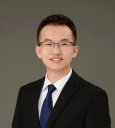
 Hao Li
· 1 previous affiliation
- Peking UniversityCurrent
- Current
- PhD student · 2023–2026
- MS student · 2021–2023
- Undergrad student · 2017–2021
35 other authors named Hao Li: Hao Li (Fudan University · 118 papers), Hao Li (Xidian University · 80 papers), Hao Li (Pinscreen · Mohamed bin Zayed University of Artificial Intelligence · 54 papers), Hao Li (42 papers), Hao Li (Baidu (China) · 33 papers), and 30 more
Research Overview
Hao Li focuses on multimodal representation learning and the application of large language models to scientific discovery, particularly in molecular design and chemical reasoning. His trajectory bridges early work in generative text-video retrieval and visual style modeling with a recent emphasis on evaluating and enhancing the reasoning capabilities of foundation models in chemistry. Currently, he investigates latent reasoning and reinforcement learning for biomolecular optimization.
Research Trajectory
Beginning his published trajectory at Peking University, Li's early research concentrated on multimodal retrieval and generative models for vision and video. He introduced a generative diffusion-based framework for text-video retrieval in DiffusionRet: Generative Text-Video Retrieval with Diffusion Model, which modeled the joint probability of queries and candidates to improve robustness in out-of-distribution scenarios. He expanded on the area of Synergistic Retrieval with Multi-Modal Queries by developing FreestyleRet: Retrieving Images from Style-Diversified Queries. This lightweight framework extracted textural information to handle diverse query types, such as sketches and low-resolution inputs, contributing to the broader research direction of Representing Visual Style through Neural Feature Correlations.
Applying diffusion models to human motion, Li also developed Local Action-Guided Motion Diffusion Model for Text-to-Motion Generation, which utilized a local-to-global paradigm to give users fine-grained control over specific body movements. Around this time, he explored interpretability in complex autonomous systems, introducing a framework to pinpoint causal environmental factors in self-driving models in Exploring the Causality of End-to-End Autonomous Driving.
In 2025, while continuing to contribute to video-language representation through collaborative work on Hierarchical Banzhaf Interaction for General Video-Language Representation Learning, Li's primary focus shifted toward AI for science. He began addressing the limitations and hallucination issues of large language models (LLMs) in computational chemistry. He introduced a novel metric-driven benchmark to quantify these errors in How to Detect and Defeat Molecular Mirage: A Metric-Driven Benchmark for Hallucination in LLM-based Molecular Comprehension. To further evaluate the step-by-step logic required for drug design, he developed ChemCoTBench in Beyond Chemical QA: Evaluating LLM's Chemical Reasoning with Modular Chemical Operations, bridging the gap between abstract reasoning and practical chemical discovery.
A major contribution during this period was the Heterogeneous Molecular Encoding (HME) framework, detailed in Navigating Chemical-Linguistic Sharing Space with Heterogeneous Molecular Encoding. This work integrated 1D sequences, 2D graphs, and 3D conformations into a unified space, advancing the research areas of Multi-Modal Fusion for Heterogeneous Molecular Representation and Multi Objective Molecular Design with Large Language Models. By incorporating structural topology, this research also aligned with broader efforts in the fields of Geometric Graph Neural Networks for Molecular Modeling and Bridging the Molecular Geometric Representation Gap. Concurrently, he contributed to specialized predictive modeling in Decoupled peak property learning for efficient and interpretable electronic circular dichroism spectrum prediction.
Moving into 2026, Li's collaborative research expanded into advanced molecular optimization and continuous reasoning mechanisms. He participated in the development of FORGE: Fragment-Oriented Ranking and Generation for Context-Aware Molecular Optimization, which reformulated molecular optimization as a two-stage local editing process rather than a standard translation task. He also helped design reinforcement learning approaches for chemistry, contributing to Pushing Biomolecular Utility-Diversity Frontiers with Supergroup Relative Policy Optimization to balance the utility-diversity trade-off in biomolecular generation. Exploring how models process chemical logic, he collaborated on LatentChem: From Textual CoT to Latent Thinking in Chemical Reasoning, demonstrating that reasoning can be efficiently executed in continuous latent spaces rather than relying on discrete natural language steps. Returning to his earlier focus on video understanding, he also contributed to Task-Aware Mechanism: Hybrid MoE Vision Tower Towards Holistic Video Understanding, which dynamically adjusts video frame counts and resolutions based on user queries to optimize computational efficiency.
Current Directions
Recent work investigates the underlying reasoning mechanisms of large language models and the optimization of generative processes for scientific discovery. The most recent papers in the evidence address the shift from discrete textual chain-of-thought to continuous latent reasoning for complex chemical tasks, suggesting that chemical logic may be more naturally expressed in continuous hidden states. Alongside this focus on latent inference, ongoing collaborative efforts explore reinforcement learning strategies that resolve utility-diversity trade-offs in biomolecular generation, as well as adaptive, mixture-of-experts architectures that dynamically allocate computational budgets for efficient video processing.
Profile updated
Loading new papers…
Other researchers whose papers cluster into the same research directions — a proxy for overlapping technical interests and shared intellectual neighborhoods.
See something wrong? Report a mistake