

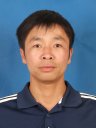
 Hao Gao
2 previous affiliations
- Full Professor · 2009–2026
- Jiangnan University2003–2009
- PhD student · 2006–2009
- MS student · 2003–2006
6 other authors named Hao Gao: Hao Gao (8 papers), Hao Gao (National University of Defense Technology · 3 papers), Hao Gao (Huazhong University of Science and Technology · 2 papers), Hao Gao (University of Glasgow · 2 papers), Hao Gao (University of Kansas · 1 paper), and 1 more
Research Overview
Hao Gao focuses on computer vision, virtual reality systems, and the optimization of machine learning models. Early work addressed object tracking and novel view synthesis, evolving into sustained research on face hallucination and telexistence drone control. More recently, the focus has expanded to include facial age transformation, interpretable autonomous driving, and foundational methods in reinforcement learning.
Research Trajectory
Hao Gao’s research trajectory demonstrates a dual focus on applied visual computing—spanning object tracking, view synthesis, and facial analysis—and the foundational optimization of machine learning models.
Early work in the mid-2010s concentrated on computer vision tasks, particularly object tracking. In Online Learning a High-Quality Dictionary and Classifier Jointly for Multitask Object Tracking, Gao and collaborators formulated object tracking within a particle filter framework as a binary classification problem. This approach integrated class label information into the dictionary learning process, allowing the system to jointly optimize a compact dictionary and a linear classifier for more robust tracking.
By the late 2010s, Gao assumed a senior role in projects addressing complex image synthesis and reconstruction challenges. A major focus was novel viewpoint synthesis from highly constrained inputs. Leading the work in Depth-Assisted Full Resolution Network for Single Image-Based View Synthesis, Gao’s team tackled the ill-posed problem of generating surrounding viewpoints from a single image. They designed a full-resolution network to preserve fine-scale features and prevent blurring, while incorporating a pre-trained relative depth estimation network to infer flow fields and capture three-dimensional structural information.
Concurrently, Gao directed research toward robust face recognition and hallucination, particularly under challenging conditions like occlusion and pose variation. This work culminated in Face image super-resolution with pose via nuclear norm regularized structural orthogonal Procrustes regression, where Gao served as principal investigator. The proposed method utilized orthogonal Procrustes regression to correct pose variations between low-resolution inputs and target images, applying a nuclear norm constraint to preserve structural information and generate near-frontal high-resolution faces suitable for downstream recognition tasks.
Parallel to these advances in visual computing, the 2019 evidence indicates Gao's active engagement with core machine learning optimization, particularly in the context of large-scale and distributed systems. This period includes contributions to the research direction Robust Data Pruning and the Noise Sensitivity of Hard Samples and the broader area of Adaptive Importance Sampling for Accelerated Stochastic Optimization. These efforts addressed the computational bottlenecks of training modern deep learning models by moving away from uniform data sampling toward more efficient, informative subset selection. Additionally, Gao contributed to themes such as Convergence Parity for Compressed Decentralized Optimization and work in the area of Adaptive Quantization for Efficient Distributed Learning, focusing on mitigating the communication overhead in peer-to-peer and federated learning environments.
Entering the 2020s, Gao expanded into cyber-physical systems, specifically the integration of virtual reality (VR) and unmanned aerial vehicles (UAVs) for telexistence and 3D reconstruction. As senior author on Virtual Reality Aided High-Quality 3D Reconstruction by Remote Drones, Gao guided the development of a telexistence drone system equipped with onboard deep learning computation. This system addressed traditional inefficiencies in drone-based photogrammetry by allowing users to control the drone via a head-mounted display, ensuring complete coverage of target objects and significantly reducing offline post-processing time.
Most recently, Gao’s trajectory has continued to diversify across generative AI and autonomous systems. In 2024, Gao led Diverse and Lifespan Facial Age Transformation Synthesis with Identity Variation Rationality Metric, introducing a framework to generate plausible and diverse facial aging patterns while maintaining identity consistency across a subject's lifespan. The following year, Gao participated as a collaborating author in Top-Down Attention-Based Mechanisms for Interpretable Autonomous Driving, which proposed a Prediction-Driven Attention Network (PDANet) to align vehicle trajectory predictions with interpretable action decisions, mimicking human perceptual attention.
Current Directions
The most recent papers and themes in the evidence highlight a continued interest in both applied autonomous systems and foundational learning paradigms. In applied domains, recent work investigates interpretable decision-making for autonomous vehicles and the generation of diverse, identity-preserving facial transformations over time.
On the algorithmic front, Gao is currently engaged with advanced reinforcement learning methodologies. This includes contributions to the broader area of Out of Distribution Overestimation in Offline Reinforcement Learning, which seeks to safely train agents on static datasets without risky online exploration. Additionally, recent themes reflect an interest in the research direction Reinforcement Learning as Weighted Supervised Learning, exploring sample-efficient and stable alternatives to traditional policy gradient and value-based methods.
Profile updated
Loading new papers…
Loading research neighbors…
See something wrong? Report a mistake