

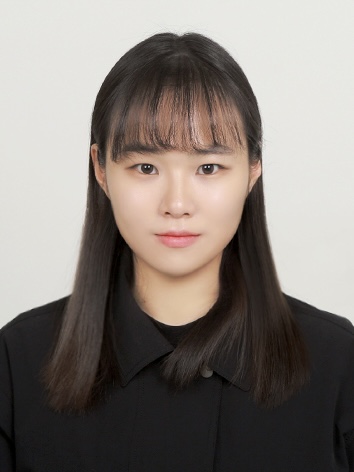
 Hansol Lee
· 4 previous affiliations
- CLO Virtual FashionSince 2025
- ML Engineer · Since 2025
- Researcher · 2023–2025
- MS student · 2021–2023
- Sookmyung Women's University2016–2021
- Undergrad student · 2016–2021
2 other authors named Hansol Lee: Hansol Lee (Stanford University · 4 papers), Hansol Lee (1 paper)
Research Overview
Hansol Lee focuses on deep learning-driven computer vision, with a primary specialization in 3D human modeling, avatar reconstruction, and the generation of complex 3D scenes. Lee’s research addresses the technical challenges of high-fidelity geometric reconstruction from limited input data, such as single RGB images or monocular video sequences. This work frequently explores the intersection of explicit mesh-based tracking and implicit neural representations to capture dynamic details, including secondary motion in clothing and complex multi-person interactions.
Research Trajectory
Lee’s research trajectory reflects an evolution from 2D-3D hybrid methods for object manipulation toward sophisticated implicit representations for dynamic human modeling and multi-person scene understanding. Early work in 2022 established a foundation in physically consistent image synthesis, specifically addressing the limitations of traditional 2D image-to-image translation when applied to 3D interactions. This period was characterized by efforts in Removing Objects and Their Environmental Side Effects and ensuring that transferred objects maintained realistic spatial relationships with human actors.
In 2023, Lee’s focus shifted toward the high-fidelity reconstruction of individual human subjects. This phase of work emphasized the preservation of identity and the modeling of temporal dynamics. By utilizing 3D Morphable Models (3DMM) and refined UV maps, Lee developed methods for intuitive facial reenactment that bridged the gap between 2D warping and 3D structural integrity. Concurrently, Lee began investigating Inertia Aware Neural Human Modeling, moving beyond static pose estimation to capture "secondary motion"—the physically driven deformation of clothing that occurs as a result of movement history rather than just instantaneous joint angles.
By 2024, Lee’s research expanded to address the complexities of multi-person environments and the synthesis of Generative Simulation for Scaling Embodied AI. A significant portion of this recent work focuses on Reconstructing 3D Interactions Under Severe Mutual Occlusion, where the presence of multiple actors creates significant data loss for standard reconstruction algorithms. Lee has addressed this by developing Collision Awareness for Physically Plausible 3D Reconstruction, ensuring that reconstructed meshes do not interpenetrate. This period also marks an adoption of diffusion-based architectures and Surface Normal Priors for High-Fidelity 3D Reconstruction to improve the structural accuracy and local detail of clothed human models.
Current Directions
Lee’s current research is centered on the development of implicit field representations that can simultaneously handle geometry, identity, and contact physics. A primary objective is the estimation of contact points in multi-person scenarios without the need for explicit contact labels during training. This involves the use of local pixel-aligned features paired with global scene transformers to resolve ambiguities caused by heavy occlusion.
Additionally, Lee is exploring the application of diffusion models to 3D reconstruction, specifically moving away from point-wise occupancy estimations toward line-wise estimations along camera rays. This approach aims to eliminate common structural artifacts, such as floating limbs or duplicated body parts, which frequently occur in "in-the-wild" image reconstructions. This work continues to push the boundaries of how generative models can be constrained by physical priors to produce realistic, animatable 3D avatars.
Representative Work
In ContactField: Implicit Field Representation for Multi-Person Interaction Geometry, Lee introduced a novel implicit representation designed for 3D multi-person interactions. The framework addresses the challenge of reconstructing body geometry and individual identities in scenes where actors are in close proximity or touching. By combining local features with a global transformer, the model effectively estimates contact points and handles heavy occlusions, providing a more robust solution for scene understanding than previous occupancy-based methods.
Lee’s work on Dynamic Appearance Modeling of Clothed 3D Human Avatars using a Single Camera addresses the limitations of pose-only models by incorporating movement history into the reconstruction process. The framework uses a compositional approach that combines explicit mesh tracking with implicit neural rendering to capture the swaying and wrinkling of clothing. This method allows for the creation of high-fidelity avatars from monocular video that exhibit realistic dynamic behaviors.
The research presented in IFaceUV: Intuitive Motion Facial Image Generation by Identity Preservation via UV map focuses on facial reenactment. Lee developed a pipeline that utilizes UV maps and 3DMMs to ensure that the subject's identity remains consistent across various expressions and poses. The system allows for high-fidelity control, including audio-driven animation, while maintaining photo-realism and structural integrity.
In the area of hand-object interaction, HOReeNet: 3D-aware Hand-Object Grasping Reenactment provides a differentiable framework for transferring objects between images. Lee’s approach ensures that the target hand's 3D pose is automatically adjusted to achieve a physically plausible grasp. By integrating 3D mesh reconstruction with neural rendering, the framework overcomes the inconsistencies typical of 2D-based image manipulation.
Lee also contributed to the development of 3D Reconstruction of Interacting Multi-Person in Clothing from a Single Image, which focuses on producing physically plausible reconstructions of multiple people. The pipeline utilizes a "contact signature" detector and high-fidelity geometric priors to prevent mesh interpenetration, a common failure mode in multi-subject 3D modeling.
Finally, Lee participated in the development of PIDiffu: Pixel-aligned Diffusion Model for High-Fidelity Clothed Human Reconstruction. This work replaces traditional point-wise occupancy networks with a diffusion-based line-wise estimation strategy. By modeling geometry along camera rays and employing Feature-wise Linear Attention (FiLA), the model improves the structural accuracy of reconstructed bodies and demonstrates enhanced generalization to complex, real-world clothing.
Profile updated
Loading new papers…
Other researchers whose papers cluster into the same research directions — a proxy for overlapping technical interests and shared intellectual neighborhoods.
See something wrong? Report a mistake