

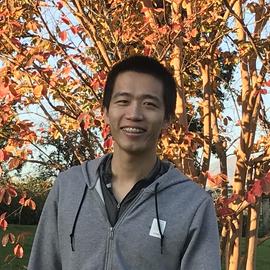
 Hanqing Zeng
· 3 previous affiliations
- Meta (United States)Since 2020
- Senior AI Research Scientist · Since 2022
- Intern · 2021
- Research Intern · 2020
- University of Southern California2016–2022
- Graduate Research Assistant · 2016–2022
- University of Hong Kong2012–2016
- Undergraduate Research Assistant · 2015–2016
- Bachelor's degree, Electronics · 2012–2016
Research Overview
Hanqing Zeng focuses on graph representation learning, large language model architecture, and scalable machine learning systems. His trajectory spans from foundational methods for scaling graph neural networks to recent innovations in parameter-efficient fine-tuning and mixture-of-experts models. He currently develops efficient models for web-scale recommendation and language processing.
Research Trajectory
Hanqing Zeng’s early research addressed fundamental scalability and expressivity bottlenecks in Graph Neural Networks (GNNs). Standard GNN architectures historically suffered from a design flaw where the depth of the network was strictly coupled to its receptive field, or "scope." As models grew deeper to capture more complex patterns, they inevitably encountered exponential neighborhood expansion and degraded performance. To resolve this, he introduced Decoupling the Depth and Scope of Graph Neural Networks. This work proposed the SHADOW-GNN design principle, which extracts a localized, bounded-size subgraph before applying a GNN of arbitrary depth. By decoupling these two properties, the architecture advanced the research direction of Scaling Graph Neural Networks Beyond Neighbor Explosion and provided a robust solution to challenges in the area of Over-Smoothing in Graph Neural Networks, enabling high-performance training on massive graphs using standard hardware.
Building on this philosophy of decoupling entangled graph modalities, he subsequently developed Mixture of Weak and Strong Experts on Graphs. Recognizing that realistic graphs contain both rich node self-features and informative neighborhood structures, he designed the Mowst framework to process these signals adaptively. Mowst pairs a lightweight Multi-layer Perceptron (the "weak expert") with an off-the-shelf GNN (the "strong expert"). Using a confidence-based gating mechanism derived from the dispersion of the weak expert's prediction logits, the system dynamically determines whether a specific node requires full neighborhood context or can be classified using local features alone. This approach yielded significant accuracy gains across both homophilous and heterophilous graphs while minimizing computational overhead.
As a Research Scientist at Meta AI, his focus expanded to include web-scale interactive systems and recommendation engines. In this domain, he explored the broader area of Dynamic Preference Modeling in Interactive Systems with Retrieval Augmentation via User Interest Clustering. This work tackled the persistent "Goldilocks" problem in recommender systems: the struggle to find sufficient signal for users with sparse histories while simultaneously failing to capture the nuanced, multifaceted interests of highly active users. By clustering user interests to augment retrieval, the method provided a more adaptable and personalized recommendation pipeline.
More recently, his research has pivoted toward the architecture and efficient adaptation of Large Language Models (LLMs). A major contribution to this space is S'MoRE: Structural Mixture of Residual Experts for LLM Fine-tuning. Fine-tuning pre-trained LLMs typically forces a compromise between the parameter efficiency of methods like LoRA and the high model capacity of Mixture-of-Experts (MoE) architectures. S'MoRE bridges this gap by employing a hierarchical low-rank decomposition of expert weights, arranging them into a multi-layer tree structure. By routing input tokens through these sub-trees, the framework exponentially increases routing combinations and structural flexibility without adding parameters, achieving highly efficient and performant fine-tuning.
Continuing his work on LLM inference and architecture in 2026, he collaborated on several projects that rethink how language models process information and compose expertise. He participated in the development of Text Has Curvature, which introduced "Texture," a text-native discrete curvature signal. By measuring how language naturally curves based on prefix and suffix interactions, this work demonstrated that curvature can be treated as a measurable property of two-sided inference, leading to improvements in prompt compression and retrieval-augmented generation without additional training.
Simultaneously, he contributed to DAG-MoE: From Simple Mixture to Structural Aggregation in Mixture-of-Experts. This architecture moves beyond the traditional weighted-sum approach of combining experts by organizing selected experts into a learned Directed Acyclic Graph (DAG). This allows for complex, multi-step interactions between experts within a single layer, boosting the model's reasoning capabilities. Finally, he collaborated on Token-Level LLM Collaboration via FusionRoute, a framework designed to facilitate dynamic routing among multiple specialized LLMs. FusionRoute employs a lightweight router that not only selects the optimal expert for each token but also provides complementary signals to correct expert mistakes, enabling state-of-the-art performance across diverse tasks without relying on a single monolithic generalist model.
Current Directions
The most recent papers in the evidence indicate a strong focus on the structural efficiency and collaborative capabilities of Large Language Models. A primary theme is the evolution of Mixture-of-Experts (MoE) architectures. Rather than treating experts as independent, parallel pathways, recent work investigates hierarchical and graph-based expert routing—such as tree-structured residual experts and Directed Acyclic Graph (DAG) aggregations—to maximize model capacity and reasoning depth without inflating parameter counts or computational overhead.
Additionally, current work addresses the orchestration of specialized models during inference. By developing token-level routing mechanisms that allow multiple distinct LLMs to collaborate dynamically, this research aims to achieve the broad competence of massive generalist models through the efficient composition of smaller, domain-specific experts.
Profile updated
Loading new papers…
Other researchers whose papers cluster into the same research directions — a proxy for overlapping technical interests and shared intellectual neighborhoods.
See something wrong? Report a mistake