

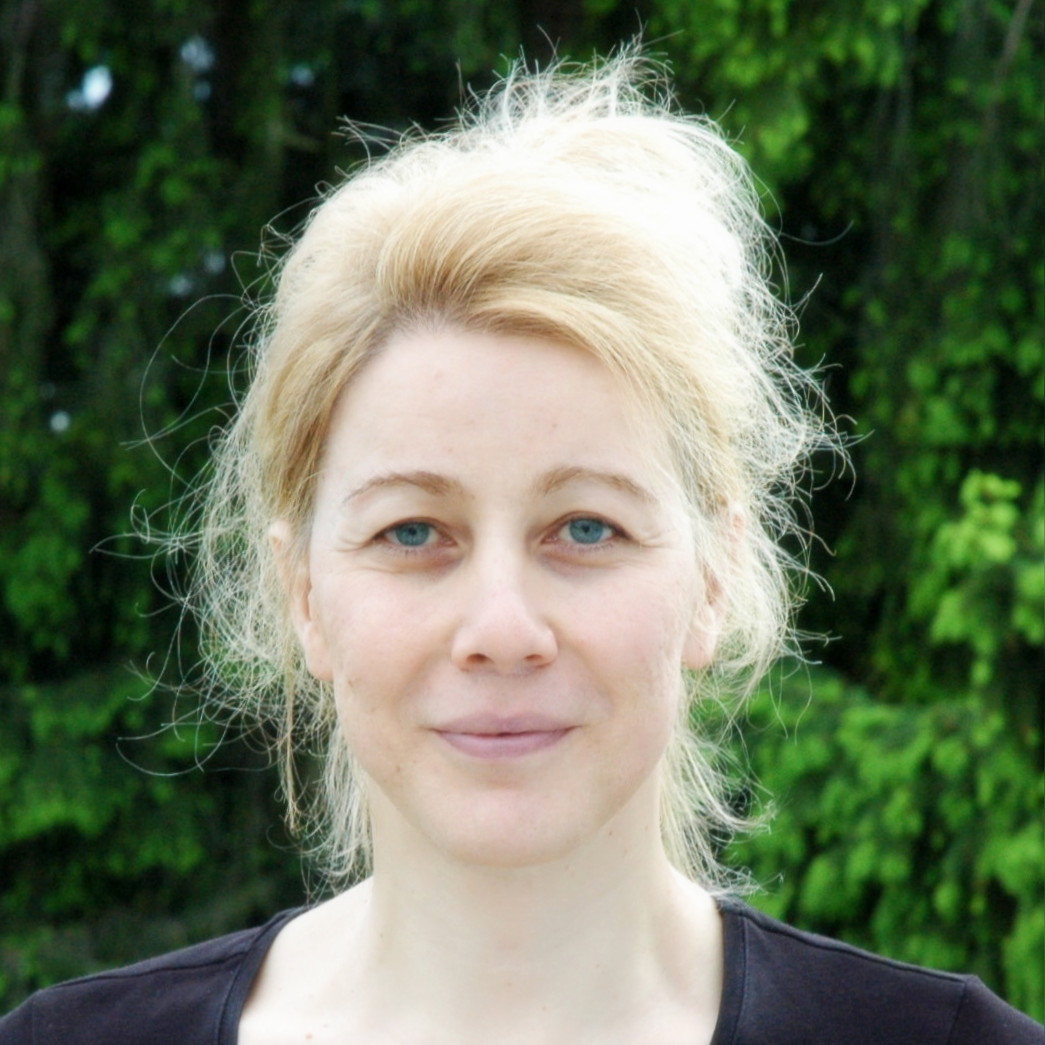
 Hannah Bast
· 5 previous affiliations
- University of FreiburgSince 2009
- Full Professor (W3) · Since 2009
- MMCI Cluster of Excellence2008–2009
- Junior Research Group Leader (W2) · 2008–2009
- Google (United States)2008–2009
- Visiting Scientist · 2008–2009
- Max Planck Institute for Informatics2003–2008
- Research Group Leader (W2) · 2003–2008
- EE
Research Overview
Hannah Bast focuses on algorithmic graph theory, efficient search systems, and the integration of semantic knowledge with full-text retrieval. Her early work established improved bounds for matching algorithms and shortest-path heuristics in sparse and random graphs. More recently, her research trajectory has expanded to include knowledge graph applications for training multimodal machine learning models.
Research Trajectory
Bast’s early research concentrated on foundational graph algorithms, particularly focusing on optimizing shortest-path and matching problems. As first author in 2003, she explored the single-source many-targets shortest-path (SSMTSP) problem in directed graphs with non-negative edge weights. In A Heuristic for Dijkstra's Algorithm with Many Targets and Its Use in Weighted Matching Algorithms, she and her co-authors developed a heuristic for Dijkstra's algorithm that significantly improved the running time for weighted bipartite matching problems, where the number of targets can vary widely.
Following this, Bast led an average-case analysis of the maximum cardinality matching problem. In the 2004 conference paper Matching Algorithms Are Fast in Sparse Random Graphs, she demonstrated that in bipartite or general random graphs, every non-maximum matching possesses an augmenting path of length $O(\log n)$ with high probability. This theoretical result proved that standard augmenting path algorithms—such as the Hopcroft-Karp algorithm for bipartite graphs and the Micali-Vazirani algorithm for general graphs—operate in $O(m \log n)$ time with high probability, a substantial improvement over their worst-case running times. This work was subsequently expanded into a 2006 journal article, also titled Matching Algorithms Are Fast in Sparse Random Graphs.
Around 2007, Bast’s focus shifted toward information retrieval and the engineering of efficient search systems. She led the development of ESTER, a search engine designed to seamlessly combine full-text search with ontology-based semantic search. In ESTER: efficient search on text, entities, and relations, she detailed the system's underlying query engine, which reduced complex SPARQL graph-pattern queries to a combination of two highly optimized basic operations: prefix search and join. This architecture allowed for a compact index and interactive querying capabilities. Bast further demonstrated the practical scalability of this system in Semantic Full-Text Search with ESTER: Scalable, Easy, Fast (2008), showcasing its ability to process combined queries over the English Wikipedia and the Yago ontology with response times under 100 milliseconds.
Following a gap in the provided publication record, Bast’s most recent work indicates a transition toward applied machine learning and data curation. As a co-author (fifth of six) on the 2025 preprint Using Knowledge Graphs to harvest datasets for efficient CLIP model training., she participated in research exploring how structured knowledge graphs can be utilized to gather and refine training data for contrastive language-image pretraining (CLIP) models.
Current Directions
The most recent papers in the evidence address the intersection of structured semantic data and the training pipelines of modern neural networks. Recent collaborative work investigates how knowledge graphs can be systematically leveraged to harvest datasets, specifically aiming to improve the efficiency of training multimodal architectures like CLIP models. This suggests a current research interest in utilizing explicit semantic structures to curate high-quality data for machine learning, bridging her historical expertise in ontologies and search with contemporary challenges in multimodal AI.
Profile updated
Loading new papers…
Other researchers whose papers cluster into the same research directions — a proxy for overlapping technical interests and shared intellectual neighborhoods.
See something wrong? Report a mistake