

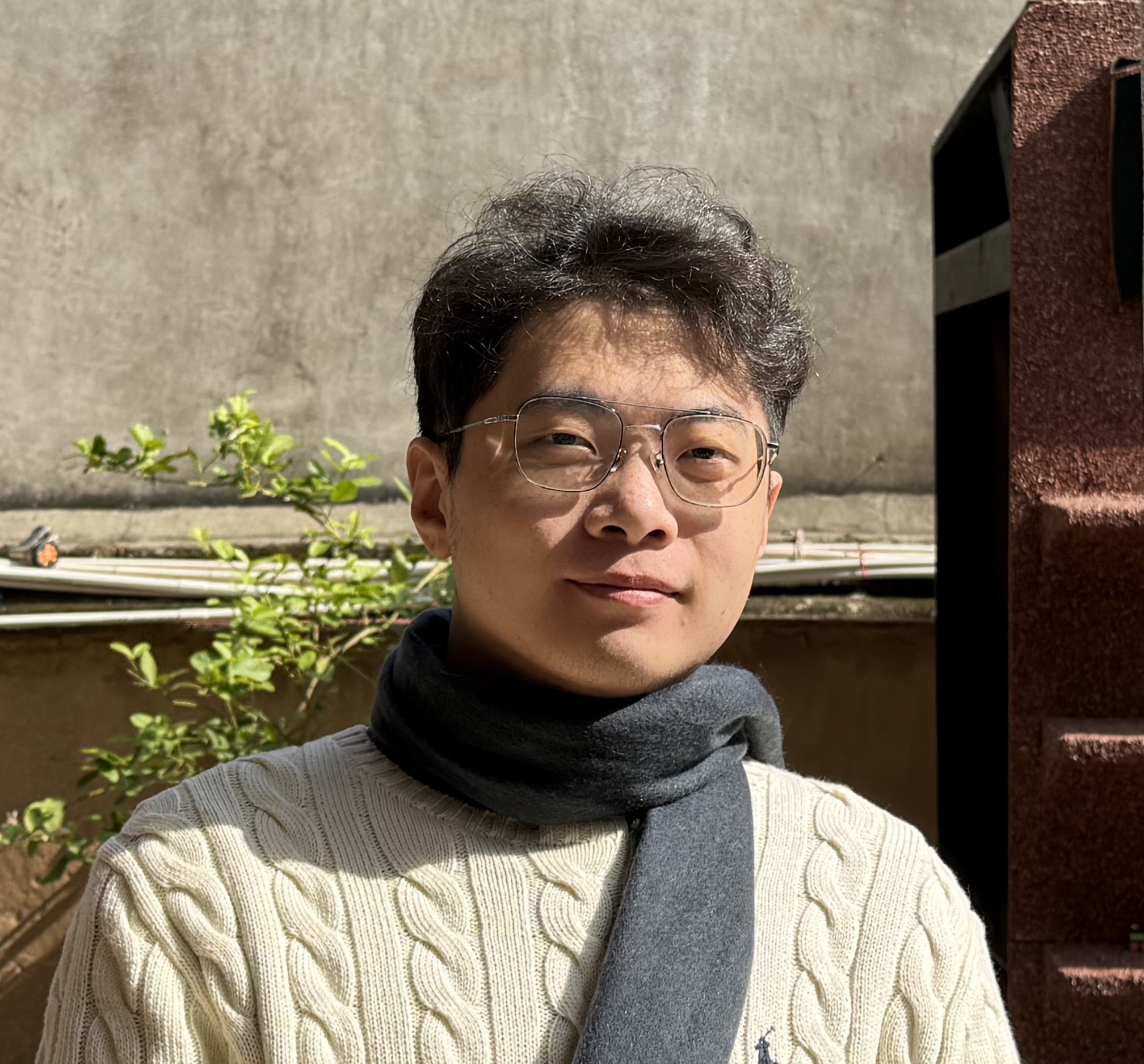
 Hanmo Liu
· 2 previous affiliations
- Huawei Technologies (China)Since 2025
- Researcher · Since 2025
- PhD student · 2021–2025
- Undergrad student · 2017–2021
Research Overview
Hanmo Liu focuses on efficient machine learning, continual learning across diverse data modalities, and automated neural network design. His early work addressed data selection and incremental learning in tabular and spatial domains, establishing methods to retain critical knowledge over time. Recently, his research investigates leveraging large language models to guide the generation and optimization of graph neural networks and agentic workflows.
Research Trajectory
Hanmo Liu’s research initially concentrated on the challenges of incremental learning and data selection, seeking to maintain model performance over time without catastrophic forgetting or prohibitive computational costs. His early investigations addressed data overflow in robotic localization. In Identifying and updating local optimization methods in extended Kalman filter SLAM, he developed a least-recently-used algorithm and weighted landmark updates to retain high-quality historical data, contributing to the broader area of Usage-Based Eviction for Scalable Knowledge Retention. Expanding these principles to tabular data, he introduced Incremental Tabular Learning on Heterogeneous Feature Space, which tackled the real-world scenario where incoming datasets possess sequentially increasing attributes rather than a static, homogeneous feature space. He subsequently advanced unsupervised continual learning paradigms with Effective Data Selection and Replay for Unsupervised Continual Learning, focusing on optimizing the replay of old data when label information is scarce.
As his work progressed into 2025, Liu increasingly applied selective learning techniques to dynamic and temporal graph structures. He proposed frameworks to handle real-world temporal graphs where new node categories appear and old ones evolve. A Selective Learning Method for Temporal Graph Continual Learning introduced a strategy to efficiently maintain model performance by learning from optimized subsets of historical data rather than retraining on entire datasets. This focus on efficient graph updates was further developed in SIT: Selective Incremental Training for Dynamic Knowledge Graph Embedding and When Speed meets Accuracy: an Efficient and Effective Graph Model for Temporal Link Prediction, which collectively addressed the computational bottlenecks of maintaining accurate embeddings in evolving networks, aligning with the research direction of Adaptive Graph Structure and Meta Learning.
More recently, Liu’s trajectory has shifted toward automating neural network design by leveraging the reasoning capabilities of large language models (LLMs). He developed methods to ground LLM suggestions in structured historical data, as detailed in Structuring Benchmark into Knowledge Graphs to Assist Large Language Models in Retrieving and Designing Models. This system organizes data-model-performance records into a knowledge graph, enabling the retrieval of effective architectures for unseen datasets without expensive retraining. Building on this foundation, Proficient Graph Neural Network Design by Accumulating Knowledge on Large Language Models empowered LLMs to systematically accumulate prior design knowledge to suggest specialized graph neural networks, advancing the fields of Topology Aware Graph Algorithm Design and Generative Algorithm Design via LLM Guided Evolution.
In parallel, Liu has explored fine-grained model optimization and interpretability. With collaborators, he treated model design as a sequence of adaptive edits in Beyond Model Base Retrieval: Weaving Knowledge to Master Fine-grained Neural Network Design, a contribution to the area of Transferable and Generative Neural Architecture Search. He also investigated the intersection of LLM reasoning and transparent modeling in Adaptive Concept Discovery for Interpretable Few-Shot Text Classification, bridging prototypical and discriminative concept architectures to achieve high accuracy with lower inference costs. Additionally, his participation in RobustFlow: Towards Robust Agentic Workflow Generation addressed the fragility of LLM-based agents, introducing preference optimization to ensure consistent execution graphs and contributing to the broader domain of Balancing Optimality and Resilience in Robust Reinforcement Learning.
Current Directions
The most recent papers in the evidence indicate a strong focus on integrating large language models with automated machine learning (AutoML) and graph neural network design. Current work investigates how structured historical knowledge can be woven into LLM prompts to guide the generation of highly optimized, task-specific architectures without the computational overhead of traditional neural architecture search. Additionally, recent research addresses the reliability and interpretability of LLM-driven systems. This includes developing dual-layer concept architectures for transparent few-shot text classification and designing robust training frameworks to stabilize agentic workflows against prompt variations and environmental uncertainty.
Profile updated
| Paper | Venue | Year |
|---|---|---|
| RobustFlow: Towards Robust Agentic Workflow GenerationGitHubDEFENSE-SEU/ | arXiv | 2025 |
| Incremental Tabular Learning on Heterogeneous Feature SpaceGitHubliuhanmo321/ | Proc. ACM Manag. Data | 2023 |
Loading new papers…
Other researchers whose papers cluster into the same research directions — a proxy for overlapping technical interests and shared intellectual neighborhoods.
See something wrong? Report a mistake