

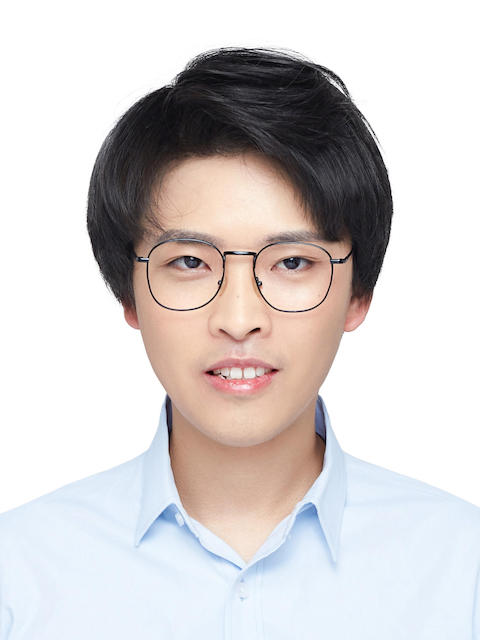
 Hanlin Chen
· 2 previous affiliations
- National University of SingaporeSince 2022
- PhD student · Since 2022
- Alibaba Group (China)2021–2022
- Researcher · 2021–2022
Research Overview
Hanlin Chen focuses on 3D computer vision, neural rendering, and efficient machine learning architectures. His early work explored binarized neural architecture search for highly compressed object recognition models. More recently, his research emphasizes generalizable neural scene representations and 3D Gaussian splatting, aiming to improve real-world visual perception, surface reconstruction, and interactive scene understanding.
Research Trajectory
Chen’s early research focused on model compression and efficient deep learning architectures. He addressed the computational bottlenecks of neural architecture search (NAS) by exploring search spaces composed of binarized convolutions. In Binarized Neural Architecture Search, he introduced channel sampling and operation space reduction to make differentiable NAS feasible for highly compressed models. This methodology was further formalized in Binarized Neural Architecture Search for Efficient Object Recognition, which demonstrated how to automatically design networks that maintain accuracy on embedded devices. Together, these projects advanced the broader research direction of Bridging the Binary Neural Network Accuracy Gap.
Transitioning to 3D computer vision, Chen began investigating neural implicit representations and their capacity to model complex environments. A key challenge in this domain is updating models with streaming data without catastrophic forgetting. To address this, he developed Incremental Learning for Neural Radiance Field with Uncertainty-Filtered Knowledge Distillation, a student-teacher framework that uses an uncertainty-based filter to discard unreliable hallucinations while retaining previously learned scene geometry. Expanding neural representations beyond pure geometry and radiance, he subsequently introduced GNeSF: Generalizable Neural Semantic Fields. This framework performs 3D semantic segmentation on entirely unseen scenes by aggregating 2D semantic maps via a soft voting mechanism, achieving high-quality 3D labels without requiring per-scene retraining or expensive 3D ground truth.
As 3D Gaussian Splatting emerged as a powerful paradigm for real-time rendering, Chen's work increasingly focused on integrating these explicit primitives with implicit surface models to improve geometric accuracy. In NeuSG: Neural Implicit Surface Reconstruction with 3D Gaussian Splatting Guidance, he jointly optimized a neural implicit surface representation with Gaussian splatting, using dense point clouds to guide surface reconstruction while leveraging implicit normals to refine the Gaussians. He deepened this approach in VCR-GauS: View Consistent Depth-Normal Regularizer for Gaussian Surface Reconstruction, which introduced a "D-Normal" regularizer that couples surface normals with Gaussian positions. This work contributed significantly to the areas of Surface Reconstruction with Constrained Gaussian Splatting and Surface Normal Supervision for Neural Geometry Optimization, while also intersecting with the field of Geometric Consistency Filtering for Neural Reconstruction. Concurrently, he explored the intersection of 3D environments and large language models in ChatSplat: 3D Conversational Gaussian Splatting, embedding LLM-compatible features directly into 3D space to enable real-time, multi-level conversational interactions with objects and scenes.
In his most recent trajectory, Chen has focused on scaling these representations to larger environments and specific complex domains. He oversaw the development of FreeSplat++: Generalizable 3D Gaussian Splatting for Efficient Indoor Scene Reconstruction, a feed-forward framework that reconstructs large-scale indoor scenes in seconds through efficient cross-view aggregation and incremental pixel-wise fusion. With collaborators, he also applied these techniques to human modeling in Generalizable Human Gaussians from Single-View Image, combining structural priors with diffusion models to hallucinate consistent back-view details. This effort advanced the direction of Resolving Occlusion Ambiguity in Single-View 3D Reconstruction as well as Real-Time Scene Representation with 3D Gaussian Splatting. Extending geometric precision to city-scale environments, he participated in the design of UrbanGS: Efficient and Scalable Architecture for Geometrically Accurate Large-Scene Reconstruction, which utilizes spatially adaptive pruning and D-Normal regularization to manage memory and maintain high fidelity across massive urban landscapes.
Current Directions
The most recent papers in the evidence indicate a strong focus on scaling and generalizing 3D Gaussian Splatting for diverse, large-scale environments. Current work investigates feed-forward architectures that can rapidly reconstruct complex indoor and city-scale scenes without the need for lengthy per-scene optimization. A central theme in this research is the development of efficient spatial pruning, cross-view aggregation, and geometric regularization techniques to manage the memory overhead of massive scenes while preserving high-fidelity surface details. Additionally, recent collaborative efforts address the challenge of single-view 3D reconstruction, utilizing structural priors and diffusion models to resolve occlusion ambiguities and generate consistent, fully realized 3D subjects from limited visual data.
Profile updated
Loading new papers…
Other researchers whose papers cluster into the same research directions — a proxy for overlapping technical interests and shared intellectual neighborhoods.
See something wrong? Report a mistake