

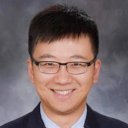
 Hang Qiu
3 previous affiliations
- waymo2022–2023
- Researcher · 2022–2023
- Stanford University2020–2022
- Postdoc · 2020–2022
- University of Southern California2013–2020
- PhD student · 2013–2020
Research Overview
Hang Qiu focuses on networked autonomous systems, cooperative robotics, and machine learning systems. His work spans from early developments in vehicular context sensing and wireless coordination to recent architectures for bandwidth-efficient cooperative perception and active learning. Currently, he investigates adaptive data selection and multi-sensor calibration to enhance the reliability and scalability of connected autonomous vehicles.
Research Trajectory
Early in his career, Qiu’s research investigated the foundational challenges of vehicular sensing, positioning, and wireless networking. He participated in the development of CARLOG: a platform for flexible and efficient automotive sensing (2014), which proposed combining low-level vehicular sensor dynamics with cloud databases to detect events and trigger actions. Recognizing that precise positioning is critical for context-aware navigation, he subsequently collaborated on CARLOC: Precise Positioning of Automobiles (2015). This system achieved lane-level precision in obstructed urban environments by unifying digital map matching, vehicular odometry, and crowd-sourced landmark estimates into a probabilistic framework.
To support the increasing data demands of mobile and crowded environments, Qiu also explored wireless coordination techniques. He introduced High-rate WiFi broadcasting in crowded scenarios via lightweight coordination of multiple access points (2016), a system designed to deliver high multicast rates capable of supporting multiple high-definition video streams by coordinating access point transmissions.
Returning to vehicular systems, his focus shifted toward the integration of multi-vehicle data to overcome the physical limitations of individual sensors. Following his work on Towards Robust Vehicular Context Sensing (2018), he developed AVR: Augmented Vehicular Reality (2018). AVR broadened a vehicle’s visual horizon by enabling it to wirelessly share visual information with nearby vehicles, addressing the line-of-sight occlusions and range limitations inherent to 3D cameras. This interest in shared vehicular intelligence led to further work on spatial awareness, including participation in CarMap: Fast 3D Feature Map Updates for Automobiles (2020).
As autonomous driving systems increasingly relied on data-driven methods, Qiu advanced the paradigm of cooperative perception. With collaborators, he developed Coopernaut: End-to-End Driving with Cooperative Perception for Networked Vehicles (2022), an end-to-end learning model that encodes LiDAR information for cross-vehicle sharing, enhancing vision-based driving in emergency situations. To address the networking bottlenecks of sharing high-dimensional sensor data, he introduced AutoCast: scalable infrastructure-less cooperative perception for distributed collaborative driving (2022). AutoCast coordinates vehicles using direct vehicle-to-vehicle communication, optimally scheduling transmissions by analyzing the positional relationships and trajectory evolution of traffic participants.
Parallel to his work in robotics and networking, Qiu has investigated the deployment and training of machine learning systems, particularly at the edge. He explored the operational challenges of edge computing in ML-EXray: Visibility into ML Deployment on the Edge (2022). Addressing the high costs of generating ground-truth data for model training, he developed MCAL: Minimum Cost Human-Machine Active Labeling (2023). This iterative approach minimizes overall annotation expenses by jointly determining which samples require human labeling and which can be auto-labeled by a trained classifier. This work contributes significantly to the research direction of Adaptive Scheduling and Budgeting for Active Learning, as well as the broader area of The Computational Cost of Active Learning and ongoing work in Detecting Diminishing Returns in Active Learning Loops.
As cooperative autonomous systems mature, securing their data exchanges has become a critical requirement. Qiu recently addressed these vulnerabilities in CATS: A Framework for Cooperative Autonomy Trust and Security (2025). The framework mitigates the limitations of existing security protocols, specifically targeting the detection delays common in reputation-based approaches and the high communication overhead associated with majority-based methods.
Current Directions
Recent work investigates the efficiency and accuracy of multi-sensor autonomous systems, focusing heavily on calibration and bandwidth optimization for cooperative swarms. The most recent papers in the evidence address the practical deployment challenges of fusing and transmitting high-dimensional spatial data.
In the domain of sensor fusion, Qiu’s lab has explored target-less calibration techniques. BEVCalib: LiDAR-Camera Calibration via Geometry-Guided Bird’s-Eye View Representation (2025) fuses features from both LiDAR and camera data using a geometry-guided decoder, improving calibration accuracy in challenging real-world scenarios without relying on physical targets.
Simultaneously, his research continues to push the boundaries of bandwidth-efficient collaborative perception. COOPERTRIM: Adaptive Data Selection for Uncertainty-Aware Cooperative Perception (2026) introduces a framework that dynamically adapts data volume based on environmental complexity. By leveraging conformal temporal uncertainty, the system allows autonomous agents to share only the most relevant, changing features of a scene, drastically reducing the bandwidth required for cooperative perception without sacrificing situational awareness.
Profile updated
Loading new papers…
Other researchers whose papers cluster into the same research directions — a proxy for overlapping technical interests and shared intellectual neighborhoods.
See something wrong? Report a mistake