

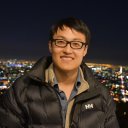
 Hang Ma
· 3 previous affiliations
- Simon Fraser UniversitySince 2019
- Assistant Professor · Since 2019
- University of Southern California2014–2019
- PhD student · 2014–2019
- McGill University2012–2014
- MS student · 2012–2014
Research Overview
Hang Ma focuses on multi-agent path finding, task assignment, and automated planning for multi-robot systems. His research trajectory has evolved from foundational algorithms for collision-free navigation to lifelong planning frameworks that handle continuous streams of tasks in dynamic environments. His most recent work investigates optimal and bounded-suboptimal algorithms for multi-goal task assignment and path finding.
Research Trajectory
Hang Ma’s research initially focused on the intersection of target assignment and collision-free navigation for teams of agents. In 2016, he led the development of the Conflict-Based Min-Cost-Flow (CBM) algorithm in Optimal Target Assignment and Path Finding for Teams of Agents. This work addressed the combined target-assignment and path-finding (TAPF) problem in known terrains, minimizing the makespan for teams of agents that each needed to visit exactly one target.
By 2017, Ma’s focus expanded to accommodate the continuous, dynamic nature of real-world logistical environments, such as automated warehouses. He first-authored Lifelong Multi-Agent Path Finding for Online Pickup and Delivery Tasks, which introduced the multi-agent pickup and delivery (MAPD) problem. This work shifted the paradigm from one-shot planning to an online setting where agents must continuously attend to a stream of new delivery tasks. This contribution aligns with his broader engagement in the research direction of Lifelong Multi-Agent Path Finding for Continuous Operations.
In 2018, Ma led research into the temporal constraints of multi-agent systems, formalizing the Multi-Agent Path Finding with Deadlines (MAPF-DL) problem. In Multi-Agent Path Finding with Deadlines, he and his co-authors proved that maximizing the number of agents reaching their goals within a strict deadline is NP-hard. To solve this, they developed optimal algorithms utilizing reductions to flow problems and compact integer linear programming formulations, demonstrating significant scalability improvements.
Continuing to refine search algorithms for multi-agent systems, Ma proposed a novel combinatorial search framework in 2019. In Searching with Consistent Prioritization for Multi-Agent Path Finding., he moved away from fixed, rule-of-thumb priority orderings, instead exploring the space of partial priority orderings to improve solution quality and success rates in prioritized planning. During this period, he also collaborated as a second author on Task and Path Planning for Multi-Agent Pickup and Delivery, which adapted online MAPD algorithms to offline scenarios where all task release times are known in advance, allowing for more effective utilization of environmental information.
As his work matured, Ma increasingly applied these theoretical frameworks to specific industrial and logistical domains. In 2020, he participated as a middle author in Idle Time Optimization for Target Assignment and Path Finding in Sortation Centers. This research applied TAPF principles to automated sortation centers, focusing on minimizing the idle time of sorting stations to maximize overall facility throughput.
Current Directions
The most recent papers in the evidence, published in 2022, indicate a shift toward more complex, sequential task structures. Operating as a senior researcher and principal investigator, Ma's recent work addresses the multi-goal task assignment and path finding (MG-TAPF) problem.
This current direction investigates scenarios where tasks are no longer simple point-to-point deliveries, but rather consist of sequences of goal locations that agents must visit in order. The recent research formalizes the theoretical complexity of MG-TAPF—proving it to be NP-hard to solve optimally—and focuses on developing both optimal and bounded-suboptimal algorithms. By building upon established multi-agent path finding techniques, this work aims to provide scalable solutions for environments where agents must execute complex, multi-stage operations without colliding.
Profile updated
Loading new papers…
Other researchers whose papers cluster into the same research directions — a proxy for overlapping technical interests and shared intellectual neighborhoods.
See something wrong? Report a mistake