

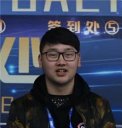
 Hanbin Zhao
· 1 previous affiliation
- Zhejiang UniversitySince 2014
- Assistant Professor · Since 2023
- PhD student · 2018–2023
- Undergrad student · 2014–2018
Research Overview
Hanbin Zhao focuses on continual learning, machine unlearning, and generative models within computer vision. His early work explored knowledge distillation and incremental learning for video and semantic segmentation, gradually shifting toward parameter-efficient adaptation for large vision-language architectures. Currently, he investigates advanced diffusion models for image super-resolution and multimodal foundation models for tactile perception.
Research Trajectory
His early research addressed computational efficiency and incremental learning in visual models. Beginning with model compression, he introduced a progressive, block-by-block approach to knowledge distillation that preserved the receptive field of the original teacher network, simplifying the training of compressed neural networks in Progressive Blockwise Knowledge Distillation for Neural Network Acceleration. Expanding into temporal data, he formalized the challenge of class-incremental video classification, developing a framework to decompose spatio-temporal features for better knowledge transfer and utilizing a dual-granularity approach to select representative frames in When Video Classification Meets Incremental Classes.
By 2022, his focus on continual learning deepened across multiple visual domains. To mitigate catastrophic forgetting under strict memory constraints, he proposed preserving auxiliary low-fidelity exemplar samples to make old-class knowledge transfer more efficient in Memory-Efficient Class-Incremental Learning for Image Classification. He also addressed continual semantic segmentation by analyzing context dependencies to rectify background semantic shifts in RBC: Rectifying the Biased Context in Continual Semantic Segmentation. Concurrently, he explored automated architecture design for multi-domain learning, utilizing neural architecture search to determine the optimal placement and structure of domain-specific modules in What and Where: Learn to Plug Adapters via NAS for Multidomain Learning. During this period, he also advanced generative models, introducing a learnable attribute memory to improve semantic consistency in text-to-image synthesis with Adma-GAN: Attribute-Driven Memory Augmented GANs for Text-to-Image Generation.
A major theme in his subsequent work is the use of parameter-efficient prompting to sustain model plasticity without forgetting. Contributing to the research direction of Structural Alignment and Composition of Parameter Efficient Adapters, he developed a bidirectional optimization strategy to explicitly separate old and new session class spaces in RCS-Prompt: Learning Prompt to Rearrange Class Space for Prompt-Based Continual Learning. He further refined this approach for Vision Transformers by maintaining a single, evolving set of prompts rather than a growing library, significantly reducing parameter overhead in PECTP: Parameter-Efficient Cross-Task Prompts for Incremental Vision Transformer. This work intersects with several broader efforts, including the area of Sequential Initialization and Merging for Continual Learning, the area of Parameter Importance Regularization for Continual Learning, and the research direction of Task Order Sensitivity in Continual Learning. He also contributed to few-shot architectures through the multi-grained framework detailed in MgSvF: Multi-Grained Slow versus Fast Framework for Few-Shot Class-Incremental Learning.
Alongside continual learning, he has directed research in specialized generative restoration. Leading a research team, he guided the development of a super-resolution framework tailored to the unique degradation models of animation production in APISR: Anime Production Inspired Real-World Anime Super-Resolution. He later extended generative enhancement to diffusion models, introducing a timestep-adaptive framework that selectively boosts frequency components—such as phase and amplitude—to preserve fine-grained textures in A Timestep-Adaptive Frequency-Enhancement Framework for Diffusion-based Image Super-Resolution.
Most recently, his work has expanded into multimodal foundation models and language model efficiency. He adapted pre-trained vision-language models for multi-domain class-incremental scenarios using instance-aware prompting in IAP: Improving Continual Learning of Vision-Language Models via Instance-Aware Prompting. Collaborating on novel sensory modalities, he participated in generating high-quality tactile images from text descriptions by decomposing tactile information into object-level and sensor-level features in TextToucher: Fine-Grained Text-to-Touch Generation. This work advances the research direction of Scaling Tactile Perception through Multimodal Foundation Models and the broader area of Generalizing Robotic Touch Across Heterogeneous Tactile Sensors. Finally, he contributed to extreme model compression techniques, helping to design a framework that replaces Transformer blocks with a lightweight fixed-point network for edge deployment in Equilibrium Language Models.
Current Directions
The most recent papers in the evidence indicate a dual focus on adapting large-scale foundation models and advancing high-fidelity generative synthesis. In the realm of continual learning, recent work investigates how to efficiently update pre-trained vision-language models across multiple domains without incurring memory bloat or catastrophic forgetting. Concurrently, research in generative models addresses the perception-distortion trade-off in diffusion-based image restoration by operating in the frequency domain to better balance global structure with fine-grained texture. Finally, recent collaborative efforts explore novel multimodal applications, such as synthesizing tactile sensory data from text using diffusion transformers, and investigate deep equilibrium models to compress large language models for memory-constrained edge devices.
Profile updated
Loading new papers…
Other researchers whose papers cluster into the same research directions — a proxy for overlapping technical interests and shared intellectual neighborhoods.
See something wrong? Report a mistake