

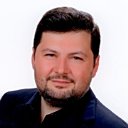
 Hakan Erdogan
· 7 previous affiliations
- Google DeepMind (United Kingdom)Since 2024
- Staff Research Scientist · Since 2025
- Research Scientist · 2024–2025
- Google (United States)2018–2024
- Research scientist · 2018–2024
- Microsoft (United States)2016–2018
- Researcher · 2016–2018
- Sabanci University2002–2016
- Faculty member · 2002–2016
- Visiting research staff · 2014–2015
- University of Michigan1993–1999
- MS PHD, EE: Systems · 1993–1999
- Middle East Technical University1989–1993
- Bachelor of Science (B.S.), Electrical and Electronics Engineering · 1989–1993
Research Overview
Hakan Erdogan focuses on audio signal processing, speech enhancement, and machine learning for acoustic modeling. His early trajectory addressed mathematical optimization in medical imaging before shifting to deep learning applications for noise-robust automatic speech recognition and multi-talker speech separation. His most recent work investigates generative audio models and multi-microphone speech enhancement techniques.
Research Trajectory
Erdogan’s early research in the late 1990s and early 2000s centered on mathematical optimization and signal processing for medical imaging. His foundational work addressed the challenges of image reconstruction in transmission tomography and positron emission tomography (PET). In Accelerated Monotonic Algorithms for Transmission Tomography (1998), he introduced a framework utilizing paraboloidal surrogate functions for penalized likelihood image reconstruction. As first author, he demonstrated how these low-curvature surrogate functions could guarantee monotonicity even for nonconvex log-likelihoods arising from background events like scatter, thereby simplifying the computational demands of the reconstruction process.
By the early 2010s, Erdogan’s focus had broadened to include sparse signal recovery and compressed sensing. Working as a co-author on A mixed integer linear programming formulation for the sparse recovery problem in compressed sensing (2013), he helped develop an exact mathematical formulation that utilized an auxiliary binary vector to locate recovered nonzero indices. This approach allowed the sparse optimization problem to be solved directly using existing mixed integer linear programming (MILP) solvers, rather than relying on approximations.
The mid-2010s marked a significant pivot in Erdogan’s trajectory toward acoustic modeling and speech processing, coinciding with the broader adoption of deep learning in these fields. He began investigating the use of recurrent neural networks to clean audio signals prior to transcription. In Speech Enhancement with LSTM Recurrent Neural Networks and its Application to Noise-Robust ASR (2015), he and his collaborators evaluated Long Short-Term Memory (LSTM) networks trained discriminatively for optimal speech reconstruction. The research demonstrated that LSTM-based speech enhancement could serve as an effective front-end processing step, significantly improving automatic speech recognition (ASR) performance in noisy environments.
Building on this foundation, Erdogan took a leading role in applying deep computational architectures to increasingly complex acoustic environments. In Deep Recurrent Networks for Separation and Recognition of Single-Channel Speech in Nonstationary Background Audio (2017), he investigated mask prediction networks for speech separation. As first author, he explored various loss functions for training deep neural networks to isolate target speech from highly nonstationary and challenging background noise, comparing these emerging deep learning architectures against conventional statistical techniques.
As voice capture technologies increasingly relied on microphone arrays, Erdogan’s research expanded into multi-channel processing, far-field speech recognition, and the difficult problem of overlapping speakers. He contributed to a series of collaborative projects focused on speaker-independent continuous speech separation (SI-CSS) and deep beamforming. A key development in this phase was Sequential Multi-Frame Neural Beamforming for Speech Separation and Enhancement (2021). In this work, Erdogan and his co-authors introduced an architecture that alternated between neural network-based spectral separation and beamforming-based spatial separation. The approach utilized a novel stabilized signal-to-noise ratio loss function and incorporated contextual frames to compute time-varying covariance matrices, significantly advancing the state of the art in multi-microphone speech enhancement.
Current Directions
The most recent papers in the evidence indicate that Erdogan continues to advance multi-microphone speech enhancement while also participating in large-scale research on generative audio. Recent work investigates unified machine learning models that jointly process raw microphone signals and spatial beamformer outputs to improve speech capture quality on edge devices. Additionally, Erdogan has contributed as part of a large research collaboration to the development of real-time generative music models. This recent direction explores open-weights live music models capable of producing continuous audio streams with synchronized, prompt-based user control over acoustic style, representing an expansion of his deep learning expertise into real-time generative acoustics.
Profile updated
Loading new papers…
Other researchers whose papers cluster into the same research directions — a proxy for overlapping technical interests and shared intellectual neighborhoods.
See something wrong? Report a mistake