

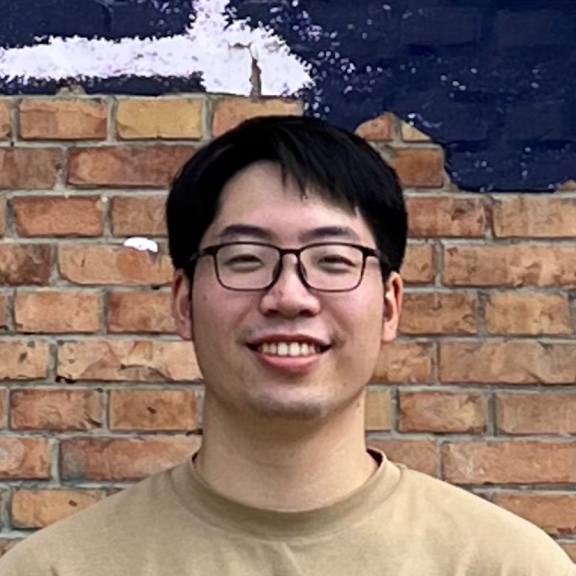
 Haizhou Shi
· 6 previous affiliations
- Doctor of Philosophy - PhD, Computer Science · 2022–2027
- Current
- Salesforce (United States)2025–2026
- AI Research Intern · 2025–2026
- Machine Learning Research Intern · 2024
- Zhejiang University2015–2022
- MS student · 2019–2022
- Undergrad student · 2015–2019
- OPPO2020–2021
- Research Intern · 2020–2021
- Deep Learning Intern · 2019
Research Overview
Haizhou Shi focuses on developing reliable methods for adapting machine learning models, with specific emphasis on uncertainty estimation and continual learning. His early research explored generalizable representations across self-supervised, weakly-supervised, and federated paradigms. Currently, his work centers on Bayesian deep learning approaches and alignment strategies to improve the reasoning capabilities and reliability of large language models.
Research Trajectory
Haizhou Shi’s early research investigated cross-modal representations and self-supervised learning frameworks. In 2019, he developed Informative Visual Storytelling with Cross-modal Rules, a framework that utilizes association rule mining to map convolutional neural network filter activations to semantic concepts. By injecting these inferred concepts into a sequence-to-sequence model, the approach generated more concrete and visually grounded narratives, particularly in data-scarce environments. Expanding into self-supervised learning, he introduced Run Away From your Teacher: a New Self-Supervised Approach Solving the Puzzle of BYOL (2020). This work provided an interpretable framework to explain how contrastive learning models can avoid collapse without negative samples by simultaneously aligning views and diverging from a mean teacher model.
Building on these foundational representation techniques, his focus shifted toward improving model robustness in noisy and incremental learning scenarios. With collaborators, he proposed CIL: Contrastive Instance Learning Framework for Distantly Supervised Relation Extraction (2021). By pairing instances with augmented versions of themselves and contrasting them against other relational clusters, the framework extracted more reliable information from noisy datasets, contributing to the broader research direction of Understanding the Computational Overhead of Contrastive Learning. That same year, he addressed challenges in the area of Representation Drift in Continual Learning with Revisiting Catastrophic Forgetting in Class Incremental Learning. This research decomposed catastrophic forgetting into intra-phase forgetting, inter-phase confusion, and classifier deviation, introducing a label-guided contrastive learning framework to create highly separable data representations.
Between 2022 and 2024, Shi continued to refine continual learning and representation strategies across diverse architectures. He analyzed the limitations of resource-constrained models in On the Efficacy of Small Self-Supervised Contrastive Models without Distillation Signals (2022), demonstrating how small models can complete pretext tasks without overfitting even in the absence of large teacher models. He later formalized continual learning theory in A Unified Approach to Domain Incremental Learning with Memory: Theory and Algorithm (2023). This work revealed that several popular continual learning methods are special cases of a single generalization bound, allowing for adaptive balancing of new knowledge and historical memory. Applying robust representation techniques to graph structures, he developed MARIO: Model Agnostic Recipe for Improving OOD Generalization of Graph Contrastive Learning (2024), which combined adversarial data augmentation with an information bottleneck to help Graph Neural Networks focus on invariant features under distribution shifts. Synthesizing his expertise in model adaptation, he also co-authored Continual Learning of Large Language Models: A Comprehensive Survey (2024), introducing a framework of vertical and horizontal continuity to categorize methods for updating language models without catastrophic forgetting.
More recently, Shi’s trajectory has concentrated on the reliability, uncertainty estimation, and reasoning capabilities of Large Language Models (LLMs). Advancing the field of Subspace Bayesian Inference for Scalable Deep Learning, he contributed to BLoB: Bayesian Low-Rank Adaptation by Backpropagation for Large Language Models (2024). This fine-tuning framework jointly learns the mean and variance of low-rank adapters, producing well-calibrated models that reduce overconfidence on out-of-distribution data. He subsequently introduced Training-Free Bayesianization for Low-Rank Adapters of Large Language Models (2025), a method that converts standard deterministic adapters into Bayesian ones via a binary search for maximum allowable weight variance, providing uncertainty quantification at a fraction of the usual computational cost.
In parallel with his work on uncertainty, Shi has investigated the limits of multimodal and graph foundation models. He participated in the development of Multimodal Needle in a Haystack: Benchmarking Long-Context Capability of Multimodal Large Language Models (2025), which revealed significant retrieval degradation and hallucination in top-tier models as visual context grows. Expanding work in the area of Cross-Task Generalization in Graph Neural Networks, he proposed GraphCLIP: Enhancing Transferability in Graph Foundation Models for Text-Attributed Graphs (2025), aligning graph structures with natural language summaries to enable zero-shot classification across disparate domains.
His most recent publications focus heavily on verifying and improving complex reasoning. In SSR: Socratic Self-Refine for Large Language Model Reasoning (2025), he introduced a framework that decomposes LLM reasoning into verifiable sub-steps, allowing models to pinpoint and correct logical leaps. He further explored self-assessment in TokUR: Token-Level Uncertainty Estimation for Large Language Model Reasoning (2026), using random, low-rank weight perturbations during decoding to generate principled uncertainty estimates that identify incorrect reasoning paths. Finally, he analyzed the broader implications of reasoning verification in MAS-ProVe: Understanding the Process Verification of Multi-Agent Systems (2026), demonstrating that while process verifiers stabilize performance on solvable tasks, they are highly sensitive to context and rarely enable agents to overcome fundamentally unsolvable problems.
Current Directions
The most recent papers in the evidence indicate a strong focus on the reliability and reasoning capabilities of large language models and multi-agent systems. A primary theme is the development of efficient, training-free methods for uncertainty estimation, particularly through Bayesian deep learning and low-rank adaptations. This research seeks to calibrate model confidence and mitigate hallucinations without incurring prohibitive computational overhead. Additionally, recent work investigates the mechanics of reasoning verification—both within single models via step-by-step self-correction and across multi-agent systems. By decomposing complex logical tasks and evaluating the limits of process verifiers, this ongoing research aims to build more robust, self-assessing AI systems capable of handling long-context multimodal inputs and complex mathematical reasoning.
Profile updated
Loading new papers…
Other researchers whose papers cluster into the same research directions — a proxy for overlapping technical interests and shared intellectual neighborhoods.
See something wrong? Report a mistake