

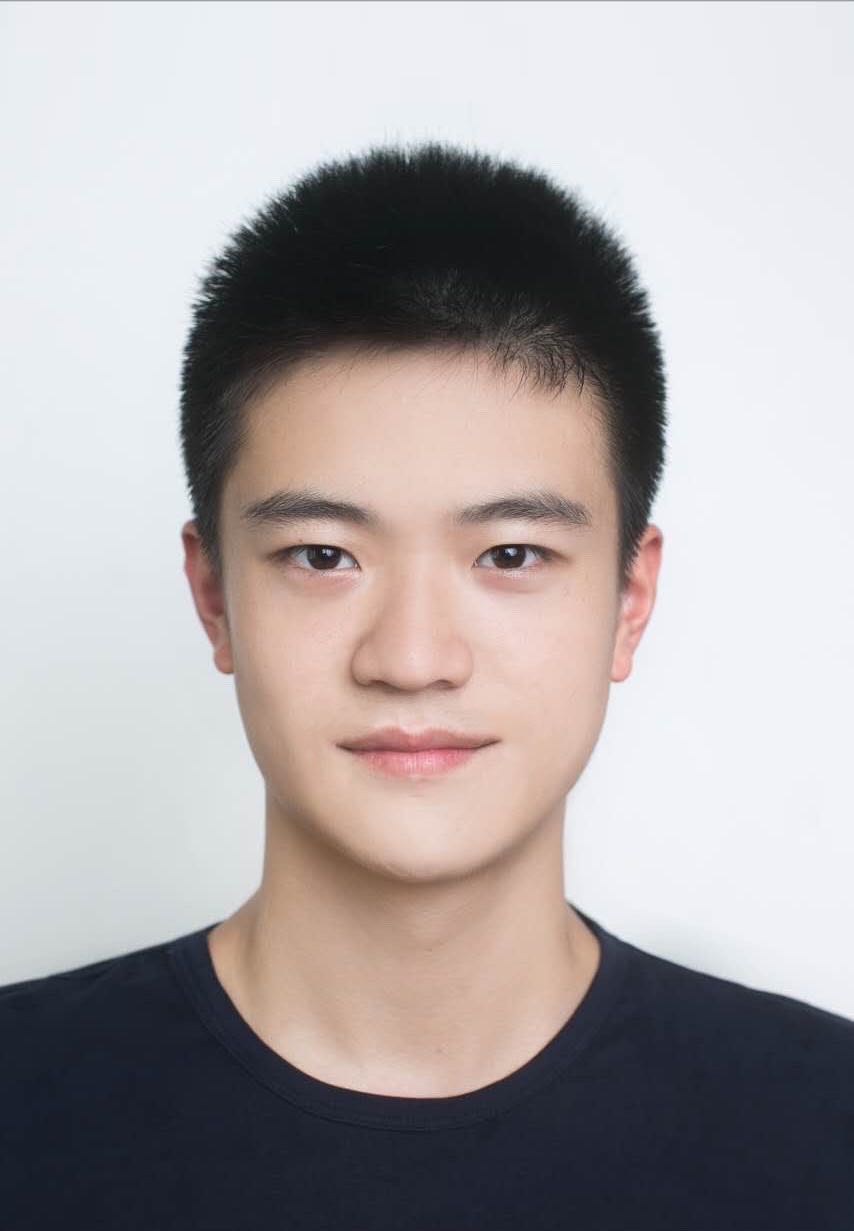
 Haixin Wang
· 6 previous affiliations
- University of California, Los AngelesSince 2024
- PhD student · Since 2024
- Westlake University2023–2024
- Researcher · 2023–2024
- Peking University2021–2024
- MS student · 2021–2024
- Intern · 2024
- Intern · 2020
- Intern · 2019
2 other authors named Haixin Wang: Haixin Wang (Chinese Academy of Sciences · 5 papers), Haixin Wang (Tencent (China) · 1 paper)
Research Overview
Haixin Wang focuses on large language model post-training, agentic reinforcement learning, and multimodal foundation models. His early work addressed parameter-efficient adaptation and domain-adaptive image retrieval before expanding into machine learning for computational fluid dynamics and scientific computing. Currently, his research emphasizes stabilizing reinforcement learning for autonomous agents and developing unified multimodal architectures for molecular tasks.
Research Trajectory
His early research focused on computer vision and image retrieval, beginning with foundational work on Stacking Networks Dynamically for Image Restoration Based on the Plug-and-Play Framework in 2020. By 2023, he had expanded into domain adaptation, introducing IDEA: An Invariant Perspective for Efficient Domain Adaptive Image Retrieval. This framework addressed domain shift by explicitly disentangling causal semantic features from non-causal domain-specific features, ensuring that the resulting hash codes remained robust even when the search environment changed drastically.
Concurrently, he began investigating the parameter-efficient adaptation of large-scale foundation models. In Mode Approximation Makes Good Multimodal Prompts, he and his collaborators explored lightweight prompt designs to align modalities under strict parameter constraints. This effort culminated in the Aurora framework, detailed in Parameter-efficient Tuning of Large-scale Multimodal Foundation Model. By leveraging techniques in the research direction of Tensor Factorization for Parameter Efficient Model Adaptation, Aurora successfully adapted massive multimodal models using only 0.1 million trainable parameters—a mere fraction of a percent of the original model size. Through tensor decomposition and modality alignment modules, the framework reduced computational costs while maintaining high performance on downstream tasks.
In 2024, his focus shifted significantly toward AI for science, particularly the application of machine learning to computational fluid dynamics (CFD) and partial differential equations (PDEs). He co-authored a comprehensive roadmap, Recent Advances on Machine Learning for Computational Fluid Dynamics: A Survey, which categorized advancements in forward modeling and inverse design within the broader area of Neural Operators for Resolution Independent Scientific Computing. The survey highlighted how machine learning can achieve orders-of-magnitude speedups in complex multi-physics scenarios. Building on these concepts, he introduced BENO: Boundary-embedded Neural Operators for Elliptic PDEs. By mimicking the mathematical structure of Green’s functions using a dual-branch Graph Neural Network and a Transformer, BENO handled complex geometries and inhomogeneous boundary conditions, contributing to the area of Overcoming Long Range Dependency Bottlenecks in Graph Networks.
This interest in physical systems and spatio-temporal dynamics extended into several specialized domains. He oversaw the development of PastNet: Introducing Physical Inductive Biases for Spatio-temporal Video Prediction, which incorporated spectral convolutions in the Fourier domain and a discrete memory bank to improve high-resolution video forecasting efficiently. Similarly, he addressed urban spatial-temporal data in Graph Masked Autoencoder for Spatio-Temporal Graph Learning, proposing a self-supervised framework to reconstruct node features across multi-view data sources to predict citywide crime, traffic, and real estate trends. Continuing his work on complex physical simulations, he participated in the development of FourierFlow: Frequency-aware Flow Matching for Generative Turbulence Modeling, a generative framework designed to overcome spectral bias and capture high-frequency details in turbulence using differential attention. He also contributed to SpectralFlowNet: Resolution-Invariant Continuous Neural Dynamics for Mesh-Based PDE Modeling, which combined graph spectral methods with continuous-time neural dynamics for multiscale modeling, demonstrating robust zero-shot transfer across different mesh resolutions.
Most recently, his research has advanced into unified multimodal architectures and agentic reinforcement learning. In the molecular domain, he guided the creation of the Omni-Mol framework, detailed across two papers: Omni-Mol: Exploring Universal Convergent Space for Omni-Molecular Tasks and Omni-Mol: Multitask Molecular Model for Any-to-any Modalities. Leveraging a massive dataset and a novel Mixture-of-GAL-Experts architecture, this framework unified diverse molecular tasks—from property prediction to de novo drug design—under a single model, mitigating conflicting representations across domains. Simultaneously, he tackled the instability of training large language models as autonomous agents. He contributed to ARLArena: A Unified Framework for Stable Agentic Reinforcement Learning, which diagnosed training collapse in interactive tasks and introduced the SAMPO optimization method. Building on this, he introduced T$^2$PO: Uncertainty-Guided Exploration Control for Stable Multi-Turn Agentic Reinforcement Learning, a framework that uses self-calibrated uncertainty signals to suppress redundant cycles and inefficient exploration in multi-turn reasoning.
Current Directions
Recent work investigates the stability and scalability of autonomous systems, with a particular emphasis on agentic reinforcement learning and unified multimodal models. The most recent papers in the evidence address the phenomenon of "training collapse" when fine-tuning large language models for multi-turn interactive tasks. By developing uncertainty-guided exploration controls, this research seeks to prevent agents from generating redundant tokens or engaging in repetitive reasoning cycles. In parallel, ongoing efforts in the molecular sciences focus on building generalist, "one-model-fits-all" architectures capable of handling diverse modalities and tasks without suffering from negative interference between conflicting domain representations.
Profile updated
Loading new papers…
Other researchers whose papers cluster into the same research directions — a proxy for overlapping technical interests and shared intellectual neighborhoods.
See something wrong? Report a mistake