

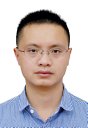
 Haitao Gan
· 3 previous affiliations
- Hubei University of TechnologySince 2020
- Full Professor · Since 2020
- Hangzhou Dianzi University2014–2020
- Associate Professor · 2014–2020
- PhD student · 2010–2014
Research Overview
Haitao Gan focuses on semi-supervised learning, manifold regularization, and safe machine learning methodologies. Early work explored image processing and the integration of clustering with classification to leverage unlabeled data effectively. More recently, the research emphasizes safe semi-supervised learning, developing algorithms that mitigate the risks of incorporating unlabeled or risky samples into predictive models.
Research Trajectory
In the early 2010s, Gan participated in applied image processing research, contributing to methods for noise reduction in complex visual data. This included collaborative work on Medical Ultrasonography Denoising Using Sparse Coding Shrinkage (2013), where Gan was a co-author on an approach utilizing sparse coding and Laplacian distributions to improve peak signal-to-noise ratios in medical ultrasound imagery.
Concurrently, Gan led foundational algorithmic research in semi-supervised learning (SSL), focusing on how to better leverage large amounts of unlabeled data when labeled examples are scarce. A key methodological focus during this period was manifold regularization. As the first author of Semi-supervised Kernel Minimum Squared Error Based on Manifold Structure (2013), Gan introduced Laplacian regularized KMSE (LapKMSE). This work modeled the manifold structure of both labeled and unlabeled examples using nearest-neighbor graphs, incorporating structural information to improve the efficiency and accuracy of classification.
During this period, Gan also explored the intersection of clustering and classification to improve model training. In Using clustering analysis to improve semi-supervised classification (2013), Gan proposed a framework that integrated semi-supervised fuzzy c-means clustering into self-training classification. This approach operated on the premise that clustering can reveal underlying data space structures in unlabeled data, which can then be used to train more robust supervised classifiers, such as support vector machines.
By 2016, Gan’s trajectory shifted toward addressing a fundamental vulnerability in SSL: the reality that incorporating unlabeled data can sometimes degrade model performance rather than improve it. Gan became a leading contributor to the subfield of Safe Semi-Supervised Learning (S3L). In Towards designing risk-based safe Laplacian Regularized Least Squares (2016), Gan developed a risk-based strategy to compute the risk degree of unlabeled data. By analyzing the characteristics of Regularized Least Squares (RLS) and Laplacian RLS, this work introduced a mechanism to ensure that the performance of the semi-supervised algorithm would not be significantly inferior to its purely supervised counterpart, providing a mathematical safeguard against performance degradation.
Current Directions
The most recent papers in the evidence, spanning 2019 to 2021, continue to advance the paradigm of safe semi-supervised learning. Recent work investigates more granular and adaptive approaches to risk mitigation in machine learning models, moving away from static or uniform risk assumptions.
Rather than treating the risk of all unlabeled data equally, this direction involves dynamically computing the safety degrees of individual unlabeled samples. For example, Adaptive safety degree-based safe semi-supervised learning incorporates an adaptive tradeoff term between supervised and semi-supervised learning directly into the objective function, allowing the model to weigh the utility of each unlabeled sample independently.
Furthermore, the scope of safety in these models has expanded beyond standard classification tasks. The most recent work addresses safe semi-supervised clustering, exploring how to jointly manage the risks associated with both labeled and unlabeled samples, as seen in Joint exploring of risky labeled and unlabeled samples for safe semi-supervised clustering. This indicates an ongoing focus on building robust, fault-tolerant algorithms capable of handling imperfect or risky data distributions in real-world applications.
Profile updated
| Title | Venue | Year |
|---|---|---|
| Joint exploring of risky labeled and unlabeled samples for safe semi-supervised clustering | Expert Systems with Applications | 2021 |
| A hybrid safe semi-supervised learning method | Expert Systems with Applications | 2020 |
| Adaptive safety degree-based safe semi-supervised learning | Int. J. Mach. Learn. Cybern | 2019 |
| Towards designing risk-based safe Laplacian Regularized Least Squares | Expert Systems with Applications | 2016 |
| Sparsity Based Feature Extraction for Kernel Minimum Squared Error | Ccpr | 2014 |
| Using clustering analysis to improve semi-supervised classification | Neurocomputing | 2013 |
| Manifold Regularized Gaussian Mixture Model for Semi-supervised Clustering | Acpr | 2013 |
| An Improved Self-Training for Face Recognition | Icig | 2013 |
| Medical Ultrasonography Denoising Using Sparse Coding Shrinkage | Icig | 2013 |
| Semi-supervised Kernel Minimum Squared Error Based on Manifold Structure | Isnn | 2013 |
Loading new papers…
Loading research neighbors…
See something wrong? Report a mistake