

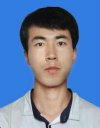
 Haidong Kang
· 1 previous affiliation
- Northeastern UniversitySince 2017
- Associate Professor · Since 2025
- Current
- PhD student · 2021–2025
- MS student · 2017–2020
Research Overview
Haidong Kang focuses on automated algorithm design, neural architecture search, and the optimization of large language models. His early work addressed resource-efficient computer vision and anomaly detection, gradually evolving toward training-free architecture search and mixed-precision quantization. Currently, he investigates how large language models can be leveraged to autonomously discover algorithms for model compression, adversarial robustness, and lifelong learning.
Research Trajectory
Kang's early research addressed computer vision and pattern recognition in complex environments. He developed A Dynamic Scene Recognition Method for Event-Based Social Network, combining supervised and unsupervised learning to extract visual information for impromptu social events. This focus on visual feature extraction soon transitioned into automating the design of the neural architectures themselves. In When NAS Meets Anomaly Detection: In Search of Resource-Efficient Architectures in Surveillance Video, he introduced a neural architecture search (NAS) method tailored for smart city surveillance, optimizing convolutional operators specifically for anomaly detection. To reduce the high computational costs associated with evaluating these architectures, he collaborated on Single-Domain Generalized Predictor for Neural Architecture Search System, which utilized meta-learning and domain-invariant feature extractors to train performance predictors capable of generalizing across unseen search spaces.
Building on these efficiency goals, Kang's work advanced into training-free NAS and model quantization. He proposed the IBFS framework in Revisiting Neural Networks for Few-Shot Learning: A Zero-Cost NAS Perspective, which leverages Information Bottleneck theory and first-order loss landscapes to discover high-performing architectures in minutes rather than days, contributing to the area of Hardware Aware Neural Architecture Search. In parallel, he investigated network quantization with Where and How to Enhance: Discovering Bit-Width Contribution for Mixed Precision Quantization, optimizing the trade-off between accuracy and complexity by dynamically allocating bit-widths to network activations and weights based on their structural contribution.
As large language models (LLMs) became central to artificial intelligence, Kang began exploring both their optimization and their utility as autonomous agents for algorithm design. He co-authored a comprehensive overview of inference acceleration and model compression in Survey on Efficient Large Language Models: Principles, Algorithms, Applications, and Open Issues. Moving beyond traditional optimization, he pioneered methods that use LLMs to generate novel algorithms. In Revolutionizing Training-Free NAS: Towards Efficient Automatic Proxy Discovery via Large Language Models, he developed the Automatic Proxy Discovery (APD) framework, which embeds an LLM within an actor-critic reinforcement learning loop to invent zero-cost proxies for NAS. He applied a similar evolutionary approach to security in Automatic Attack Discovery for Few-Shot Class-Incremental Learning via Large Language Models. By wrapping an LLM in a reinforcement learning loop, this work generated adversarial attacks that expose vulnerabilities in incremental learning systems, advancing the broader area of Cross Model Adversarial Transferability and the emerging field of Discovering Algorithms via LLM-Driven Code Evolution.
Kang has also addressed the challenge of updating and maintaining large models over time. He contributed to QueueEDIT: Structural Self-Correction for Sequential Model Editing in LLMs, introducing a queue-based framework that maps knowledge graph triplets to neural components. This approach corrects factual errors without degrading general reasoning, supporting research directions such as Scaling Sequential Model Editing for Lifelong Knowledge Updates and Sequential Model Editing Collapse in Large Language Models. Extending this focus on lifelong learning, he explored model fusion in Unlocking the Potential of Continual Model Merging: An ODE Perspective. This framework treats continual model merging as a continuous trajectory governed by an Ordinary Differential Equation, using gradient feedback to balance the retention of old knowledge with the acquisition of new expertise.
Most recently, Kang has combined his expertise in LLM-driven algorithm design and model compression. In Automatic Pruning Discovery for Large Language Models, he introduced AutoPrune, a framework that enables LLMs to autonomously discover optimal pruning algorithms for themselves. By integrating Graph-driven Chain-of-Thought reasoning with dynamic sparsity allocation, this work addresses the performance collapse typically seen at high pruning ratios, eliminating the need for manual expert design in sparsity allocation.
Current Directions
The most recent papers in the evidence indicate a strong focus on automated algorithm design and the efficient lifecycle management of large language models. Kang is currently investigating how LLMs can be utilized as reasoning engines to autonomously discover and optimize complex algorithms, such as zero-cost proxies for architecture search, adversarial attack generation, and dynamic sparsity allocation for model pruning. Additionally, his recent work addresses the continuous updating of foundation models, exploring ordinary differential equations for continual model merging and structural self-correction frameworks for sequential knowledge editing. These efforts collectively aim to make large-scale AI systems more efficient, adaptable, and capable of self-improvement without requiring exhaustive manual engineering.
Profile updated
Loading new papers…
Other researchers whose papers cluster into the same research directions — a proxy for overlapping technical interests and shared intellectual neighborhoods.
See something wrong? Report a mistake