

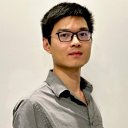
 Haibo Wang
· 2 previous affiliations
- University of KentuckySince 2023
- Assistant Professor · Since 2023
- University of Florida2019–2023
- PhD student · 2019–2023
2 other authors named Haibo Wang: Haibo Wang (Deloitte (United States) · 4 papers), Haibo Wang (1 paper)
Research Overview
Haibo Wang focuses on software-defined networking, distributed systems, and graph-based machine learning. His trajectory spans from foundational routing and load-balancing mechanisms in network infrastructure to robust edge computing and spatio-temporal forecasting. Most recently, his work addresses cross-cluster communication frameworks and long-term traffic state estimation using sparse sensing techniques.
Research Trajectory
Wang’s early research concentrated heavily on the optimization and deployment of software-defined networks (SDNs). In 2017, he directed research on Incremental Deployment and Throughput Maximization Routing for a Hybrid SDN, addressing the technical challenges of transitioning legacy systems to software-defined architectures under strict budget constraints. This interest in SDN optimization continued with PrePass: Load balancing with data plane resource constraints using commodity SDN switches in 2020, which tackled load distribution limitations inherent in commodity hardware. He also collaborated on Joint Routing and Sketch Configuration in Software-Defined Networking, exploring how to efficiently allocate limited computing and memory resources on switches for traffic measurement without introducing massive network overhead. This arc of network infrastructure optimization culminated in his work guiding research on Achieving high reliability and throughput in software defined networks in 2021.
Concurrently with his networking research, Wang developed methodologies in graph-based machine learning and anomaly detection. He introduced Deep Structure Learning for Fraud Detection (2018), framing fraud detection as the identification of suspicious dense blocks in attributed bipartite graphs and improving adversarial robustness against camouflage actions. Expanding on graph neural networks, he proposed Graph Stochastic Neural Networks for Semi-supervised Learning in 2020. This framework modeled the uncertainty of classification functions to better handle imperfect observed data, such as scarce labels and noisy graph structures, by simultaneously learning a family of stochastic functions rather than a single deterministic one.
Moving toward decentralized and dynamic environments, Wang investigated edge computing resilience. In Robust Task Offloading in Dynamic Edge Computing (2023), he addressed the challenges of using mobile end devices as edge servers, developing offloading strategies tolerant to server failures caused by mobility and power limitations. This focus on distributed infrastructure naturally extended to multi-cluster cloud environments. He oversaw the development of X-ClusterLink: An Efficient Cross-Cluster Communication Framework in Multi-Kubernetes Clusters (2025). This framework utilizes broker-based traffic management and eBPF/XDP-accelerated gateways to increase forwarding bandwidth and accelerate failover compared to standard service meshes. This research contributes to the broader area of Bypassing the Kernel for Ultra-Low Latency Networking and advances the research direction of Hardware-Software Co-design for High-Performance Resource Disaggregation.
Also in 2025, Wang participated in research on predictive modeling for physical infrastructure, specifically Spatio-temporal Partial Sensing Forecast of Long-term Traffic. This work tackles the difficulty of predicting road traffic when sensors are only available at select locations, managing unknown data distributions and intricate spatio-temporal correlations. This contribution intersects with several active research areas, including Optimal Sensor Placement for Sparse Field Reconstruction, Traffic State Estimation and Control with Sparse Sensing, Dynamic Topology for Spatial-Temporal Forecasting, and Temporal Horizon Accuracy Decay in Sequential Modeling.
Current Directions
The most recent papers in the evidence indicate a dual focus on high-performance distributed systems and complex spatio-temporal forecasting. In the realm of cloud infrastructure, Wang is exploring cross-cluster communication frameworks that leverage kernel-bypass technologies to enhance bandwidth and failover efficiency in multi-Kubernetes environments. Simultaneously, his research addresses spatio-temporal forecasting challenges, particularly focusing on how to accurately estimate long-term traffic states when relying on sparse, partially sensed data networks. These directions reflect an ongoing commitment to optimizing both the underlying infrastructure of distributed computing and the algorithmic models used to interpret large-scale physical systems.
Profile updated
Loading new papers…
Other researchers whose papers cluster into the same research directions — a proxy for overlapping technical interests and shared intellectual neighborhoods.
See something wrong? Report a mistake