

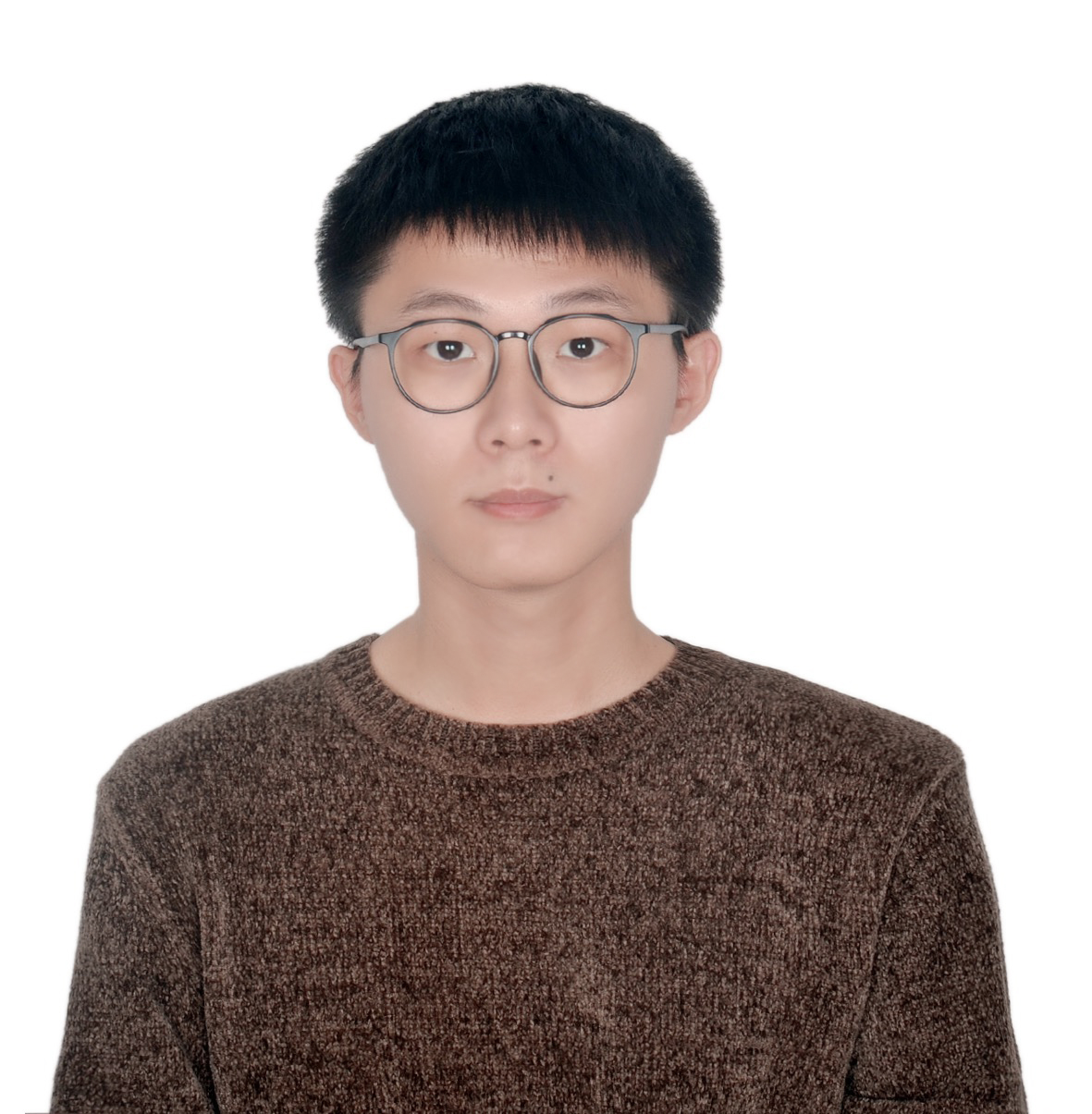
 Haibin Wu
· 4 previous affiliations
- Meta (United States)Since 2025
- AI Research Scientist · Since 2025
- Research scientist intern · 2022
- Researcher · 2024
- National Taiwan University2020–2024
- PhD student · 2020–2024
- Applied research scientist intern · 2022
Research Overview
Haibin Wu focuses on speech processing, neural audio codecs, and audio deepfake detection. His trajectory spans from securing automatic speaker verification systems against adversarial attacks to developing comprehensive benchmarks for speech emotion recognition and audio language modeling. Currently, his research investigates the temporal localization of partial audio-visual deepfakes and the design of efficient streaming audio architectures.
Research Trajectory
His early research addressed the vulnerabilities of speech systems to malicious manipulation. In Defense Against Adversarial Attacks on Spoofing Countermeasures of ASV, he introduced spatial smoothing and adversarial training mechanisms to protect automatic speaker verification (ASV) systems from crafted adversarial inputs. This focus on security naturally evolved into broader contributions to the research direction of Spoofing Aware Speaker Verification. To handle the dual challenge of verifying speaker identity while detecting spoofing attacks, he developed a multi-level fusion strategy in Spoofing-Aware Speaker Verification by Multi-Level Fusion, which intelligently combined pre-trained verification and countermeasure models. Recognizing that forgeries were becoming more sophisticated, he also pioneered techniques for finding manipulated segments hidden within otherwise genuine audio, framing the problem as fake span discovery in Partially Fake Audio Detection by Self-Attention-Based Fake Span Discovery.
As the field of audio processing rapidly advanced, he identified a critical need for standardized evaluation protocols. He provided a comprehensive survey of emerging methodologies in Towards audio language modeling - an overview. To systematically evaluate how well neural audio codecs preserve content, paralinguistics, and speaker characteristics, he introduced the Codec-SUPERB ecosystem in Codec-SUPERB: An In-Depth Analysis of Sound Codec Models. This initiative was further expanded into a formal challenge detailed in Codec-SUPERB @ SLT 2024: A lightweight benchmark for neural audio codec models. He applied a similar rigorous benchmarking approach to address reproducibility issues in speech emotion recognition, developing the EMO-SUPERB framework presented in EMO-SUPERB: An In-depth Look at Speech Emotion Recognition and Open-Emotion: A Reproducible EMO-Superb For Speech Emotion Recognition Systems.
Alongside his work on evaluation, he advanced the capabilities of speech synthesis systems. In Laugh Now Cry Later: Controlling Time-Varying Emotional States of Flow-Matching-Based Zero-Shot Text-to-Speech, he designed an emotion-controllable zero-shot TTS system capable of generating highly expressive speech, including nonverbal vocalizations like laughter. Acutely aware of the security risks posed by such advanced synthesis, he curated a dataset to test whether existing anti-spoofing models could detect outputs from modern codec-based generators, as detailed in CodecFake: Enhancing Anti-Spoofing Models Against Deepfake Audios from Codec-Based Speech Synthesis Systems. He also continued to refine ASV security, comparing various purification techniques in Scalable Ensemble-Based Detection Method Against Adversarial Attacks For Speaker Verification to balance genuine sample performance with robustness against adversarial perturbations.
Concurrently, while serving as a senior applied scientist at Microsoft, he contributed to the broader area of Unified Architectures for General Audio Intelligence. Pushing toward more efficient sequence modeling, he introduced a purely transformer-based, convolution-free neural audio codec designed specifically for real-time streaming in TS3-Codec: Transformer-Based Simple Streaming Single Codec.
Current Directions
Recent work investigates the increasingly complex landscape of synthetic media, particularly focusing on the research direction of Temporal Localization of Partial Deepfakes. Rather than treating deepfake detection as a binary classification problem, his most recent papers address the challenge of pinpointing manipulated segments within larger, mostly genuine audio-visual contexts. This includes developing hierarchical boundary modeling techniques to localize partial forgeries in video, as explored in Localizing Audio-Visual Deepfakes via Hierarchical Boundary Modeling. Additionally, he is investigating the detection of synthetic singing voices, demonstrating in How Does Instrumental Music Help SingFake Detection? that instrumental accompaniment serves primarily as a form of data augmentation that forces detection models to rely on low-frequency vocal features.
Profile updated
Loading new papers…
Other researchers whose papers cluster into the same research directions — a proxy for overlapping technical interests and shared intellectual neighborhoods.
See something wrong? Report a mistake