

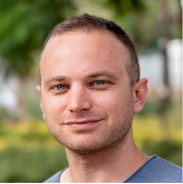
 Hagai Rossman
· 2 previous affiliations
- Current
- Weizmann Institute of Science2018–2022
- PhD student · 2018–2022
Research Overview
Hagai Rossman focuses on the intersection of machine learning and clinical physiology, developing computational methods to analyze complex physiological time-series data. His work spans cardiovascular modeling, continuous glucose monitoring, and large-scale phenomic associations. Recently, he has emphasized the integration of deep learning with mechanistic models and genetic data to capture patient-specific health trajectories.
Research Trajectory
The available corpus of Hagai Rossman's work centers on the year 2025, highlighting a strong focus on applying machine learning to complex, multi-modal physiological data. His research spans both large-scale collaborative cohort studies and targeted methodological advancements in cardiovascular modeling.
In the realm of large-scale physiological data analysis, Rossman has contributed to research leveraging extensive clinical cohorts to uncover new health insights. He participated in a comprehensive study of sleep-related biomarkers, Phenome-wide associations of sleep characteristics in the Human Phenotype Project, which analyzed thousands of nights of home sleep apnea test monitoring to identify significant correlations between sleep traits and body characteristics, such as visceral adipose tissue. Expanding into metabolic health, he was also part of the collaborative effort behind GluFormer: Learning Generalizable Representations from Continuous Glucose Monitoring Data. This project introduced a generative foundation model trained via self-supervised learning on millions of continuous glucose monitoring measurements, aiming to capture the complexities of glycemic variability better than standard clinical metrics.
Alongside these broad collaborative efforts, Rossman has focused closely on cardiovascular representation learning, specifically the analysis of electrocardiograms (ECGs). With collaborators, he developed CardioPRIME: Cardiovascular Physiological Representation Integration With Multimodal Embeddings, a hybrid framework that bridges purely data-driven neural networks with classical ordinary differential equation-based cardiac models. By enforcing consistency between ECG-derived latent representations and clinical phenotypes, this approach yields embeddings that are more physiologically grounded and discriminative for prevalent diseases. Building on the use of ECG embeddings, he also co-developed Delta ECG: A Genetic Perspective. This work introduced a metric designed to capture patient-specific cardiovascular changes over time, demonstrating that longitudinal variations in ECG embeddings can reliably differentiate individual trajectories from population-level differences and align with genetic risk factors for cardiovascular disease.
Current Directions
Based on the most recent papers in the evidence, Rossman's current research investigates the integration of deep learning with established physiological and genetic frameworks. A major ongoing theme is the development of hybrid models that constrain neural network representations using mechanistic biological principles, particularly in cardiovascular health. Additionally, his work addresses the challenge of extracting generalizable, patient-specific insights from continuous physiological monitoring—such as ECGs and glucose sensors—to better understand disease trajectories and underlying genetic risk factors.
Profile updated
Loading new papers…
Loading research neighbors…
See something wrong? Report a mistake