

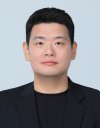
 Hae-Gon Jeon
· 5 previous affiliations
- Yonsei UniversityCurrent
- Current
- Associate Professor · 2022–2025
- Assistant Professor · 2019–2022
- Carnegie Mellon University2018–2019
- Postdoc · 2018–2019
- PhD student · 2015–2018
- MS student · 2011–2013
- Individual2006–2011
- Undergrad student · 2006–2011
Research Overview
Hae-Gon Jeon focuses on computer vision, 3D scene reconstruction, and computational photography. His early work addressed fundamental challenges in depth estimation and light field imaging, developing robust methods for extracting geometry from uncalibrated or noisy camera data. More recently, his research has expanded into generative video modeling, neural radiance fields, and scalable architectures for dynamic visual prediction.
Research Trajectory
Hae-Gon Jeon’s early research concentrated on computational photography and depth estimation, particularly in extracting reliable 3D geometry from constrained or noisy inputs. His work began with coded exposure imaging, where he collaborated on Fluttering Pattern Generation Using Modified Legendre Sequence for Coded Exposure Imaging (2013) to efficiently find high-quality binary sequences for deblurring. He soon shifted focus to light field cameras, introducing Accurate depth map estimation from a lenslet light field camera (2015), which utilized phase shift theorems and angular coordinates to achieve sub-pixel accuracy.
Addressing the limitations of consumer camera hardware, Jeon contributed to the research direction of Overcoming Triangulation Instability in Small Baseline Motion. In High-Quality Depth from Uncalibrated Small Motion Clip (2016), he helped develop a pipeline that recovers fine scene geometry from accidental camera shakes without pre-calibration. He also tackled low-light conditions by combining complementary sensor data in Stereo Matching with Color and Monochrome Cameras in Low-Light Conditions (2016). To improve Depth from Focus (DfF) techniques, he proposed Noise Robust Depth from Focus Using a Ring Difference Filter (2017). This work advanced the area of Overcoming the Staircase Effect in Discrete Depth Representations by introducing a focus measure that significantly reduced computation time while maintaining accuracy. He subsequently integrated deep learning into light field imaging with EPINET: A Fully-Convolutional Neural Network Using Epipolar Geometry for Depth From Light Field Images (2018), a multi-stream architecture that vastly accelerated depth estimation compared to prior optimization-based methods.
In recent years, leading the Visual AI Lab at Yonsei University, Jeon’s research has broadened to encompass geometric deep learning, trajectory forecasting, and generative modeling. He directed work in the area of Learnable Manifold Curvature in Geometric Deep Learning, presenting the Hyperbolic Affinity learning Module in Learning Affinity with Hyperbolic Representation for Spatial Propagation (2023) to reduce boundary errors in semantic segmentation and depth completion. In the domain of pedestrian forecasting, he partnered to develop EigenTrajectory: Low-Rank Descriptors for Multi-Modal Trajectory Forecasting (2023), which improved prediction reliability by moving high-dimensional coordinate data into a compact, low-rank space, contributing to the broader direction of Integrating Static Environmental Constraints for Trajectory Prediction.
His lab has also made significant strides in computational photography and rendering. He oversaw the development of Close Imitation of Expert Retouching for Black-and-White Photography (2024), utilizing deep metric learning to capture professional aesthetic nuances. In generative video, his team created the Kinetic Typography Diffusion Model (2024), a framework designed to generate readable animated text by separating static appearance from dynamic motion. Applying deep learning to environmental challenges, he led research into Data-driven Precipitation Nowcasting Using Satellite Imagery (2024), offering a high-resolution forecasting solution independent of ground radar. Concurrently, his group advanced 3D scene reconstruction by introducing Geometry-Aware Projective Mapping for Unbounded Neural Radiance Fields (2024), which utilized an adaptive distance metric to improve novel view synthesis for distant objects.
Moving into 2025 and 2026, Jeon has continued to push the boundaries of foundation models and dynamic scene understanding. He returned to light field challenges with Inverse Image-Based Rendering for Light Field Generation from Single Images (2025), exploring how to hallucinate rich 3D information from 2D snapshots. To adapt large-scale models efficiently, he directed test-time prompt tuning for zero-shot depth completion (2025), adjusting depth scales using sparse sensor data without full fine-tuning. His work on scalable architectures yielded VideoTitans: Scalable Video Prediction with Integrated Short- and Long-term Memory (2025), balancing micro-movements and macro-memory for high-resolution forecasting. Most recently, his lab proposed CanonicalFusion: Generating Drivable 3D Human Avatars from Multiple Images (2026), a framework that reconstructs animatable meshes by predicting compressed skinning weights. He also oversaw Video Scene Segmentation with Genre and Duration Signals (2026) to improve AI understanding of long-form narrative structures, and participated in developing diffusion-based aesthetic tools in Video color grading via look-up table generation (2026).
Current Directions
Recent work investigates the intersection of generative video modeling, 3D human digitization, and the efficient adaptation of visual foundation models. The most recent papers in the evidence address the synthesis of drivable 3D avatars from multi-view images and the segmentation of long-form video narratives using genre and duration cues. Additionally, Jeon's lab is exploring scalable memory architectures for high-resolution video prediction and test-time prompt tuning techniques that allow zero-shot depth models to adapt to unseen environments with minimal computational overhead.
Profile updated
Loading new papers…
Other researchers whose papers cluster into the same research directions — a proxy for overlapping technical interests and shared intellectual neighborhoods.
See something wrong? Report a mistake