

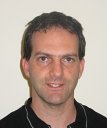
 Guy Gilboa
· 2 previous affiliations
- Associate Professor · Since 2019
- Assistant Professor · 2013–2019
- PhD student · 1998–2004
- Discover2004–2007
- Postdoc · 2004–2007
Research Overview
Guy Gilboa focuses on nonlinear spectral analysis, image decomposition, and the theoretical foundations of representation learning. His early trajectory established variational frameworks and nonlocal operators for image processing, evolving into rigorous mathematical treatments of nonlinear operators. Currently, his focus centers on zero-shot detection of AI-generated media and the geometric properties of latent spaces in foundation models.
Research Trajectory
Gilboa's early work established foundational variational and nonlocal methods for image processing. He participated in developing models for Structure-Texture Image Decomposition - Modeling, Algorithms, and Parameter Selection (2006), utilizing total-variation energy and various norms—including L1, L2, and tunable Gabor functions—to separate structural and textural information. Building on this, he introduced a mathematical framework in Nonlocal Operators with Applications to Image Processing (2008), enabling distant points in an image to interact for improved denoising, inpainting, and anomaly detection.
This interest in advanced mathematical operators evolved into a sustained focus on the research direction of Nonlinear Spectral Analysis for Structured Signal Recovery. He advanced this domain with A Total Variation Spectral Framework for Scale and Texture Analysis (2014) and provided a comprehensive synthesis of the field in Nonlinear Spectral Analysis via One-Homogeneous Functionals: Overview and Future Prospects (2016). Continuing in this vein, he contributed to the specific area of Nonlinear Spectral Analysis via the p-Laplacian and TV Transform by helping to formalize these concepts in Introducing the p-Laplacian spectra (2020).
In parallel with his spectral analysis work, Gilboa explored active perception strategies. He developed a framework for the research direction of Adaptive Sampling for Active Perception and Mapping in How to Guide Adaptive Depth Sampling? (2022). This approach trained neural networks to predict depth reconstruction failures from standard RGB images, allowing systems to concentrate limited LiDAR sampling budgets on high-frequency areas like object edges rather than relying on uniform pulses.
By 2024, his research expanded to address the theoretical and practical challenges of modern deep learning architectures. He led investigations into optimization dynamics with Enhancing Neural Training via a Correlated Dynamics Model (2024). Returning to his roots in image decomposition, he introduced a novel explainability method in DXAI: Explaining Classification by Image Decomposition (2024), which separates images into class-agnostic structures and class-distinct features to provide high-resolution, multi-channel explanations that outperform traditional heatmaps. He also tackled fundamental mathematical challenges in the area of Diffusion Priors for Non-linear Inverse Problems, proposing new methods for "undoing" complex operations in Generalized Inversion of Nonlinear Operators (2024).
Most recently, Gilboa's lab has focused extensively on the geometric properties of latent spaces and the detection of synthetic media. He guided the development of Whitened CLIP as a Likelihood Surrogate of Images and Captions (2025), a training-free method that transforms CLIP embeddings into a clean Gaussian distribution to calculate direct likelihoods. This theoretical grounding was further formalized in InfoNCE Induces Gaussian Distribution (2026), where he and his collaborators proved that representations trained with contrastive loss naturally approach a multivariate Gaussian shape as dimensionality increases.
Leveraging these probabilistic insights, Gilboa has pioneered several zero-shot detection methods for AI-generated content. His team introduced CLIDE in General and Domain-Specific Zero-shot Detection of Generated Images via Conditional Likelihood (2025), a method that conditions its analysis on a small reference set to drastically outperform existing techniques on niche, real-world domains. They also analyzed the probability surfaces of pre-trained models in Manifold Induced Biases for Zero-shot and Few-shot Detection of Generated Images (2025), showing that generated images consistently land near stable local maxima. He connected his earlier mathematical expertise to modern generative models by applying p-Laplace operators to estimated score functions in Identifying Memorization of Diffusion Models Through p-Laplace Analysis (2025). Extending these forensic techniques to temporal data, he oversaw the creation of STALL in Training-free Detection of Generated Videos via Spatial-Temporal Likelihoods (2026), a framework that jointly models frame realism and motion naturalness to identify synthetic video footage from cutting-edge systems.
Current Directions
Recent work investigates the theoretical properties of deep representation learning and the urgent challenge of media forensics in the era of advanced generative models. A primary focus is the geometric and probabilistic structure of latent spaces, particularly demonstrating how contrastive learning objectives like InfoNCE naturally induce multivariate Gaussian distributions. By applying these insights, recent papers develop training-free, zero-shot detection methods for AI-generated images and videos. This involves leveraging conditional likelihoods, analyzing the manifold biases of pre-trained diffusion models, and modeling spatial-temporal naturalness to distinguish real footage from synthetic artifacts. Additionally, ongoing research explores the internal mechanics of diffusion models, utilizing advanced mathematical tools like p-Laplace operators to identify memorized training data within estimated score functions.
Profile updated
Loading new papers…
Other researchers whose papers cluster into the same research directions — a proxy for overlapping technical interests and shared intellectual neighborhoods.
See something wrong? Report a mistake