

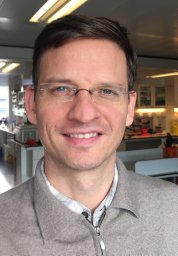
 Guy-Bart Stan
· 6 previous affiliations
- Imperial College LondonSince 2009
- Professor of BioSystems Engineering and Control, Department of BioEngineering · Since 2019
- Reader · 2014–2019
- Lecturer · 2009–2014
- European Patent OrganisationSince 2023
- Patent Examiner · Since 2023
- ETH Zurich2018
- Invited Professor · 2018
- Invited Professor · 2015
- University of Cambridge2006–2009
- Research Associate · 2006–2009
- University of Liège1995–2005
- Ph.D., Applied Sciences (network of oscillators, nonlinear dynamical systems) · 2000–2005
- Civil Engineer, Electronics · 1995–2000
Research Overview
Guy-Bart Stan focuses on the intersection of artificial intelligence and engineering biology, developing machine learning methods for the design and optimization of engineered living systems. His trajectory spans foundational deep learning applications in synthetic biology to advanced genomic foundation models and generative architectures for DNA sequence design. Recently, his work emphasizes multimodal alignment and long-context understanding to bridge raw genomic sequences with functional natural language annotations.
Research Trajectory
Stan’s recent trajectory builds upon the growing synergy between machine learning and synthetic biology. In Deep Learning Concepts and Applications for Synthetic Biology, he explored how deep neural networks can inform biological design. This foundational overview highlighted the potential of automated data analysis, optimal experimental design, and the generation of novel biological parts to accelerate synthetic biology workflows.
To address the structural complexity of genomic data, he introduced specialized neural architectures capable of mapping distant genetic interactions. Genomic Interpreter: A Hierarchical Genomic Deep Neural Network with 1D Shifted Window Transformer replaces traditional convolutional pooling with a hierarchical attention mechanism. By adapting shifted-window transformers to one-dimensional DNA sequences, this architecture provides a clearer map of genomic activity, advancing the research direction of Multi-Scale Hierarchical Modeling for Biological Sequences and contributing to the broader area of Mechanistic Interpretability for Genomic Deep Learning.
In parallel with sequence modeling, Stan has participated in research on complex relational data structures. Work on Hybrid Graph: A Unified Graph Representation with Datasets and Benchmarks for Complex Graphs established a unified mathematical framework that merges simple pairwise edges, multi-node hyperedges, and hierarchical structures. He further explored graph topology in Enhancing Node Representations for Real-World Complex Networks with Topological Augmentation. This research introduced TopoAug, a technique that constructs virtual hyperedges to enrich node representations, aligning with ongoing work in the area of Higher Order Topological Deep Learning.
Returning to genomics, collaborative efforts sought to improve the clinical precision of foundation models. GV-Rep: A Large-Scale Dataset for Genetic Variant Representation Learning provided a standardized benchmark of 7.5 million genetic variant records. This dataset pushes genomic AI beyond binary pathogenic-versus-benign classifications, exposing the need for models to capture complex, tissue-specific nuances.
A major theme in his 2024 research involves generating synthetic DNA that respects the heterogeneous architecture of biological sequences. His work encompasses generative approaches, as seen in DiscDiff: Latent Diffusion Model for DNA Sequence Generation, which applies latent diffusion models to generate highly realistic, multi-species DNA sequences. This intersects with the research direction of Score Based Generative Modeling for Discrete Data. The underlying refinement algorithm was further detailed in Absorb & Escape: Overcoming Single Model Limitations in Generating Heterogeneous Genomic Sequences. This paper proposed a hybrid solution to capture the distinct statistical signatures of functional regions, such as promoters and exons, arguing that single-model approaches are fundamentally limited for complex DNA design.
Most recently, Stan has participated in scaling genomic models to handle ultra-long contexts and natural language annotations. Collaborative work yielded Omni-DNA: A Genomic Model Supporting Sequence Understanding, Long-context, and Textual Annotation, a family of foundation models utilizing a novel compression mechanism called SEQPACK. By bridging raw DNA sequences with textual data, this architecture enables the prediction of distal biological interactions over vast distances, contributing to the emerging field of Multimodal Alignment of Biological Sequences and Natural Language.
Current Directions
The most recent papers in the evidence point toward a focus on scaling genomic foundation models and improving their interpretability. Current work investigates how to bridge raw, long-context DNA sequences with functional natural language annotations, enabling models to understand distal biological interactions across hundreds of kilobase pairs. Additionally, ongoing efforts in generative modeling seek to overcome the limitations of single-model architectures by developing hybrid diffusion frameworks capable of designing highly realistic, heterogeneous genomic sequences for synthetic biology applications.
Profile updated
| Paper | Venue | Year |
|---|---|---|
| GV-Rep: A Large-Scale Dataset for Genetic Variant Representation LearningGitHubZehui127/ | NeurIPS | 2024 |
| Latent Diffusion Model for DNA Sequence GenerationGitHubZehui127/ | Neurips2023-ai4science | 2023 |
Loading new papers…
Other researchers whose papers cluster into the same research directions — a proxy for overlapping technical interests and shared intellectual neighborhoods.
See something wrong? Report a mistake