

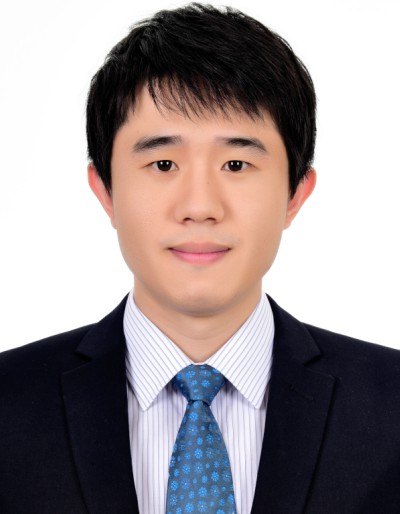
 Guozhu Meng
· 3 previous affiliations
- Chinese Academy of SciencesSince 2018
- Associate Professor · Since 2018
- Nanyang Technological University2013–2017
- PhD student · 2013–2017
- Tianjin University2005–2012
- MS student · 2009–2012
- Undergrad student · 2005–2009
Research Overview
Guozhu Meng focuses on software security, mobile application analysis, and the robustness of machine learning systems. His early research investigated collaborative security mechanisms and large-scale vulnerability detection in Android environments. More recently, his work has shifted toward understanding the inherent vulnerabilities of deep learning models and enhancing the security of code-based pre-trained models.
Research Trajectory
Meng’s early research centered on broad, distributed approaches to systems security. In 2015, he led work on Collaborative Security: A Survey and Taxonomy, which systematized how distributed environments can leverage collaboration to defend against threats like botnets and spam. This foundational work established a framework for understanding how decentralized defense mechanisms operate across different security domains.
By 2017, Meng’s focus shifted toward data-driven security and automated analysis, specifically within the Android ecosystem. Addressing the difficulty of processing massive amounts of mobile application data, he led the development of AndroVault: Constructing Knowledge Graph from Millions of Android Apps for Automated Analysis. This framework utilized a long-running web crawler combined with static and dynamic analysis to extract attributes and build a comprehensive knowledge representation of Android applications. Building on this mobile security focus, Meng co-authored AUSERA: Large-Scale Automated Security Risk Assessment of Global Mobile Banking Apps in 2018. This research targeted the high-stakes financial sector, identifying critical data-related security weaknesses in global mobile banking applications that existing automated tools frequently missed.
Expanding beyond mobile applications, Meng’s research in 2019 and 2020 began to address broader software engineering challenges, including performance optimization and vulnerability prediction. He co-authored Learning Performance Optimization from Code Changes for Android Apps, which mined historical code changes to extract programmatic guidelines for developers struggling with app performance. Concurrently, his work in software security deepened with A large-scale empirical study on vulnerability distribution within projects and the lessons learned. By analyzing extensive datasets of known vulnerabilities across representative open-source projects, this research provided empirical insights into how vulnerabilities cluster within specific project modules, offering a data-backed foundation for future vulnerability prediction models.
By 2022, Meng’s trajectory expanded into the intersection of cybersecurity and artificial intelligence, reflecting the growing adoption of deep learning systems. He co-authored Towards Security Threats of Deep Learning Systems: A Survey, which systematically categorized the intrinsic weaknesses of neural networks. This work evaluated the mechanics and effectiveness of various adversarial attacks against deep learning models, marking a definitive shift in his research toward AI robustness and the security of machine learning infrastructure.
Current Directions
The most recent papers in the evidence indicate a continued focus on the security, robustness, and ethical dimensions of advanced machine learning systems. A primary area of recent investigation is the vulnerability of large-scale code pre-trained models, such as CodeBERT and GraphCodeBERT. Meng contributed to collaborative research in this domain, including ContraBERT: Enhancing Code Pre-trained Models via Contrastive Learning. This work demonstrates how simple adversarial perturbations—such as renaming variables—can significantly degrade the performance of code models, and proposes contrastive learning techniques to defend downstream tasks against these weaknesses.
Additionally, recent collaborative work explores fairness and bias mitigation in deep learning. Meng participated in research such as Fairness via Group Contribution Matching, which investigates how discrimination develops during the standard model training process. By analyzing the unequal gradient contributions from different data subgroups, this direction seeks to understand and correct the root causes of systemic bias in artificial intelligence systems.
Profile updated
Loading new papers…
Other researchers whose papers cluster into the same research directions — a proxy for overlapping technical interests and shared intellectual neighborhoods.
See something wrong? Report a mistake