

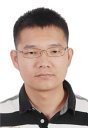
 Guoxian Yu
· 2 previous affiliations
- Shandong UniversitySince 2020
- Full Professor · Since 2020
- Southwest University2013–2020
- Full Professor · 2018–2020
- Associate Professor · 2013–2018
Research Overview
Guoxian Yu focuses on machine learning and computational biology, developing algorithms for multi-label classification, complex data clustering, and multi-omics integration. His trajectory spans early work in protein function prediction to extensive methodological contributions in multiple clusterings and graph-based representation learning. Recently, his research investigates deep graph clustering benchmarks, causal structure learning, and multi-agent communication frameworks.
Research Trajectory
Guoxian Yu’s early research established foundational methods in dimensionality reduction and computational biology. In 2011, he introduced techniques for Enhanced locality preserving projections using robust path based similarity, improving how high-dimensional data is mapped to lower-dimensional spaces while preserving local structures. He subsequently applied machine learning to bioinformatics, specifically addressing the challenge of integrating heterogeneous genomic and proteomic data. This led to Transductive multi-label ensemble classification for protein function prediction (2012), which utilized composite kernels to infer the multiple roles proteins play. He expanded on this framework in Protein Function Prediction by Integrating Multiple Kernels (2013), shifting the optimization focus from the composite kernel weights to the loss of the binary classifiers themselves, thereby improving predictive performance.
As his research progressed, Yu made significant contributions to clustering and multi-label learning methodologies. In 2018, he and his collaborators tackled the problem of discovering non-redundant, alternative ways to organize data in Multiple Co-clusterings. This approach utilized matrix tri-factorization to simultaneously optimize sample-wise and feature-wise co-clustering indicator matrices across multiple distinct views. That same year, he addressed the practical challenge of noisy annotation data with Feature-Induced Partial Multi-label Learning, designing a framework to handle scenarios where instances are tagged with candidate label sets containing false positives. His work on structured data and large-scale systems also included directing the development of SHOAL: Large-scale Hierarchical Taxonomy via Graph-based Query Coalition in E-commerce (2019). Continuing his focus on annotation quality and efficiency, he proposed Active Multilabel Crowd Consensus (2021), a novel approach to budget-constrained crowdsourcing that accounts for the commonality and individuality of different annotator groups by organizing workers based on shared expertise.
In recent years, Yu has increasingly integrated deep learning and graph-based methods with multi-omics analysis. He contributed to Lung cancer subtype diagnosis using weakly-paired multi-omics data (2022), leveraging heterogeneous biological data for clinical applications. He then synthesized his expertise in clustering and bioinformatics by overseeing scMCs: a framework for single-cell multi-omics data integration and multiple clusterings (2023), which addresses the noise and sparsity of single-cell data while mining alternative cell state clusterings. Concurrently, his lab developed scGGAN: single-cell RNA-seq imputation by graph-based generative adversarial network (2023), utilizing graph convolutional networks to model gene-to-gene regulatory relations for missing value imputation. Beyond biology, he advanced multi-modal data processing with Long-tail Cross Modal Hashing (2023). This work introduced an auto-encoder architecture designed to mine the commonality of multi-modal data without allowing it to override the tail labels encoded by the individuality of respective modalities.
Yu's most recent work demonstrates a broadening scope encompassing causal discovery, benchmarking, and multi-agent systems. He synthesized the state of his long-standing clustering research in the comprehensive review Multiple clusterings: Recent advances and perspectives (2024). He also participated in the development of Gradient-Based Local Causal Structure Learning (2024), moving beyond traditional conditional independence tests to discover local causal graphs. This research addresses the specific challenges of neighborhood determination and edge orientation in noisy, real-world applications where traditional tests often fail. In 2025, he directed the creation of DGCBench: A Deep Graph Clustering Benchmark, providing a unified evaluation framework and open-source toolkit to address the fragmented landscape of deep graph clustering. This effort contributes to the broader research areas of standardizing graph representation learning benchmarks and evaluating graph neural networks for heterophilic structures. Most recently, he contributed to Learning Efficient and Interpretable Multi-Agent Communication (2026). This work addresses the "trilemma" of multi-agent communication—balancing task performance, efficiency, and interpretability—by combining discrete autoencoders with offline supervision from large language models. This research advances several broader areas, including decentralized coordination via minimalist feedback and differentiable discrete communication for multi-agent systems, ultimately allowing agents to coordinate using compressed symbols that remain understandable to humans.
Current Directions
The most recent papers in the evidence indicate a dual focus on rigorous evaluation in graph machine learning and the interpretability of complex AI systems. In the domain of graph representation learning, current work addresses the need for standardized benchmarking in deep graph clustering, ensuring that unsupervised learning methods on heterophilic structures can be systematically evaluated across diverse datasets. Simultaneously, research in multi-agent systems investigates emergent communication, utilizing discrete autoencoders and offline supervision from large language models to balance task performance with human interpretability. Additionally, ongoing efforts in causal machine learning focus on gradient-based methods for local causal structure discovery, aiming to overcome the limitations of traditional conditional independence tests in noisy, real-world environments.
Profile updated
| Paper | Venue | Year |
|---|---|---|
| DGCBench: A Deep Graph Clustering BenchmarkGitHubMarigoldwu/ | NeurIPS | 2025 |
Loading new papers…
Other researchers whose papers cluster into the same research directions — a proxy for overlapping technical interests and shared intellectual neighborhoods.
See something wrong? Report a mistake