

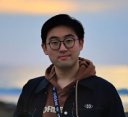
 Guofeng Zhang
· 2 previous affiliations
- Johns Hopkins UniversitySince 2023
- PhD student · Since 2023
- Discover2019–2023
- Undergrad student · 2019–2023
2 other authors named Guofeng Zhang: Guofeng Zhang (Zhejiang University · InSpatio · 263 papers), Guofeng Zhang (9 papers)
Research Overview
Guofeng Zhang focuses on 3D vision, generative artificial intelligence, and robust object recognition. His early work addresses the joint estimation of 3D object pose and classification in out-of-distribution scenarios, often leveraging synthetic data and neural object volumes. Recently, his research has expanded into controllable video generation and sparse-view computed tomography reconstruction.
Research Trajectory
Zhang’s early research in 2023 centered on 3D-aware classification and pose estimation, with a particular emphasis on maintaining performance in out-of-distribution scenarios. He contributed to architectures designed to jointly estimate 3D object pose and class labels, co-authoring Robust 3D-aware Object Classification via Discriminative Render-and-Compare. This work advanced the research area of Reconstructing Deformable and Articulated 3D Shapes by demonstrating that joint estimation models could perform comparably to single-task models while remaining highly robust. During this period, he also participated in broader collaborative efforts to capture biological diversity in computer vision, contributing to Animal3D: A Comprehensive Dataset of 3D Animal Pose and Shape, a benchmark dataset providing high-quality 3D mesh annotations for 40 different mammalian species.
In 2024, Zhang’s focus on robust 3D representations deepened. He co-developed NOVUM: Neural Object Volumes for Robust Object Classification, introducing a neural network architecture that integrates 3D compositional object representations via neural object volumes. This approach maintained real-time inference speeds while enabling interpretable 3D pose estimation and improving robustness. Concurrently, he participated in research exploring the direction of Synthetic Data Generation for 3D Vision and the area of Quality Filtering for High Fidelity Synthetic Data. This was highlighted by his contributions to Generating Images with 3D Annotations Using Diffusion Models, which bridged 3D CAD models and photo-realistic image generation by using 3D renders as visual prompts for diffusion models to automatically generate annotated training data.
Building on these themes of scale and robust representation, Zhang introduced ImageNet3D: Towards General-Purpose Object-Level 3D Understanding. This massive dataset scaled 6D pose annotations to 200 rigid object categories across over 86,000 instances, complete with 3D-aware natural language captions. This work significantly advanced the research direction of Robust Object Recognition in Cluttered Real World Scenes and explored the broader area of Emergent 3D Representations in 2D Vision Models by enabling general-purpose vision models to infer 3D structures directly from natural images.
Moving into 2025, Zhang investigated methods to reduce the field's reliance on expensive, manual 3D annotations. He proposed DINeMo: Learning Neural Mesh Models with no 3D Annotations, a framework for 3D pose estimation that leverages bidirectional pseudo-correspondences from visual foundation models like DINOv2. By training neural mesh models without explicit 3D annotations, the method narrowed the performance gap between unsupervised and fully supervised approaches by over 67% while maintaining high robustness to occlusions. This approach also contributed to the broader area of Resolving Geometric Symmetry Ambiguity in 3D Pose Estimation. Additionally, he collaborated on 4D-Animal: Freely Reconstructing Animatable 3D Animals from Videos, a framework for reconstructing animatable 3D animals from monocular videos using dense 2D features and hierarchical alignment strategies, bypassing the need for manual keypoint annotations.
By 2026, Zhang’s research expanded into generative video models and specialized 3D reconstruction tasks. He developed HECTOR: Hybrid Editable Compositional Object References for Video Generation, a generative framework that decomposes scenes into individual trajectories. By utilizing a specialized alignment module, HECTOR allows users to compose videos with specific objects, motions, and scales, combining static images and dynamic video references for precise, object-level control. In parallel, he addressed medical imaging challenges with X-LRM: X-ray Large Reconstruction Model for Extremely Sparse-View Computed Tomography Recovery in One Second. This work proposed a feedforward architecture to recover volumetric structures from extremely sparse-view X-ray projections (fewer than 10 views) using an MLP-based image tokenizer and a Transformer-based encoder, outputting to a novel X-triplane representation.
Current Directions
The most recent papers in the evidence indicate a dual focus on controllable generative AI and efficient 3D reconstruction from sparse or unannotated data. Recent work investigates how to achieve precise, object-level control in video generation by decomposing scenes into editable trajectories and combining static and dynamic references. Concurrently, Zhang is exploring large reconstruction models capable of recovering complex 3D structures—such as volumetric computed tomography scans—from extremely limited 2D views. A continuing theme across these efforts is the reduction of manual annotation bottlenecks, leveraging foundation models, synthetic data pipelines, and novel architectures to infer 3D properties directly from 2D features and natural images.
Profile updated
| Paper | Venue | Year |
|---|---|---|
| 4D-Animal: Freely Reconstructing Animatable 3D Animals from VideosGitHubzhongshsh/ | arXiv | 2025 |
Loading new papers…
Other researchers whose papers cluster into the same research directions — a proxy for overlapping technical interests and shared intellectual neighborhoods.
See something wrong? Report a mistake