

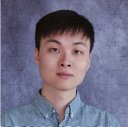
 Guo Ye
1 previous affiliation
- Northwestern University2020–2026
- PhD student · 2020–2026
1 other author named Guo Ye: Guo Ye (64 papers)
Research Overview
Guo Ye focuses on data-centric robotic systems, multi-agent reinforcement learning, and the application of large language models to specialized domains. His early work addressed collision-free navigation and cloud-based workflow management for AI-enhanced robots. More recently, his research investigates the fine-tuning of foundation models for complex translation tasks, such as converting dense scientific literature into actionable policy briefs.
Research Trajectory
His early research addressed fundamental machine learning techniques and robotic navigation. In 2018, he contributed to methods for Learning binary codes with local and inner data structure, exploring how to preserve data relationships during compression. Building on these computational foundations, he transitioned toward human-robot interaction, developing approaches for Collision-free Navigation of Human-centered Robots via Markov Games. This work modeled complex, dynamic environments to ensure safe robotic movement around humans.
A significant portion of his subsequent work focuses on the software infrastructure required to develop and deploy AI-enhanced robots. He collaborated on RoboFlow: a Data-centric Workflow Management System for Developing AI-enhanced Robots, which proposed a cloud-based architecture to orchestrate data processing, algorithmic development, back-testing, and application adaptation. By modeling the robotic development process around a centralized data engine, this system advanced the research direction of Standardized Benchmarking for Generalizable Robotic Learning and provided tools for Closing the Sim-to-Real Gap in Robotics. Continuing this focus on data-driven robotics, he helped design EMS®: A Massive Computational Experiment Management System towards Data-driven Robotics to handle large-scale experimental pipelines. He later introduced DOS®: A Deployment Operating System for Robots, further streamlining the transition of robotic algorithms from development to physical deployment.
In parallel with his systems-level robotics research, he investigated multi-agent reinforcement learning (MARL). He introduced Learning to Infer Belief Embedded Communication, an algorithm termed Intention Embedded Communication (IEC) that utilizes variational autoencoders to decode hidden intentions behind agent messages. This method allows agents to effectively learn a communication protocol from scratch, enabling significantly faster coordination. This work contributed to the broader area of Differentiable Communication for Multi Agent Coordination and advanced research in the area of Symbol Grounding in Decentralized Multi-Agent Communication.
Most recently, his research has expanded into the evaluation and optimization of large language models and foundation models for specialized tasks. He led the development of Sci2Pol: Evaluating and Fine-tuning LLMs on Scientific-to-Policy Brief Generation, creating a comprehensive framework and dataset to translate dense academic literature into actionable policy briefs. By curating a high-quality dataset of paper-policy pairs and developing a specialized evaluation benchmark, this project demonstrated that specialized, fine-tuned models can effectively handle complex domain translations, aligning with the research direction of Simplifying Clinical and Technical Jargon for Lay Audiences. Additionally, he participated in a collaborative effort on Fast and Low-Cost Genomic Foundation Models via Outlier Removal. This work addressed efficiency bottlenecks in DNA-based AI models by replacing standard attention mechanisms with a memory-inspired approach to mitigate activation outliers, allowing genomic analysis to run on consumer-grade hardware. This contribution advanced work in the area of Overcoming the Softmax Summation Constraint in Transformers.
Current Directions
The most recent papers in the evidence indicate a strong focus on adapting massive foundation models for highly specialized, resource-constrained, or domain-specific applications. Recent work investigates how targeted fine-tuning and specialized evaluation benchmarks can enable language models to perform complex knowledge translation, such as converting technical scientific findings into accessible policy formats. Concurrently, this research trajectory explores architectural modifications to transformer models—specifically addressing attention mechanisms and outlier activations—to make foundation models more computationally efficient and robust for specialized domains like genomics. Together, these directions highlight an ongoing interest in democratizing access to advanced AI capabilities by making models more efficient, interpretable, and practically useful for domain experts.
Profile updated
Loading new papers…
Other researchers whose papers cluster into the same research directions — a proxy for overlapping technical interests and shared intellectual neighborhoods.
See something wrong? Report a mistake