

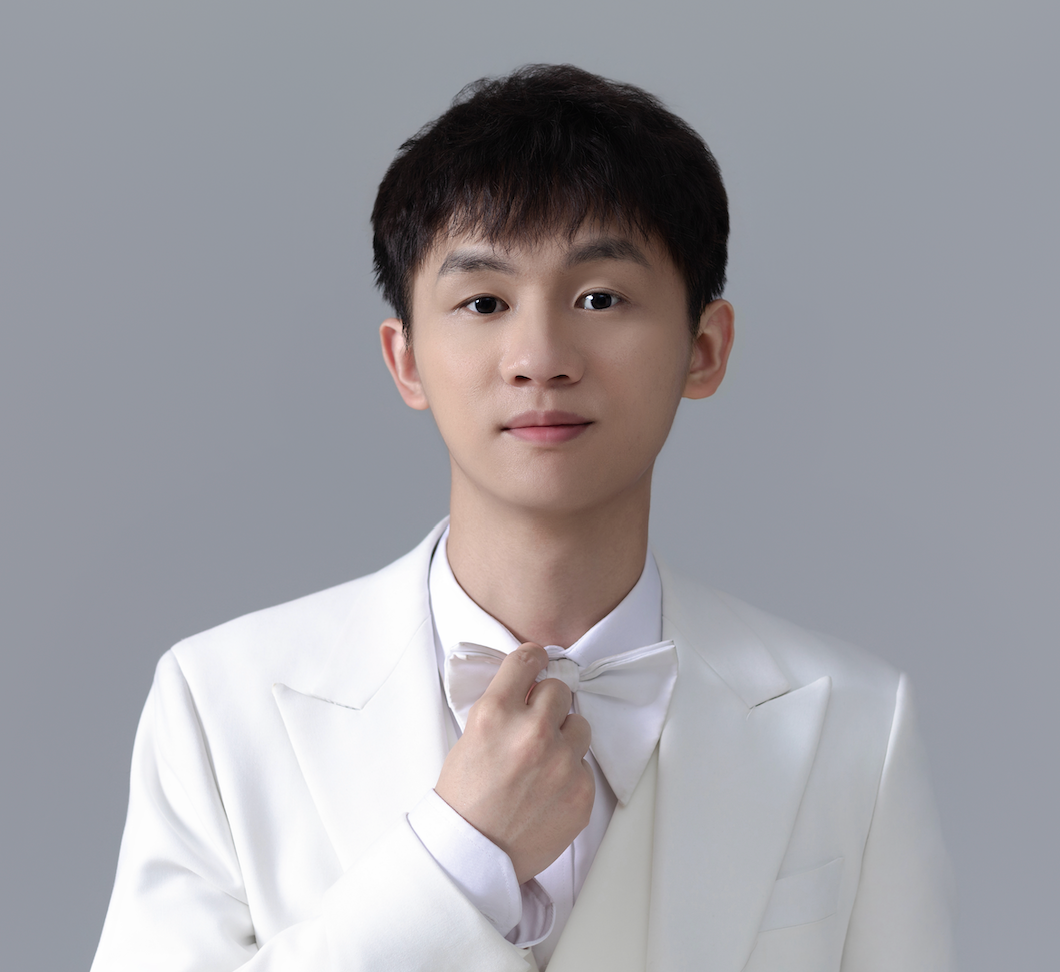
 Guikun Chen
· 1 previous affiliation
- Zhejiang UniversitySince 2021
- PhD student · Since 2021
Research Overview
Guikun Chen focuses on multi-modal learning, scene graph generation, and artificial intelligence for scientific applications. His trajectory spans from foundational visual representation learning and compositional zero-shot learning to the integration of large language models for complex scene understanding. Currently, his research emphasizes uncertainty-aware policy optimization and context anchoring in foundation models.
Research Trajectory
Guikun Chen’s early research involved applied machine learning, beginning with An efficient tea quality classification algorithm based on near infrared spectroscopy and random Forest in 2020, which utilized factor analysis and random forests to evaluate agricultural samples. During his doctoral studies at Zhejiang University and as a visiting PhD student at Harvard University, his focus shifted significantly toward multi-modal learning, scene understanding, and the integration of large language models (LLMs) into computer vision tasks.
In 2023, he introduced Compositional Zero-shot Learning via Progressive Language-based Observations, addressing the area of Modeling Context-Dependent Visual Attributes. This framework leveraged LLMs to generate descriptive hints, allowing models to recognize unseen object-state combinations by observing visual cues in a progressive manner. Contributing to the broader direction of Generative Semantic Enrichment for Multimodal Alignment, he collaborated on Zero-shot Visual Relation Detection via Composite Visual Cues from Large Language Models. This work decomposed abstract relationships into concrete visual descriptions for subjects, objects, and spatial arrangements, improving the ability of models to distinguish fine-grained interactions. He also tackled the long-tail distribution of visual relationships in Compositional Feature Augmentation for Unbiased Scene Graph Generation, advancing the research direction of Mitigating Predicate Frequency Bias in Scene Graph Generation by swapping object features to create diverse training samples for rare relations.
Moving into 2024, his work increasingly integrated LLMs for dynamic and open-vocabulary scene understanding. He developed Scene Graph Generation with Role-Playing Large Language Models, which replaced static text prompts with scene-specific descriptions generated by LLMs acting as domain experts. He also co-developed DoraemonGPT: Toward Understanding Dynamic Scenes with Large Language Models (Exemplified as A Video Agent), an LLM-driven video agent that utilized Monte Carlo Tree Search to navigate reasoning paths, contributing to the area of Managing Visual Token Explosion in Video Large Language Models. In foundational visual representation, he proposed Neural Clustering Based Visual Representation Learning, introducing a neural clustering framework that extracts features by selecting and updating data-driven representatives rather than relying on rigid grid-style paradigms.
Alongside his empirical work, he provided comprehensive overviews of emerging fields. He authored A Survey on 3D Gaussian Splatting, detailing the shift from implicit neural networks to explicit 3D point representations for real-time rendering. He also led A Survey on Multimodal Benchmarks: In the Era of Large AI Models, which systematized evaluation frameworks across understanding, reasoning, and generation, touching on the research direction of The Decoupling of Visual Perception and Logical Reasoning.
In 2025, his research expanded across scene graph generation, 3D animation, and AI for science. He co-authored Hydra-SGG: Hybrid Relation Assignment for One-stage Scene Graph Generation, which addressed the sparse supervision problem inherent in detection transformer architectures. In the 3D vision domain, he introduced TAGA: Self-supervised Learning for Template-free Animatable Gaussian Articulated Model, a framework for creating high-fidelity animatable 3D models from monocular video by reframing canonical ambiguity as an anomaly detection task. Expanding into scientific applications, he developed a Chemical knowledge-informed framework for privacy-aware retrosynthesis learning, enabling collaborative AI training for pharmaceutical research without exposing proprietary molecular data.
His most recent work in 2025 and 2026 focuses on optimizing foundation models and refining clustering architectures. He proposed SEED-GRPO: Semantic Entropy Enhanced GRPO for Uncertainty-Aware Policy Optimization, integrating semantic entropy to scale down policy updates when language models exhibit inconsistent reasoning. To address attention drift in long-context generation, he and his collaborators proposed SinkTrack: Attention Sink based Context Anchoring for Large Language Models, repurposing the first token of a sequence as a high-information anchor. Finally, he contributed to Deep Ensemble Clustering for Visual Representation Learning, which replaced single-algorithm clustering with a differentiable ensemble approach to improve the performance-efficiency trade-off in vision backbones.
Current Directions
The most recent papers in the evidence indicate a dual focus on optimizing the reasoning capabilities of large language models and advancing foundational visual representation architectures. Recent work investigates uncertainty-aware policy optimization by integrating semantic entropy to improve reasoning consistency and efficiency in language models. Additionally, ongoing research addresses attention drift in long-context generation by repurposing attention sinks as structural anchors that inject crucial context without requiring additional training. In the visual domain, current efforts explore differentiable ensemble clustering methods to create more efficient and interpretable vision backbones, alongside applications of privacy-preserving federated learning for chemical retrosynthesis.
Profile updated
Loading new papers…
Other researchers whose papers cluster into the same research directions — a proxy for overlapping technical interests and shared intellectual neighborhoods.
See something wrong? Report a mistake