

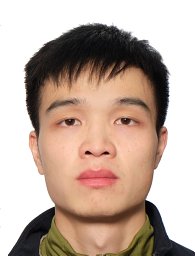
 Guanxiong Luo
5 previous affiliations
- Postdoctoral Research Fellow · 2025
- Universitätsmedizin Göttingen2020–2024
- Research Scientist · 2020–2024
- University of Göttingen2020–2023
- Doctor of Philosophy - PhD, Computer Science · 2020–2023
- Teaching Assistant · 2021–2022
- University of Hong Kong2017–2019
- Research Assistant · 2017–2019
- Xi'an Jiaotong University2013–2017
- Undergrad student · 2013–2017
Research Overview
Guanxiong Luo focuses on the intersection of deep generative modeling and medical imaging, with a primary emphasis on solving inverse problems in Magnetic Resonance Imaging (MRI). His work explores the application of Bayesian inference, diffusion models, and self-supervised learning to reconstruct high-quality images from noisy or undersampled data. Currently, his research investigates Deep Priors for Zero-Shot Image Restoration, aiming to develop reconstruction frameworks that operate without the need for extensive pre-training on large-scale external datasets.
Research Trajectory
Luo’s research trajectory reflects a consistent evolution from classical Bayesian frameworks toward advanced generative models that address the specific physical constraints of medical imaging. In the early stages of his work, around 2019, he focused on establishing deep learning-based Bayesian inference for MRI reconstruction. This period was characterized by the use of generative networks as image priors within a maximum a posteriori (MAP) framework, utilizing methods like stochastic backpropagation to handle incomplete k-space measurements.
By 2022, his work transitioned toward addressing the limitations of point-estimate reconstructions. He introduced frameworks for sampling from learned probability distributions using Markov chain Monte Carlo (MCMC) methods. This shift allowed for the computation of minimum mean square error (MMSE) estimates and the generation of uncertainty maps, providing a more robust statistical foundation for Preserving Structural Fidelity in Generative Medical Imaging. During this time, he also contributed to the development of open-source tools, participating in the extension of the BART toolbox to include non-linear operator frameworks and automatic differentiation, facilitating reproducible research in the field.
In 2023, Luo addressed the challenge of Complex Valued Neural Networks for Wave Physics. Recognizing that most generative models are trained on magnitude-only images, he developed workflows to construct generic generative priors that could handle the complex-valued nature of MRI data. This work demonstrated that priors trained to account for phase information significantly outperform those limited to magnitude data, particularly in compressed sensing and parallel imaging contexts.
The year 2024 marked a significant pivot toward diffusion-based models and temporal dynamics. Luo introduced Autoregressive Image Diffusion (AID), which applies Enforcing Temporal Causality with Causal Attention Masking to MRI sequences. By treating MRI slices as a sequence, this approach leverages the high-fidelity generation of diffusion models while maintaining sequential logic, thereby reducing AI-generated hallucinations. He also participated in research regarding Out-of-Distribution Robustness, specifically developing noise-level adaptive diffusion models to handle the inherent thermal noise found in real-world, high-resolution, or low-field MRI acquisitions.
Luo’s most recent work, spanning 2025 and 2026, focuses on "self-diffusion" and zero-shot learning. This research direction seeks to solve inverse problems by treating the neural network architecture itself as a statistical prior. By moving away from data-hungry supervised models, these frameworks enable image restoration and blind deconvolution in scenarios where paired training data is unavailable or the data distribution is unique. His participation in cross-modality research, such as unsupervised radar point cloud enhancement, further indicates an expansion of these generative priors into broader sensing domains.
Representative Work
MRI Reconstruction Using Deep Bayesian Inference In this 2019 study, Luo developed a Bayesian inference framework for MRI reconstruction using a generative network as an image prior. The method modeled the reconstruction as a posterior maximization problem, employing a projected subgradient method to enforce k-space data fidelity. This work established a foundation for using computationally tractable generative models to regularize ill-posed inverse problems in medical imaging.
MRI Reconstruction via Data Driven Markov Chain with Joint Uncertainty Estimation Shifting from MAP estimation to full posterior sampling, this 2022 paper introduced a framework using MCMC to draw samples from learned distributions. By decoupling the generative model from the forward operator, the approach enabled the calculation of MMSE estimates and uncertainty maps. This provided a mechanism for quantifying the reliability of reconstructed images, a critical requirement for clinical applications.
Generative Image Priors for MRI Reconstruction Trained from Magnitude-Only Images Luo addressed the discrepancy between standard training datasets and the requirements of complex-valued MRI in this 2023 work. He proposed a workflow to augment magnitude-only datasets with phase information, training generative priors that could be applied to both linear and nonlinear reconstructions. The results showed that these complex-aware priors were more robust across various undersampling schemes compared to traditional magnitude-based models.
Autoregressive Image Diffusion: Generation of Image Sequence and Application in MRI This 2024 paper introduced the Autoregressive Image Diffusion (AID) model to handle MRI as a sequential data problem. By combining diffusion models with autoregressive transformers, the framework "remembers" previous slices to inform the reconstruction of subsequent ones. This method significantly improved the acceleration of MRI scans while maintaining high fidelity and reducing the artifacts common in slice-by-slice reconstruction methods.
Self-diffusion for Solving Inverse Problems In this 2025 work, Luo explored the potential of diffusion models in the absence of massive training datasets. The "self-diffusion" approach leverages the internal statistics of the data and the structural priors of the network to solve inverse problems. This zero-shot capability is particularly relevant for unique or sensitive medical data that does not align with the distributions of existing large-scale datasets.
DeblurSDI: Blind Image Deblurring Using Self-diffusion As a second author, Luo contributed to this 2026 framework for blind image deconvolution. The method, DeblurSDI, utilizes an iterative reverse self-diffusion process starting from pure noise. By progressively refining both the latent sharp image and the blur kernel through randomly-initialized neural networks, the framework achieves restoration without any prior training, demonstrating the versatility of self-supervised generative priors in solving complex, ill-posed problems.
Profile updated
Loading new papers…
Other researchers whose papers cluster into the same research directions — a proxy for overlapping technical interests and shared intellectual neighborhoods.
See something wrong? Report a mistake