

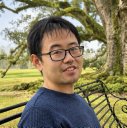
 Guannan Qu
· 3 previous affiliations
- Carnegie Mellon UniversitySince 2021
- Assistant Professor · Since 2021
- California Institute of Technology2019–2021
- Postdoc · 2019–2021
- Harvard University2014–2019
- PhD student · 2014–2019
Research Overview
Guannan Qu focuses on the intersection of machine learning, control theory, and large-scale networked systems. His trajectory spans foundational work in multi-agent reinforcement learning and the stabilization of complex dynamical systems to recent investigations into the internal planning mechanisms of generative AI. His current focus centers on developing scalable, safe, and interpretable algorithms for both physical control systems and large language models.
Research Trajectory
Guannan Qu’s early research engaged with the control of physical infrastructure, beginning with collaborative work on decentralized coordination, such as Real-time decentralized voltage control in distribution networks. Building on this foundation in networked systems, his focus expanded to the theoretical underpinnings of reinforcement learning (RL) and stochastic approximation. Contributing to the research direction of The Non-Linear Function Approximation Gap in Reinforcement Learning, he established sharp finite-time convergence bounds for asynchronous stochastic approximation schemes in Finite-Time Analysis of Asynchronous Stochastic Approximation and $Q$-Learning, matching the best available bounds for synchronous $Q$-learning while improving upon prior asynchronous results.
A major theme of his subsequent work has been overcoming the curse of dimensionality in multi-agent reinforcement learning (MARL). By identifying local dependence structures within networked systems, he developed scalable actor-critic methods capable of learning near-optimal localized policies. This approach, which limits computational complexity to local neighborhoods rather than the entire network, was introduced in Scalable Multi-Agent Reinforcement Learning for Networked Systems with Average Reward and further formalized in Scalable Reinforcement Learning for Multiagent Networked Systems. These contributions significantly advanced the broader area of Scaling Multi-Agent Reinforcement Learning via Structural Abstraction. Alongside his work in MARL, he also analyzed predictive control strategies in time-varying environments. In Perturbation-based Regret Analysis of Predictive Control in Linear Time Varying Systems, he and his collaborators established dynamic regret bounds for predictive control, intersecting with the research direction of Learning Non-Stationary Dynamics in Evolving Physical Systems.
As deep learning became increasingly integrated with control, Qu addressed the dual challenges of certifiability and scalability in neural control systems. He collaborated on Compositional Neural Certificates for Networked Dynamical Systems, which utilized Input-to-State Stability (ISS) Lyapunov functions to provide decentralized stability guarantees that compose into global system stability. This work contributed directly to the area of Certifiable Stability for Deep Neural Control Systems.
In recent years, Qu’s research group has significantly expanded its focus on sampling-based optimal control and the stabilization of unknown systems. He oversaw comprehensive studies on control methodologies in Sampling-Based Methods for Optimal Control: Theory, Algorithms, and Applications and applied diffusion-style annealing to complex physical tasks in Full-Order Sampling-Based MPC for Torque-Level Locomotion Control via Diffusion-Style Annealing. A major theoretical thrust of his lab involves the research direction of Stabilization via Unstable Subspace Projection. By isolating the unstable components of a system, his group demonstrated how to stabilize unknown noisy Linear Time-Invariant (LTI) systems on a single trajectory in Learning to Stabilize Unknown LTI Systems on a Single Trajectory under Stochastic Noise. They extended this principle to achieve dimension-free sample complexity for partially observable systems in Stabilizing LTI Systems under Partial Observability: Sample Complexity and Fundamental Limits.
Continuing his long-standing interest in networked systems, his lab has developed distributed algorithms that leverage the area of Spatial Decay of Influence in Networked Multi-Agent Systems. This is exemplified by Distributed Truncated Predictive Control for Networked Systems under Uncertainty: Stability and Near-Optimality Guarantee, which guarantees stability using only short-term forecasts and local information. To scale MARL to even larger systems, his group introduced subsampling techniques in Mean-Field Sampling for Cooperative Multi-Agent Reinforcement Learning and utilized graph transformers to handle long-range interactions in Transformer-Based Scalable Multi-Agent Reinforcement Learning for Networked Systems with Long-Range Interactions.
Most recently, Qu has applied his expertise in complex systems and representation learning to the fundamental principles of Large Language Models (LLMs). His group developed information-theoretic frameworks to analyze the internal hidden states of LLMs, investigating whether these models perform internal planning and maintain awareness of alternative solution branches. This work is detailed in Language Model Planning from an Information Theoretic Perspective and Internal Planning in Language Models: Characterizing Horizon and Branch Awareness. Additionally, he collaborated on Towards \textit{Effective Theory} of LLMs: A Representation Learning Approach, which introduces a framework to describe LLM computation through high-level macrostates, enabling the prediction and steering of model behavior.
Current Directions
The most recent papers in the evidence highlight a dual focus in Qu’s ongoing research. The first major direction involves the interpretability and fundamental mechanics of generative AI. Recent work investigates the internal representations of Large Language Models, using information-theoretic tools and representation learning to understand how LLMs plan, track long-term goals, and form stable "mental states." This line of inquiry aims to predict behavioral failures and steer reasoning strategies in real-time.
The second major direction continues to advance scalable control and multi-agent reinforcement learning for complex physical and networked systems. Recent efforts address the stabilization of high-dimensional, partially observable systems by focusing sample complexity strictly on unstable modes. Concurrently, his group is developing novel architectures—such as graph transformers combined with counterfactual advantage estimators and mean-field sampling techniques—to scale MARL to thousands of agents while accommodating long-range interactions and unknown network topologies.
Profile updated
Loading new papers…
Other researchers whose papers cluster into the same research directions — a proxy for overlapping technical interests and shared intellectual neighborhoods.
See something wrong? Report a mistake