

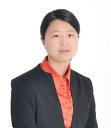
 Guangyan Huang
· 3 previous affiliations
- Deakin UniversitySince 2014
- Associate Professor · Since 2014
- Victoria University2009–2014
- Postdoc · 2012–2014
- PhD student · 2009–2012
- Chinese Academy of Sciences2007–2009
- Assistant Professor · 2007–2009
Research Overview
Guangyan Huang focuses on data mining, time series analysis, and information extraction across diverse domains including social media and sensor networks. Early work addressed the extraction of semantics from correlated time series and web data, evolving into the analysis of short text streams for event detection. Recent research investigates entity resolution in sparse networks and privacy protection in smart grid infrastructure.
Research Trajectory
Guangyan Huang’s research trajectory is characterized by a consistent focus on extracting actionable patterns from complex, noisy, or sparse data sources. In the early 2010s, this work primarily centered on time series analysis and web information extraction. A notable contribution to time series mining is the co-authored paper Discovering Semantics from Multiple Correlated Time Series Stream (2013). In this work, Huang and collaborators proposed a Correlation field-based Semantics Learning Framework (CfSLF) that utilized Hidden Markov Random Fields to model the relationships between latent states and observations, effectively learning data-generating and state-transforming rules from correlated streams. Concurrently, Huang served as the senior author on Leveraging Visual Features and Hierarchical Dependencies for Conference Information Extraction (2013), which addressed the limitations of traditional text-based web extraction. The proposed approach segmented web pages using a hybrid algorithm combining visual features with Document Object Model (DOM) structures, subsequently labeling text blocks via a Tree-structured Random Fields model.
By 2015, Huang’s focus expanded to the challenges of social media and real-time text analytics. As the first author of Mining streams of short text for analysis of world-wide event evolutions (2015), Huang tackled the specific difficulties of processing short text messages, such as news titles and microblogs. Because traditional metrics like term frequency are less effective in brief texts lacking repetition, this research developed new methodologies to reliably identify and track real-world events amidst constant and overlapping topic streams.
In the late 2010s, Huang’s expertise in data mining was increasingly applied to Internet of Things (IoT) environments, smart city infrastructure, and sensor data. Returning to time series classification, Huang co-authored Flexible Shapelets Discovery for Time Series Classification (2019). This research addressed the computational bottlenecks associated with finding arbitrary-length shapelets—highly predictive sub-sequences of time series—enabling more accurate classification for intelligent sensor applications. In the same year, Huang acted as the senior investigator on Enhanced Smart Meter Privacy Protection Using Rechargeable Batteries (2019). This work addressed a critical vulnerability in smart grids: the ability of adversaries to infer a consumer's daily activities from high-frequency smart meter readings. The paper proposed a heuristic energy management method utilizing rechargeable batteries to mask actual consumption patterns without tampering with the meter's reporting mechanisms.
Moving into the 2020s, Huang’s research began addressing the integration of highly sparse network data. This is exemplified by the co-authored work Entity Resolution in Sparse Encounter Network Using Markov Logic Network (2021). When unique identifiers like mobile phone numbers are unavailable, determining whether different descriptions refer to the same real-world entity becomes highly complex. This paper applied Markov Logic Networks to perform entity resolution on sparse encounter datasets, demonstrating how probabilistic logic can integrate limited information from close-range, person-to-person contacts.
Current Directions
The most recent papers in the evidence, published between 2020 and 2021, indicate a continued focus on data integration, pattern recognition, and recommendation systems within sparse and dynamic networks. A primary area of recent investigation is entity resolution in environments where unique identifiers are absent or unreliable, utilizing probabilistic logic frameworks to infer identities from limited encounter data.
Additionally, ongoing research explores the temporal dynamics of social media and online communities. This includes leveraging the frequency of usage over time—rather than relying solely on explicit text—to cluster short texts like hashtags, which helps in capturing evolving events and opinions despite the inherent sparsity of the medium. Related recent work also addresses the challenges of large-scale online sharing communities, developing frameworks for dynamic group recommendation that explore both collective group interests and the underlying connections between users.
Profile updated
| Title | Venue | Year |
|---|---|---|
| SE-shapelets: Semi-supervised Clustering of Time Series Using Representative Shapelets | Expert Systems with Applications | 2024 |
| Entity Resolution in Sparse Encounter Network Using Markov Logic Network | IEEE Access | 2021 |
| Multi-Scale Shapelets Discovery for Time-Series Classification | Int. J. Inf. Technol. Decis. Mak | 2020 |
| Clustering Hashtags Using Temporal Patterns | Wise | 2020 |
| Dynamic Connection-Based Social Group Recommendation | IEEE TKDE | 2020 |
| A combination model based on transfer learning for waste classification | CCPE | 2020 |
| Community Enhanced Record Linkage Method for Vehicle Insurance System | Adma | 2019 |
| Enhanced Smart Meter Privacy Protection Using Rechargeable Batteries | IEEE Internet of Things Journal | 2019 |
| Flexible Shapelets Discovery for Time Series Classification | Icds | 2019 |
| A Review on Automatic Facial Expression Recognition Systems Assisted by Multimodal Sensor Data | Sensors | 2019 |
Loading new papers…
Other researchers whose papers cluster into the same research directions — a proxy for overlapping technical interests and shared intellectual neighborhoods.
See something wrong? Report a mistake