

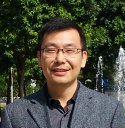
 Guangming Lu
· 2 previous affiliations
- Harbin Institute of TechnologySince 2007
- Full Professor · Since 2013
- Associate Professor · 2007–2013
- Tsinghua University2005–2007
- Postdoc · 2005–2007
2 other authors named Guangming Lu: Guangming Lu (LinkedIn (United States) · 3 papers), Guangming Lu (3 papers)
Research Overview
Guangming Lu focuses on computer vision, biometric recognition, and the optimization of deep neural networks for robust, real-world deployment. His early work established foundational techniques in palmprint and fingerprint analysis before expanding into broader machine learning architectures. Currently, his research addresses multimodal robustness, generative steganography, and debiasing strategies in medical artificial intelligence.
Research Trajectory
His early research trajectory began at the intersection of hardware architecture and pattern recognition. In 2000, he contributed to the development of MorphoSys: An Integrated Reconfigurable System for Data-Parallel and Computation-Intensive Applications, exploring coarse-grain reconfigurable systems-on-chip for high-throughput tasks. Following this, he established a long-running focus on biometric security and feature extraction. He introduced foundational techniques for Palmprint recognition using eigenpalms features (2003) and later expanded this to incorporate spatial depth in Palmprint Recognition Using 3-D Information (2009). His biometrics research also addressed system optimization, such as identifying optimal sensor parameters in Selecting a Reference High Resolution for Fingerprint Recognition Using Minutiae and Pores (2011). Concurrently, he applied computational analysis to medical imaging, participating in neuroimaging research to map small-world directed networks via resting-state fMRI in Small-world directed networks in the human brain: Multivariate Granger causality analysis of resting-state fMRI (2011). His extensive body of biometrics work culminated in a comprehensive evaluation of the field, Feature Extraction Methods for Palmprint Recognition: A Survey and Evaluation (2019).
As deep learning became central to computer vision, his focus shifted toward optimizing neural network architectures and improving image restoration. He proposed a novel learning paradigm in Filter Grafting for Deep Neural Networks (2020), which re-activates invalid filters by grafting external weights to boost representation capability without the information loss associated with traditional pruning. In the clinical domain, he led the development of predictive triage systems, integrating clinical and radiomic data in AI-based analysis of CT images for rapid triage of COVID-19 patients (2021) to forecast disease severity and optimize resource allocation. Returning to core computer vision, he addressed the computational bottlenecks of 4K image processing. His work on the Global-Local Stepwise Generative Network for Ultra High-Resolution Image Restoration (2022) balanced global context with fine-grained local details, establishing new benchmarks for reflection and rain streak removal. This work significantly advanced the broader research direction of All-in-One Image Restoration for Compound Degradations.
By 2025, his research expanded into several advanced areas of machine learning, including network efficiency, robust medical AI, and adversarial security. To improve depth perception in challenging environments, he developed a hybrid approach in Stereo Matching Algorithm Combining Image Segmentation and Improved Belief Propagation (2025), utilizing Mean Shift segmentation to accelerate processing in textureless regions. In network optimization, he introduced PrunNet in Learning Compatible Multi-Prize Subnetworks for Asymmetric Retrieval (2025), a framework that trains a single dense network capable of yielding multiple compatible subnetworks for diverse hardware constraints.
Addressing generalization in clinical AI, he tackled the pervasive issue of language bias in Medical Visual Question Answering (Med-VQA). He framed this bias as a cause-effect problem in Cause-Effect Driven Optimization for Robust Medical Visual Question Answering with Language Biases (2025), using dynamic loss rescaling to prevent models from relying on textual shortcuts. He further advanced this debiasing effort in LBF-VQA: Towards Language Bias-Free Visual Question Answering With Multi-Space Collaborative Debiasing (2025).
His recent trajectory also explores the security vulnerabilities and cryptographic potential of generative models. He investigated stealthy neural backdoors in A Set of Generalized Components to Achieve Effective Poison-only Clean-label Backdoor Attacks with Collaborative Sample Selection and Triggers (2025), demonstrating how co-optimizing poisoned samples and triggers can bypass detection. Conversely, he leveraged generative diffusion models for secure communication, developing frameworks for statistical invisibility in generative steganography. This included SSHR: More Secure Generative Steganography with High-Quality Revealed Secret Images (2025), which uses reference images and dynamically generated symmetric keys, and Large-capacity and Receiver Authenticable Generative Image Steganography (2026), which enables multiple secret images to be authenticated and extracted by specific recipients. Finally, he addressed the reliability of multimodal systems in Coverage ≠ Exposure: Auditable Control of Same-Support Tail Failures under Multimodal Missingness (2026), introducing a lightweight training controller to stabilize catastrophic tail failures caused by sensor dropouts.
Current Directions
Recent work investigates the security, robustness, and efficiency of advanced generative and multimodal models. A major current focus is generative steganography, where diffusion models are adapted to hide high-capacity, cryptographically secure data within visually natural images, ensuring statistical invisibility and receiver authentication. Alongside secure communication, research addresses the vulnerabilities of deep learning systems, including the mechanics of stealthy, clean-label backdoor attacks.
In the domain of multimodal artificial intelligence, particularly for clinical applications, current efforts aim to eliminate systemic biases and improve reliability under real-world constraints. This includes developing cause-effect optimization strategies to remove language bias in Medical Visual Question Answering, ensuring models ground their predictions in visual evidence rather than textual shortcuts. Additionally, ongoing work tackles multimodal missingness, designing training controllers that dynamically adjust weight decay to prevent catastrophic tail failures when sensor data is noisy or incomplete. Finally, the optimization of neural architectures remains a persistent theme, with recent frameworks enabling the extraction of compatible, multi-capacity subnetworks for efficient inference across diverse hardware platforms.
Profile updated
Loading new papers…
Other researchers whose papers cluster into the same research directions — a proxy for overlapping technical interests and shared intellectual neighborhoods.
See something wrong? Report a mistake