

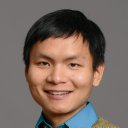
 Greg Yang
2 previous affiliations
- Microsoft (United States)2017–2023
- Researcher · 2017–2023
- Harvard University2010–2017
- Undergrad student · 2010–2017
Research Overview
Greg Yang focuses on the mathematical foundations of deep learning, specifically the behavior of neural networks in the infinite-width limit and the development of the Tensor Programs framework. His work aims to unify the theoretical understanding of diverse neural architectures and provide a principled basis for Predictable Hyperparameter Scaling for Large Scale Neural Networks. By identifying the optimal scaling limits for neural network parameters, his research enables the transfer of hyperparameters from small-scale models to large-scale production models, addressing a fundamental challenge in the training of massive deep learning systems.
Research Trajectory
The evolution of Yang’s research reflects a transition from abstract mathematical logic and memory systems to a rigorous, unified theory of neural network scaling. His early work in 2014 addressed The Computational Boundaries of Probabilistic Logic, where he investigated the computability and satisfiability of logics equipped with probability measures. This period focused on the "complexity tax" of adding probabilities to classical logic, establishing foundational results on the decidability of $\epsilon$-logics over finite and countable models.
By 2017, his focus shifted toward the intersection of differential geometry and neural architectures, specifically regarding Sequential Associative Memory and Dynamic Attractors. During this time, he explored how neural networks could interact with external memory through continuous manifolds rather than discrete tapes. This work utilized Lie group actions to create differentiable and invertible memory access mechanisms, moving away from static fixed-point attractors toward more dynamic, biologically inspired memory models.
In 2019, Yang introduced the Tensor Programs framework, which became the cornerstone of his subsequent research. This framework provided a systematic language for deriving the infinite-width limits of virtually any neural architecture. This work addressed Finite Width Corrections for Infinite Neural Network Limits, proving that as layers become infinitely wide, architectures such as Recurrent Neural Networks (RNNs) and Transformers converge to Gaussian Processes (GPs). This period was characterized by a focus on the "lazy training" regime, where the network's behavior is governed by a frozen Neural Tangent Kernel (NTK).
Starting in 2020, Yang’s research evolved to address the limitations of the NTK regime, specifically its inability to account for feature learning. He identified that standard parametrizations often lead to "featureless" limits and proposed modifications to allow for rich feature evolution in the infinite-width limit. This led to the development of the Maximal Update Parametrization ($\mu$P), which ensures that both the forward activations and the backward gradients remain stable as the width increases. This work also touched upon Signal Propagation and Dynamical Isometry in Deep Networks, ensuring that information flows effectively through very deep architectures.
In the most recent phase of his work (2021–2025), Yang has extended these scaling principles to include depthwise evolution and global convergence guarantees. His research now focuses on the practical application of these theoretical limits to large-scale model training, demonstrating that the optimal hyperparameters for a wide or deep network can be predicted by training a much smaller "proxy" model. This trajectory represents a move from Finite Width Corrections in Deep Learning Theory toward a comprehensive, actionable theory of neural network scaling.
Representative Work
In Computabilities of Validity and Satisfiability in Probability Logics over Finite and Countable Models, Yang established the computational complexity of $\epsilon$-logic, a variant of first-order logic where quantifiers are interpreted probabilistically. He demonstrated that the satisfiability and validity problems for this logic vary significantly depending on the value of $\epsilon$ and the nature of the models (finite vs. countable). This work provided a rigorous mapping of the computational landscape of probabilistic reasoning, showing that the transition from classical to probabilistic logic fundamentally alters the complexity of logical inference.
The introduction of the Tensor Programs framework in Tensor Programs I: Wide Feedforward or Recurrent Neural Networks of Any Architecture are Gaussian Processes marked a significant shift in deep learning theory. Yang proved that the correspondence between neural networks and Gaussian Processes extends beyond simple fully-connected networks to include LSTMs, GRUs, convolutions, attention mechanisms, and various normalization layers. By developing the NETSOR language, he provided a unified mathematical toolset to compute the infinite-width limit of any architecture composed of standard deep learning building blocks.
In Feature Learning in Infinite-Width Neural Networks, Yang addressed the "lazy training" problem inherent in the Neural Tangent Kernel (NTK) limit. He showed that standard parametrizations do not allow infinite-width networks to learn features, which is essential for the success of pretraining and transfer learning. To resolve this, he proposed a new parametrization that enables feature learning in the limit, deriving explicit formulas for these limits using the Tensor Programs technique. This work laid the theoretical foundation for the Maximal Update Parametrization ($\mu$P).
As a senior author, Yang explored the impact of architectural constraints on learning dynamics in Implicit Acceleration and Feature Learning in Infinitely Wide Neural Networks with Bottlenecks. This research analyzed how a finite-sized bottleneck in an otherwise infinitely wide network allows for data-dependent feature learning. The study empirically and theoretically demonstrated that such bottlenecks can dramatically accelerate training compared to purely infinite networks, drawing parallels to the acceleration effects observed in deep linear models.
Yang extended the $\mu$P framework to the dimension of depth in Feature Learning in Infinite-Depth Neural Networks. While previous work focused on widthwise hyperparameter transfer, this paper investigated the analogous classification for depthwise parametrizations in residual networks. By identifying a unique optimal parametrization called Depth-$\mu$P, Yang showed that it is possible to predict the optimal hyperparameters of deep networks from shallower ones, further expanding the utility of scaling laws in model development.
In Global Convergence and Rich Feature Learning in $L$-Layer Infinite-Width Neural Networks under $\mu$ Parametrization, Yang contributed to a proof that deep, infinitely wide networks under $\mu$P can achieve both rich feature learning and global convergence. This result is significant because it moves beyond the linear-regime analysis of the NTK, showing that even when features evolve significantly from their initialization, the network can maintain the properties necessary to ensure that any convergent point is a global minimum. This work provides a theoretical bridge between the complex dynamics of feature learning and the stability required for successful optimization.
Profile updated
Loading new papers…
Other researchers whose papers cluster into the same research directions — a proxy for overlapping technical interests and shared intellectual neighborhoods.
See something wrong? Report a mistake