

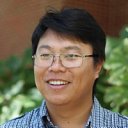
 Gongbo Liang
· 2 previous affiliations
- Texas A&M University – San AntonioSince 2022
- Assistant Professor · Since 2022
- University of Kentucky2016–2020
- PhD student · 2016–2020
Research Overview
Gongbo Liang focuses on medical image analysis, self-supervised representation learning, and the robustness of neural networks. His early work addressed multimodal classification and dimensionality reduction for clinical diagnostics and astrophysics. More recently, his research investigates cross-modal pre-training strategies and the application of multiscale satellite imagery to environmental and infrastructure risk assessment.
Research Trajectory
Liang’s early research established a strong foundation in computer vision, initially exploring pedestrian detection before transitioning heavily into the medical imaging domain. By 2019, his focus had shifted toward the integration of multiple imaging modalities to improve diagnostic accuracy. As first author, he published Joint 2D-3D Breast Cancer Classification, proposing an innovative convolutional neural network (CNN) architecture designed to process 2D digital mammograms and 3D digital breast tomosynthesis simultaneously. This approach was explicitly inspired by clinical practice, where radiologists evaluate both modalities in tandem rather than in isolation. His work in multimodal diagnostics aligns with broader challenges in the field, including themes such as Overcoming the Modality Gap in Medical Image Segmentation, where models must learn to recognize consistent anatomical structures across varying physical imaging properties.
In 2020, Liang expanded his methodological scope to address the computational bottlenecks associated with 3D data. He contributed to the research direction of Dimensionality Reduction for Efficient Volumetric Medical Image Analysis, which seeks to mitigate the memory-intensive nature of 3D CNNs. A key example is his second-author contribution to Dynamic Image for 3D MRI image Alzheimer’s Disease classification. This work utilized dynamic image technology to transform 3D MRI volumes into 2D inputs, achieving significant improvements in classification accuracy while reducing training time by 80% compared to baseline 3D models.
Concurrently, Liang began applying representation learning to domains characterized by massive, unlabeled datasets. As first author, he developed Optical Wavelength Guided Self-Supervised Feature Learning For Galaxy Cluster Richness Estimate, leveraging the data properties of multi-band optical images for pre-training in astronomical surveys like the Sloan Digital Sky Survey. This reliance on unlabeled data connects to his broader interest in the area of Filtering Pseudo Labels with Predictive Confidence, addressing the need to extract reliable signals from unannotated environments. During this period, he also addressed fundamental issues of neural network reliability. He led work on Improved Trainable Calibration Method for Neural Networks, contributing to the broader area of Differentiable Calibration for Reliable Neural Networks, which focuses on correcting the overconfidence often exhibited by modern deep learning models.
Between 2021 and 2022, Liang returned to medical imaging with a focus on data scarcity and weak supervision. Recognizing the difficulty of obtaining manually labeled medical images, he introduced Contrastive Cross-Modal Pre-Training: A General Strategy for Small Sample Medical Imaging as first author. This research utilized unstructured textual clinical reports as a form of weak supervision. By employing an image-text matching task to train a feature extractor, the method allowed for effective transfer learning on supervised tasks with very small sample sizes.
Most recently, Liang’s trajectory has expanded into remote sensing and infrastructure safety. In 2024, he authored Unveiling Roadway Hazards: Enhancing Fatal Crash Risk Estimation Through Multiscale Satellite Imagery and Self-Supervised Cross-Matching. This work integrates multiscale satellite imagery with self-supervised learning to capture both broad environmental factors and detailed ground-level information, offering a novel approach to estimating traffic accident risks without relying on traditional, labor-intensive data collection.
Current Directions
The most recent papers in the evidence indicate a dual focus on applied remote sensing and the fundamental interpretability of machine learning models. Recent work investigates how self-supervised learning and multiscale feature extraction can be applied to satellite imagery for large-scale risk assessment, specifically in the context of roadway hazards and environmental monitoring.
Additionally, his recent senior-author contributions highlight an ongoing interest in the consistency of neural network decision-making criteria. Rather than relying solely on black-box performance metrics like overall accuracy, this line of research analyzes input sensitivity to understand how models form predictions across multiple training trials, aiming to ensure that networks learn stable and reliable features for deployment in high-stakes environments.
Profile updated
Loading new papers…
Other researchers whose papers cluster into the same research directions — a proxy for overlapping technical interests and shared intellectual neighborhoods.
See something wrong? Report a mistake