

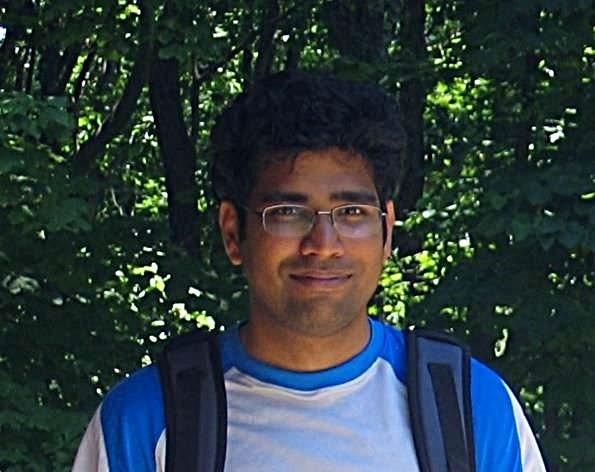
 Giri P Krishnan
· 4 previous affiliations
- Georgia Institute of TechnologySince 2024
- Principal Researcher · Since 2024
- University of California San Diego2021–2024
- Research Scientist · 2021–2024
- Independent Researcher2009–2015
- Postdoc · 2009–2015
- Indiana University2002–2009
- PhD student · 2002–2009
Research Overview
Giri P Krishnan focuses on the development of neuro-inspired artificial intelligence and the application of machine learning methods to complex problems in computational science. His work bridges computational neuroscience and deep learning, specifically investigating how biological mechanisms—such as sleep-dependent memory consolidation—can be adapted to improve the stability, generalization, and robustness of artificial neural networks. Currently, his research emphasizes generative workflows for scientific computing, neural acceleration for compute-intensive simulations, and the interpretability of models in domains such as molecular dynamics and protein structure prediction.
Research Trajectory
Krishnan’s early research was grounded in clinical and computational neuroscience, focusing on the physiological markers of neurological disorders. His work in this period, exemplified by a 2009 study on Steady state and induced auditory gamma deficits in schizophrenia, examined how neural oscillations relate to cognitive deficits. This foundational interest in neural dynamics eventually transitioned into the development of biologically inspired algorithms for artificial intelligence.
Starting around 2019, Krishnan began translating principles of biological plasticity and sleep into the domain of deep learning. This research direction addresses the problem of catastrophic forgetting, where artificial neural networks lose previously learned information when trained on new tasks. By developing "sleep algorithms" that utilize Offline Consolidation and Replay for Stable Continual Learning, he demonstrated that converting standard networks into spiking neural networks (SNNs) during an unsupervised phase could stabilize internal representations. This work also explored Mechanisms for Adversarial Resilience in Neural Networks, suggesting that biologically inspired "offline" phases could improve a model's ability to generalize to noisy or adversarial data.
In recent years, Krishnan’s focus has expanded toward AI for Science and the evaluation of large-scale models. His group has investigated the use of Unsupervised Feature Learning with Spike Timing Dependent Plasticity and modern associative memory architectures to enhance classification and generalization. Most recently, his work has moved into high-impact scientific domains, including quantum chemistry and structural biology. This includes developing ensemble methods for molecular interaction simulations and analyzing the internal components of protein structure prediction models. Additionally, he has participated in research evaluating the Structural Logic over Lexical Shortcuts in Code Models, contributing to the understanding of how Large Language Models (LLMs) reason about obfuscated code.
Representative Work
In Biologically inspired sleep algorithm for artificial neural networks, Krishnan introduced a method to mitigate catastrophic forgetting by mapping standard artificial neural networks to spiking neural networks. This approach allows the network to undergo an unsupervised "offline" phase characterized by synaptic plasticity and memory replay. The research demonstrated that this biologically inspired process not only preserves old memories during new task acquisition but also enhances the network's generalization capabilities when faced with noisy input data.
Building on these neuro-inspired foundations, Biologically inspired sleep algorithm for increased generalization and adversarial robustness in deep neural networks explored the intersection of neuroscience and model security. The study proposed that simulating sleep-like states can make deep neural networks more resilient to adversarial perturbations. By allowing the model to "replay" internal representations in a controlled, unsupervised manner, the research identified a pathway for creating models that are less brittle and more capable of maintaining performance across diverse data distributions.
In the area of associative memory and classification, Krishnan co-authored Modern Hopfield Network with Local Learning Rules for Class Generalization. This work examined whether Modern Hopfield Networks (MHNs), which typically scale memory capacity non-linearly, could be adapted for standard classification tasks. The researchers developed an MHN-based classifier utilizing local learning rules, demonstrating that such architectures could achieve accuracies comparable to multi-layer perceptrons on vision tasks while maintaining the unique memory properties of Hopfield systems.
As a senior author, Krishnan led the research presented in Sleep-Like Unsupervised Replay Improves Performance when Data are Limited or Unbalanced. This study addressed a critical limitation in deep learning: the requirement for massive, balanced datasets. By implementing a sleep-like replay phase using random noise and biologically inspired plasticity, the team achieved significant accuracy gains (up to 30%) in scenarios where training data was scarce or highly imbalanced. This work suggests that "dreaming" or unsupervised replay can serve as a powerful regularizer for models trained in data-constrained environments.
In the domain of computational chemistry, Krishnan served as senior author on Δ-ML Ensembles for Selecting Quantum Chemistry Methods to Compute Intermolecular Interactions. This research developed a framework using ensembles of Delta-Machine Learning models to predict errors and computational costs across eighty different quantum chemistry methods. By utilizing pre-trained neural network embeddings, the system can correct low-cost, lower-accuracy calculations to meet "gold standard" scientific accuracy. This work functions as a recommendation engine to optimize the trade-off between computational expense and precision in molecular simulations.
Finally, Krishnan has contributed to the interpretability of complex biological models in Quantifying the Role of OpenFold Components in Protein Structure Prediction. This study provides a systematic evaluation of the individual components within OpenFold, a state-of-the-art protein structure prediction network. By identifying which architectural components are critical for accuracy and how their importance scales with protein length, the research offers insights into the internal mechanics of high-dimensional biological prediction models, moving toward more transparent and interpretable scientific AI.
Profile updated
| Paper | Venue | Year |
|---|---|---|
| What Variables Affect Out-of-Distribution Generalization in Pretrained Models?GitHubyousuf907/ | NeurIPS | 2024 |
Loading new papers…
Other researchers whose papers cluster into the same research directions — a proxy for overlapping technical interests and shared intellectual neighborhoods.
See something wrong? Report a mistake