

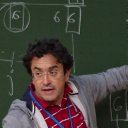
 Giorgio Satta
· 5 previous affiliations
- member · Since 1991
- University of PaduaSince 1994
- full professor · Since 2004
- professor · Since 1994
- PhD, Computer Science · 1986–1989
- University of Pennsylvania1991–1993
- postdoc · 1991–1993
- Istituto Scientifico Romagnolo per lo Studio e la Cura dei Tumori1990–1991
- researcher · 1990–1991
- Fondazione Bruno Kessler1990–1991
- senior researcher · 1990–1991
Research Overview
Giorgio Satta focuses on the formal properties of grammar formalisms, parsing algorithms, and the computational complexity of natural language processing. His trajectory spans early foundational work on efficient parsing for context-free and tree-adjoining grammars to the development of transition-based dependency parsers. Most recently, his research addresses semantic graph parsing and the application of directed acyclic graph automata to abstract meaning representation.
Research Trajectory
In the late 1990s and early 2000s, Satta’s research concentrated on optimizing parsing algorithms for highly expressive grammar formalisms. A central challenge in this era was balancing the expressive power needed to capture complex linguistic phenomena with computational tractability, aligning with the research direction of Binarization Trade-offs for Efficient Grammar Parsing. As a co-author, he contributed to significant algorithmic improvements in this domain, such as in Efficient Parsing for Bilexical Context-Free Grammars and Head Automaton Grammars. This work demonstrated $O(n^4)$ parsing algorithms for bilexical formalisms, improving upon previous $O(n^5)$ upper bounds and providing more efficient underlying solutions for stochastic parsers.
Moving into the 2010s, Satta expanded his focus to the theoretical properties of mildly context-sensitive grammars and the complexities of non-projective dependency parsing. Serving as senior author, he investigated the weak generative capacity of Combinatory Categorial Grammar (CCG) in The Importance of Rule Restrictions in CCG. This research proved that "pure," fully lexicalized CCG is strictly less expressive than CCG equipped with grammar-specific rules or Tree Adjoining Grammar (TAG). Concurrently, his work addressed the broader area of Statistical Disambiguation for Formal Grammars. In Exact Inference for Generative Probabilistic Non-Projective Dependency Parsing, he and his collaborators introduced a generative model and a dynamic programming algorithm for non-projective dependency trees, enabling unsupervised learning through a novel inside-outside algorithm. During this period, he also contributed to optimal rank reduction algorithms for Linear Context-Free Rewriting Systems (LCFRSs), yielding asymptotic improvements in running time for parsing discontinuous phrases.
By 2013, Satta was exploring flexible parsing strategies to handle structural ambiguities, contributing to themes such as Mitigating Search Errors in Structured Prediction. As a co-author on A Transition-Based Dependency Parser Using a Dynamic Parsing Strategy, he helped design a greedy dependency parser that dynamically mixed bottom-up and top-down strategies. This approach allowed the parser to delay difficult attachment decisions until sufficient contextual information became available, significantly reducing unlabeled attachment errors compared to standard arc-eager parsers.
In the latter half of the decade, Satta’s trajectory shifted toward semantic representation, specifically Abstract Meaning Representation (AMR). This transition reflected a growing need in the field to parse sentences into complex semantic structures rather than simple syntactic trees, engaging deeply with the research direction of Online Reordering Transitions for Non-Projective Parsing. As senior author, he led the development of linear-time, left-to-right parsing architectures, detailed in An Incremental Parser for Abstract Meaning Representation. This transition-based parser proved highly competitive, particularly in recovering named entities and handling polarity within semantic graphs.
Current Directions
The most recent papers in the evidence, dating to 2018, indicate a sustained focus on the formal foundations of semantic graph processing. A primary objective of this recent work is establishing rigorous mathematical frameworks for graphs that parallel classical finite state automata for strings and trees. As senior author on Weighted DAG Automata for Semantic Graphs, Satta has investigated weighted directed acyclic graph (DAG) automata, developing practical recognition algorithms that facilitate inference and learning over semantic structures.
Additionally, his recent research explores sequence-to-sequence models applied to cache transition systems, further advancing the broader area of Syntactic Graphs for Long Range Textual Dependencies. These directions highlight an ongoing commitment to bridging formal language theory with modern, graph-based semantic parsing, ensuring that complex meaning representations can be processed with the same algorithmic rigor historically applied to syntactic trees.
Profile updated
Loading new papers…
Other researchers whose papers cluster into the same research directions — a proxy for overlapping technical interests and shared intellectual neighborhoods.
See something wrong? Report a mistake