

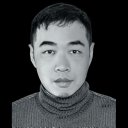
 Gilbert Lim
· 6 previous affiliations
- EyRISSince 2018
- Chief AI Scientist · Since 2025
- Co-Founder · Since 2018
- SingHealth2021–2025
- Senior AI Scientist · 2024–2025
- Assistant Professor · 2023–2025
- AI Scientist · 2021–2024
- Duke-NUS Medical School2019–2025
- Assistant Professor (Joint Appointment) · 2023–2025
- Instructor (Joint Appointment) · 2020–2022
- Research Fellow (Joint/Adjunct Appointment) · 2019–2020
- Singapore National Eye Center2019–2023
- Research Fellow I · 2021–2023
- Research Fellow II · 2020
- Adjunct Research Fellow · 2019–2020
- Singapore Eye Research Institute2019–2023
- Research Fellow I · 2021–2023
- Research Fellow II · 2020
- Adjunct Research Fellow · 2019–2020
- National University of Singapore2009–2020
- Senior Research Fellow · 2020
- Research Fellow · 2016–2019
- Master of Arts (M.A.), English Language and Linguistics · 2017–2019
- Research Associate · 2015–2016
- Doctor of Philosophy (Ph.D.), Computer Science · 2009–2015
Research Overview
Gilbert Lim focuses on medical image analysis, specifically applying computer vision and deep learning to retinal imaging. His trajectory spans from early feature-based detection of ocular pathologies to the development of robust convolutional neural networks for disease screening and hypothesis testing. Recent work investigates generative data augmentation and the technical factors influencing the clinical deployment of diagnostic models.
Research Trajectory
Lim’s early research in the early 2010s concentrated on traditional computer vision techniques for the automated screening of ocular diseases. A primary focus during this period was diabetic retinopathy, a condition requiring efficient, large-scale screening solutions. As first author of Constrained-MSER detection of retinal pathology (2012), Lim proposed a framework utilizing a variant of the Maximally Stable Extremal Region (MSER) method. This approach, termed C-MSER, was designed to systematically locate abnormalities such as microaneurysms, haemorrhages, and exudates in retinal images, demonstrating effectiveness for online screening tasks.
By 2014, Lim’s methodological focus shifted toward the emerging capabilities of deep learning. Recognizing that convolutional neural networks (CNNs) were highly suited for discriminative vision tasks, he investigated methods to make these networks more efficient and accurate for medical applications. In Transformed Representations for Convolutional Neural Networks in Diabetic Retinopathy Screening, Lim led the development of a pipeline that utilized a fast pre-segmentation step to isolate candidate objects. These objects were then subjected to spatial transformations, creating a compact, high-level representation that improved the network's processing efficiency.
Expanding beyond diabetic retinopathy, Lim applied these deep learning methodologies to glaucoma screening. The 2015 paper Integrated Optic Disc and Cup Segmentation with Deep Learning detailed a comprehensive solution for extracting the cup-to-disc ratio, a critical metric for glaucoma diagnosis. As first author, Lim demonstrated how applying CNNs to feature-exaggerated inputs—specifically emphasizing disc pallor and vessel kinking—could produce raw probability maps that, when refined with prior anatomical knowledge, yielded accurate segmentations of retinal structures.
In the late 2010s, Lim’s research expanded from localized ocular diseases to systemic health risk assessment, utilizing deep learning as a tool for medical hypothesis testing. A significant contribution in this area is Feature Isolation for Hypothesis Testing in Retinal Imaging: An Ischemic Stroke Prediction Case Study. (2019). In this first-author work, Lim addressed the challenge of reliably predicting ischemic stroke by examining the correlation between retinal microcirculation and cerebral health. The study applied feature isolation to segmented vascular tree images across multiple datasets, rigorously testing whether vessel caliber and shape alone were effective predictors for stroke classification.
Entering 2020, Lim’s work increasingly addressed the practical bottlenecks of deploying machine learning in medical environments. A major limitation in medical image classification is the scarcity of positive disease examples. To combat this, Lim led research on Generative Data Augmentation for Diabetic Retinopathy Classification. This paper introduced generative adversarial network (GAN)-based data augmentation methods with dynamic input sampling, demonstrating that synthesizing class-specific data could significantly improve the performance of classification algorithms on real-world tasks.
Alongside algorithmic innovations, Lim also contributed to the clinical translation and evaluation of these technologies. As second author on Technical and imaging factors influencing performance of deep learning systems for diabetic retinopathy (2020), he participated in analyzing how real-world variables—such as image quality and technical acquisition parameters—impact the reliability of deep learning systems in clinical practice.
Current Directions
Based on the most recent papers in the evidence, published in 2020, Lim’s work addresses the dual challenges of algorithmic robustness and clinical viability in medical imaging. A primary direction involves overcoming data scarcity through generative modeling. By utilizing GANs for dynamic data augmentation, this research seeks to artificially expand limited medical datasets, thereby improving the training and accuracy of diagnostic classifiers for rare or underrepresented disease conditions.
Concurrently, recent collaborative work emphasizes the translational aspects of deep learning in healthcare. This includes evaluating the technical and imaging factors that dictate how well automated screening systems perform outside of controlled laboratory settings. Together, these directions highlight an ongoing focus on building medical AI systems that are not only methodologically advanced but also resilient and effective in real-world clinical deployments.
Profile updated
Loading new papers…
Loading research neighbors…
See something wrong? Report a mistake