

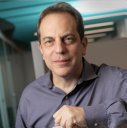
 Gil Zussman
· 1 previous affiliation
- Columbia UniversitySince 2019
- Full Professor · Since 2019
Research Overview
Gil Zussman focuses on wireless and mobile networking, the resilience of cyber-physical systems, and advanced radio technologies. His trajectory spans early work in distributed scheduling and disaster recovery networks to the development of full-duplex radios and millimeter-wave communication systems. Currently, he investigates smart city infrastructure, integrating edge computing and machine learning to build digital twins for urban transportation and power grid security.
Research Trajectory
Gil Zussman's early research focused on the design and optimization of wireless ad hoc networks, particularly in constrained environments. He introduced Energy Efficient Routing in Ad Hoc Disaster Recovery Networks, formulating anycast routing problems to maximize battery life for wireless smart badges used to locate survivors in emergency scenarios. This interest in robust wireless operation extended to distributed scheduling algorithms. He developed Multihop Local Pooling for Distributed Throughput Maximization in Wireless Networks, demonstrating how specific network conditions enable simple distributed algorithms to achieve optimal throughput. He later participated in further theoretical analysis of these topologies in Analyzing the Performance of Greedy Maximal Scheduling via Local Pooling and Graph Theory.
In the late 2000s and early 2010s, his focus expanded to encompass infrastructure resilience and dynamic spectrum access. With collaborators, he evaluated the physical robustness of communication networks in Assessing the Vulnerability of the Fiber Infrastructure to Disasters, identifying geographical vulnerabilities to events like earthquakes or electromagnetic pulses. Concurrently, his research group explored ultra-low-power systems, presenting Challenge: ultra-low-power energy-harvesting active networked tags (EnHANTs). In the domain of wireless spectrum, he contributed to the research direction of Dynamic Spectrum Sharing for Efficient Resource Allocation. This work included Channel fragmentation in dynamic spectrum access systems: a theoretical study, which demonstrated that spectrum fragmentation does not grow uncontrollably even with arbitrarily small fragments. This study also advanced the broader area of Proving Convergence with Lyapunov Functions and touched upon the area of Fragmentation Aware Resource Allocation and Scheduling. Expanding his focus on infrastructure resilience, he modeled the power grid, contributing to the area of Non-Local Cascading Failures in Power Grids with Computational analysis of cascading failures in power networks, which utilized linearized power flow models to analyze cascade evolution.
A major, sustained theme in his trajectory is the development and deployment of full-duplex wireless systems, aligning with the research direction of Self-Interference Cancellation in Full-Duplex Systems. He characterized the theoretical and practical limits of these systems in Resource Allocation and Rate Gains in Practical Full-Duplex Systems. This theoretical foundation transitioned into extensive experimental deployments, including Open-access full-duplex wireless in the ORBIT and COSMOS testbeds. His lab continued to push the boundaries of real-time adaptive systems, showcasing hardware implementations in Demo: Experimentation with Wideband Real-Time Adaptive Full-Duplex Radios and advancing equalization techniques in Design and Testbed Deployment of Frequency-Domain Equalization Full Duplex Radios.
Concurrently, he has conducted extensive empirical research on millimeter-wave (mmWave) propagation in dense urban environments. This includes large-scale measurement campaigns detailed in Outdoor-to-indoor 28 GHz wireless measurements in manhattan: path loss, location impacts, and 90% coverage and subsequent studies like Around-Corner and Over-Top 28 GHz Measurement in Manhattan: Path Loss and AoA for MU-MIMO. His work increasingly intersects with smart city infrastructure and edge computing. He led the development of experimental frameworks for urban safety in Real-time camera analytics for enhancing traffic intersection safety, utilizing the COSMOS testbed in New York City. He has also continued to address grid security, proposing machine learning methods to detect cyber attacks on distributed energy resources in Identification of Intraday False Data Injection Attack on DER Dispatch Signals.
Current Directions
Recent work investigates the integration of artificial intelligence into urban infrastructure and the robustness of machine learning models deployed in these complex environments. The most recent papers in the evidence address the creation of AI-powered digital twins for smart cities, as seen in AI-Powered Urban Transportation Digital Twin: Methods and Applications. This work emphasizes real-time prediction and decision-making to protect vulnerable road users, touching on trajectory planning and hierarchical offloading across the edge-cloud continuum. Additionally, he participates in research on adaptive data collection strategies, detailed in Adaptive Data Collection for Robust Learning Across Multiple Distributions, which combines multi-armed bandit strategies with online optimization to ensure machine learning models remain robust across varying data sources in smart-city deployments.
Profile updated
Loading new papers…
Other researchers whose papers cluster into the same research directions — a proxy for overlapping technical interests and shared intellectual neighborhoods.
See something wrong? Report a mistake