

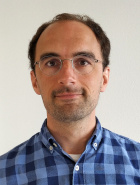
 Gijs van Tulder
· 3 previous affiliations
- Delft University of TechnologySince 2023
- Postdoc · Since 2023
- MS student · 2006–2012
- Postdoc · 2020–2023
- Erasmus MC2013–2019
- PhD student · 2013–2019
Research Overview
Gijs van Tulder focuses on active learning methodologies, medical image segmentation, and the broader evaluation of machine learning models. His early work spanned natural language processing and deep learning infrastructure before transitioning into applied computer vision for clinical diagnostics. His most recent research investigates the theoretical limitations and sample reusability challenges inherent in active learning strategies.
Research Trajectory
Gijs van Tulder's research trajectory spans over a decade, beginning with applied natural language processing and evolving through foundational machine learning infrastructure into specialized computer vision and active learning methodologies. His early work in 2011 focused on question answering systems. He co-authored Question Classification by Weighted Combination of Lexical, Syntactic and Semantic Features, which explored the extraction and weighted combination of linguistic features to predict entity types for natural language queries, achieving competitive results on standard benchmarks.
As deep learning began to dominate the machine learning landscape, van Tulder was among the many contributors to foundational open-source infrastructure. In 2016, he participated as a co-author in the large-scale collaborative paper detailing Theano: A Python framework for fast computation of mathematical expressions. While his specific individual contribution is not isolated in this massive multi-author effort, his involvement reflects an engagement with the core computational tools that enabled the subsequent deep learning boom.
By 2017, van Tulder's focus had shifted toward applied deep learning in the medical domain, specifically addressing the challenges of automated clinical image analysis. He co-authored Segmentation of Intracranial Arterial Calcification with Deeply Supervised Residual Dropout Networks, which proposed a novel 3D fully convolutional neural network for the automatic segmentation of intracranial carotid artery calcification (ICAC). This work addressed the difficulty of distinguishing lesions from nearby bony structures with similar attenuation coefficients, introducing regularization techniques to improve model robustness in a domain where manual annotation is prohibitively time-consuming.
In his more recent work, van Tulder has pivoted toward the theoretical and practical limitations of machine learning data efficiency. In 2022, he led the research on On the reusability of samples in active learning. This paper critically examined the assumption that datasets constructed via active learning for one model can be effectively reused by another. Through theoretical arguments and practical demonstrations, the work highlighted that because active learning strategies intentionally undersample certain areas of the data distribution, universal sample reusability is fundamentally impossible, and models relying on those undersampled regions may actually perform better with purely random sampling.
Current Directions
The most recent papers in the evidence indicate that van Tulder's current research focuses on the methodological constraints of active learning and data sampling. Based on his 2022 publications, his work investigates the research direction of Model Coupling and the Transferability of Active Learning. This involves understanding how the strategic selection of informative samples inherently biases datasets toward specific model architectures or decision boundaries.
Consequently, his recent interests intersect with the broader area of Selection Bias in Active Learning, exploring the hidden costs of departing from independent and identically distributed data collection. Furthermore, the methodological challenges he addresses share conceptual overlap with themes such as Stabilizing Inverse Propensity Weighting for Causal Inference, as both areas grapple with the consequences of systematically missing data in specific regions of a sample space and the resulting difficulties in generalizing model performance.
Profile updated
Loading new papers…
Other researchers whose papers cluster into the same research directions — a proxy for overlapping technical interests and shared intellectual neighborhoods.
See something wrong? Report a mistake