

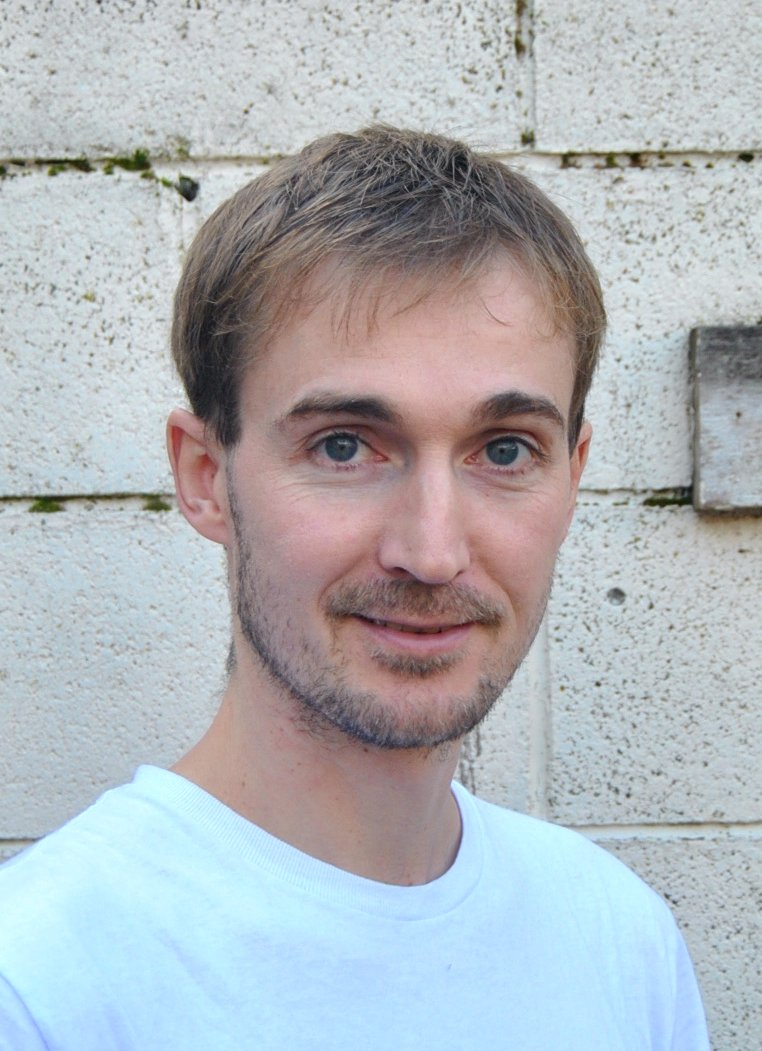
 Gido M. van de Ven
· 8 previous affiliations
- University of GroningenSince 2025
- Assistant Professor · Since 2025
- KU Leuven2022–2025
- FWO Senior Postoctoral Fellow · 2024–2025
- Postdoc · 2022–2025
- MSCA Postdoctoral Fellow · 2022
- Delft University of Technology2024–2025
- Visiting researcher · 2024–2025
- University of Cambridge2018–2022
- Visiting researcher · 2018–2022
- Baylor College of Medicine2017–2022
- Postdoctoral Researcher · 2017–2022
- University of Oxford2011–2017
- PhD student · 2013–2017
- Postdoc · 2017
- MS student · 2011–2012
- MS student · 2009–2011
- Erasmus University Rotterdam2005–2008
- Undergrad student · 2005–2008
Research Overview
Gido M. van de Ven focuses on continual learning, catastrophic forgetting, and the optimization dynamics of deep neural networks. His trajectory spans the standardization of evaluation scenarios and the development of generative replay techniques for class-incremental learning. Recently, his work investigates the stability gap in sequential training and the application of low-rank adaptation to maintain knowledge across tasks.
Research Trajectory
In 2019, he published Three scenarios for continual learning, which brought structural clarity to the field by defining three distinct evaluation settings based on whether task identity is provided or inferred at test time. This work demonstrated that while many methods succeed when task identity is known, standard regularization approaches fail in class-incremental settings, necessitating replay-based solutions. This foundational benchmarking contributed significantly to the area of Standardizing Evaluation Scenarios in Continual Learning and advanced the broader field of Task Identification for Class Incremental Learning. Related efforts during this period also explored the domain of Generative Pseudo-Replay for Data-Free Model Optimization and work in the direction of Task-Agnostic Inference for Modular Continual Learning.
Expanding on the mechanisms of memory retention, he collaborated on Natural continual learning: success is a journey, not (just) a destination in 2021. This research contrasted parameter regularization—which maps out destinations in parameter space—with gradient projection techniques that guide the optimization journey to prevent interference, aligning with research areas such as Task Free Continual Learning in Continuous Streams. That same year, he introduced a novel strategy in Class-Incremental Learning With Generative Classifiers. Rather than learning a conditional distribution or relying on standard generative replay, this approach learns the joint distribution of data and labels, performing classification via Bayes' rule. This methodology intersects with the area of Modular Parameter Isolation for Continual Learning. To support the growing community and address reproducibility challenges, he also participated in the development of Avalanche: An End-to-End Library for Continual Learning, an open-source PyTorch codebase for fast prototyping and evaluation.
In 2023, he took a broader perspective on the field's trajectory with Continual Learning: Applications and the Road Forward, analyzing the dominance of memory-constrained settings and connecting continual learning to wider open problems in machine learning. Concurrently, his research uncovered a critical phenomenon in sequential training: the "stability gap." In Continual evaluation for lifelong learning: Identifying the stability gap, he and his collaborators demonstrated that even state-of-the-art methods suffer from substantial, albeit temporary, forgetting when initiating training on a new task.
Building on this insight, he guided the research in Two Complementary Perspectives to Continual Learning: Ask Not Only What to Optimize, But Also How (2024), arguing that continual learning strategies must modify the optimization trajectory itself rather than relying solely on joint loss approximations. Further advancing class-incremental learning, he developed Prediction Error-based Classification for Class-Incremental Learning, a paradigm that assigns a dedicated student network to each class to mimic a fixed random teacher, thereby avoiding catastrophic forgetting in single-pass scenarios without requiring a memory buffer.
Current Directions
The most recent papers in the evidence investigate the mechanics of model merging and the refinement of weight regularization techniques for efficient adaptation. In Forgetting of task-specific knowledge in model merging-based continual learning (2025), collaborative work demonstrates that while linear model merging preserves shared knowledge, it rapidly degrades task-specific information.
Addressing the foundational tools of the field, On the Computation of the Fisher Information in Continual Learning highlights how the exact computation of the Fisher Information matrix significantly impacts the performance of Elastic Weight Consolidation (EWC), urging a move away from suboptimal approximations. Finally, Revisiting Weight Regularization for Low-Rank Continual Learning (2026) applies classical weight regularization to low-rank adapters (LoRA) in a shared parameter space. This approach estimates parameter importance over the full-dimensional weight space while updating only low-rank matrices, achieving a strong stability-plasticity trade-off with a constant memory footprint.
Profile updated
Loading new papers…
Other researchers whose papers cluster into the same research directions — a proxy for overlapping technical interests and shared intellectual neighborhoods.
See something wrong? Report a mistake